Tajikistan
Visited: October 2025
Our trip to Tajikistan started surprisingly two days early when we went for a morning walk with our dog Yoda. Clare got her new passport a month ago, but we realised that we never registered it in Qatar and didn’t know if she could leave the country. Luckily, the process was pretty straightforward – just use the government app Metrash. Unluckily (and this is based on our own experiences), the question “Will Metrash work today?” can be answered by flipping a coin. Of course, it didn’t work this day. When Clare went for help to HR, they even told her that the application she needed had worked just yesterday! But everyone was very helpful, and Clare just had two free periods when she went to HR, so they let her leave work and get it sorted at the immigration office. There, it was pretty easy, except Clare left her ID at home, so there was a bit of driving all around Doha involved.
On Thursday, we left work as soon as possible, dropped Yoda off at the doggie camp (sounds better than a kennel), and were on our way to the airport. We got checked in and passed through customs with no issue with the new passport, which was a huge relief. We even made it to the lounge and had enough time to enjoy some food, sweets, and the mandatory red wine before the flight.
But the flying part never came. We got told that there was an issue and we would get an update in 30 minutes. I then went to ask and found out that the new departure was scheduled 4 hours later. We had a connection in 2 hours, so we already knew that we were screwed. We checked all our options, but there wasn’t any other flight to Dushanbe, even with a different airline, so the only other possibility was to reschedule for the next day at the same time.
In a taxi on the way back to the apartment, we joked that this happened because we both forgot our headphones and, more importantly, because the Universe wanted us to see Viktoria Plzeň beat AS Roma 2:1 in the Europa League!
The next day, everything worked fine. We even had our bags waiting for us at the airport. Once we got to Dubai, we waited only a bit and boarded the next flight on time. Everything ran smoothly, we got on the runway, the plane started picking up speed for liftoff, and then it abruptly stopped and moved off the runway. We didn’t know for a while what had happened, and then the captain announced that there was a minor issue and they had to fix it. So we had to go back to where we started. Luckily, everything got fixed, and we left with “only” a 2-hour delay.
Day 1: Longer nap and stroll through Dushanbe
We finally arrived in Dushanbe just after 5 am. We got an eVisa (30 USD each) ahead of time, so the customs were quick. We were then approached by about a hundred taxi drivers (not that many, but a lot for 5 am) and were able to bargain for a taxi to our hotel for $5. We haven’t had any local currency yet because the exchange at the airport was closed.
Our hotel, Almaz Hotel, wasn’t far, and I was in contact with them during the flight issues, so we were able to rebook our stay. The fella was waiting at the reception when we got there around 6. We went straight into the room and to bed. We both barely slept on the planes. I had an alarm set to 9:15 to make it to breakfast, but Clare was threatening to kill me if I woke her up. In the end, she didn’t go for breakfast, but she was up just before 10, so I brought her two cups of coffee to wake up.

We didn’t want to waste a day, so we swapped rooms (for some reason, we were in the wrong one…the new one was nicer, so no complaints there), and were on our way to explore Dushanbe. Our first stop was a money exchange nearby. We weren’t sure how much we would need, but estimated it at $500. The rate at the time was 9.2 Tajikistan Somoni for 1 US dollar.
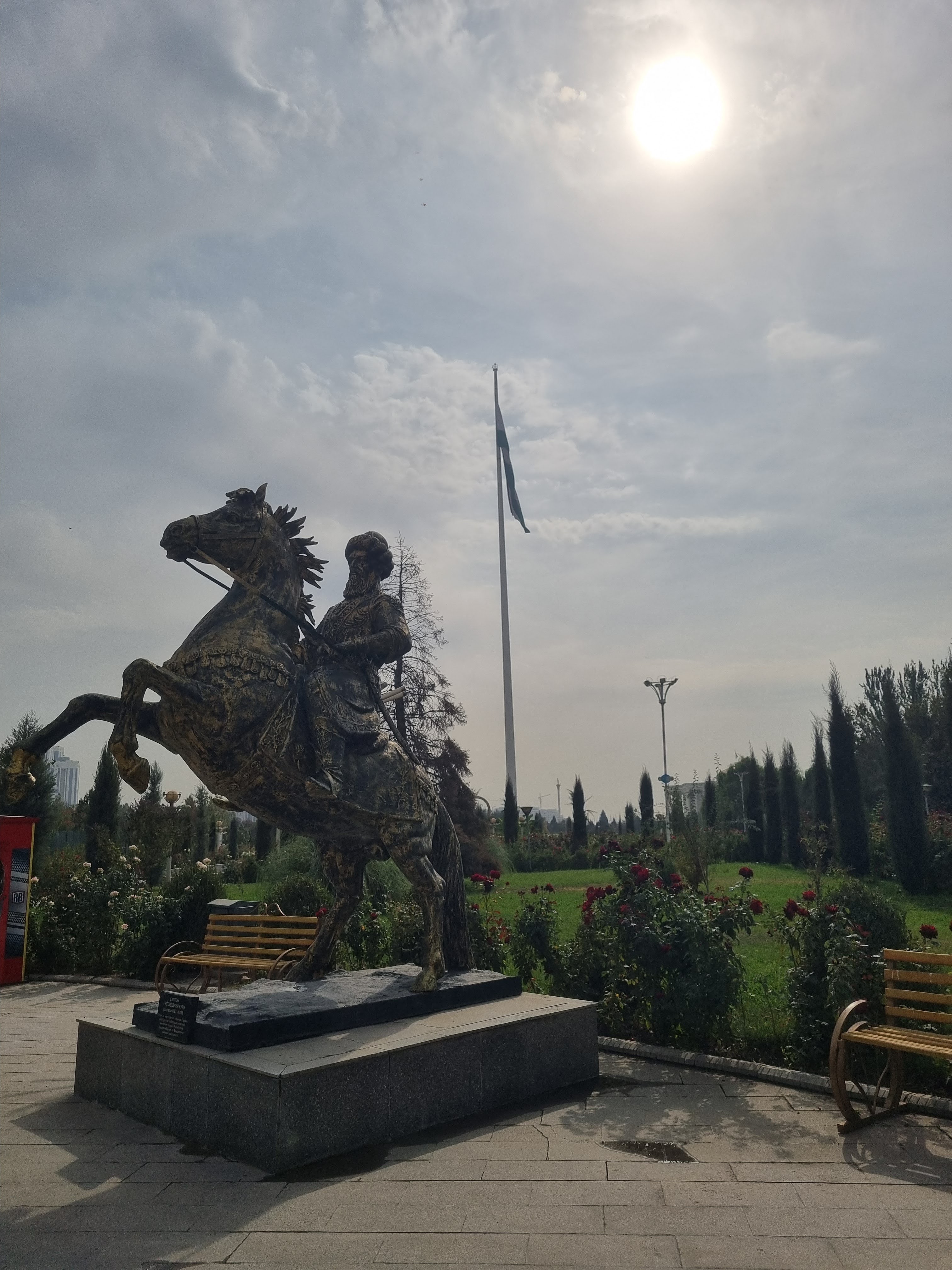
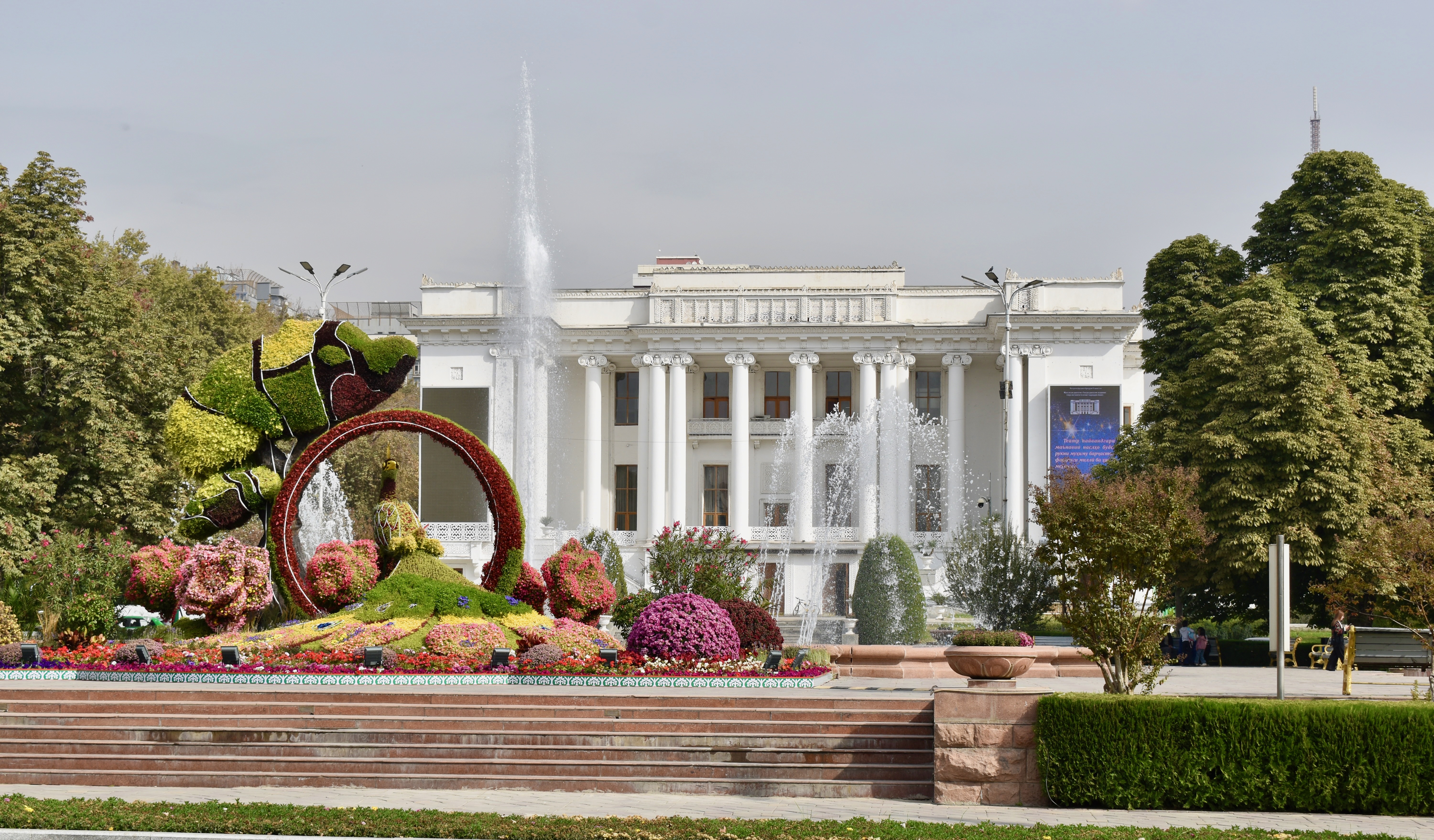
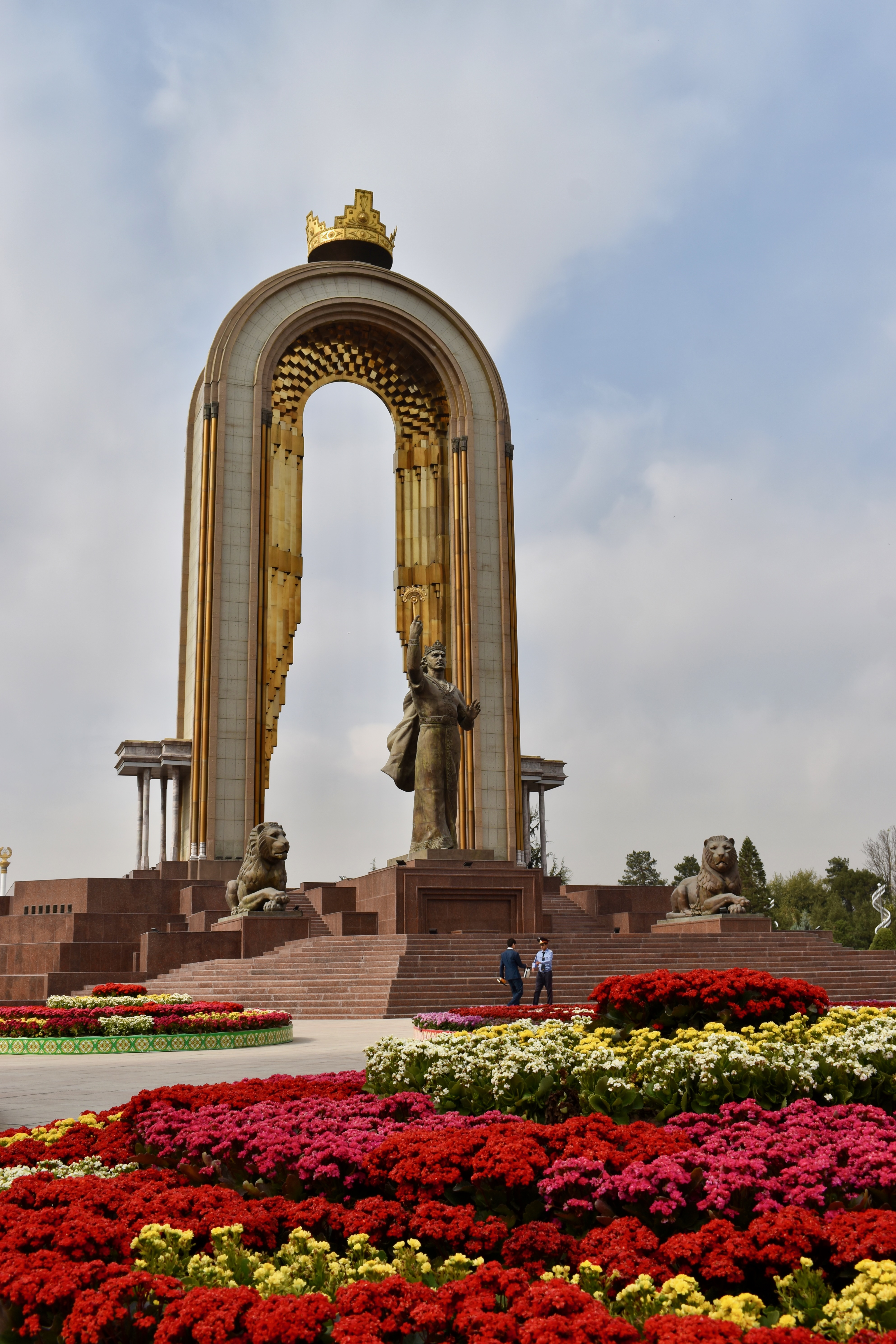
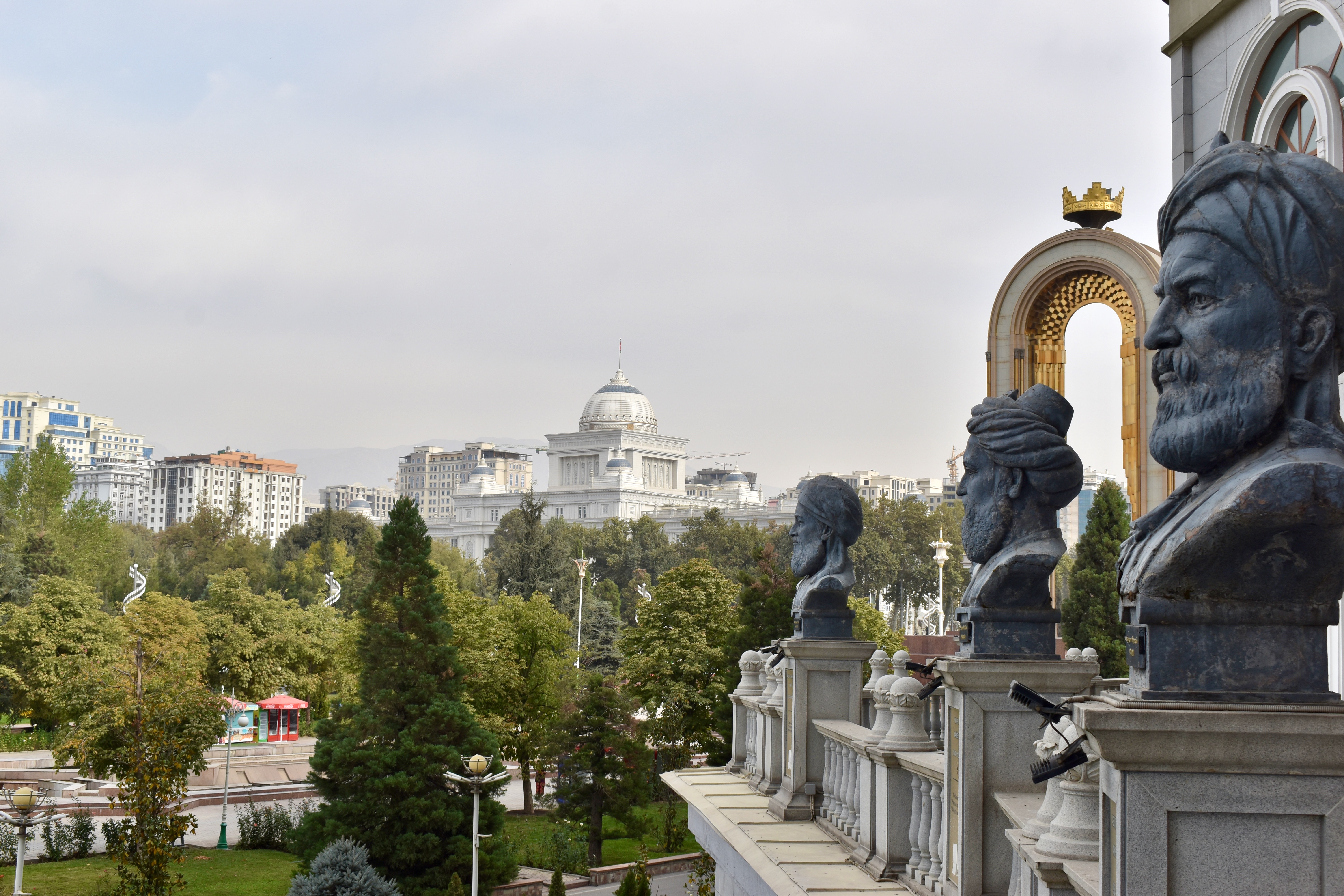
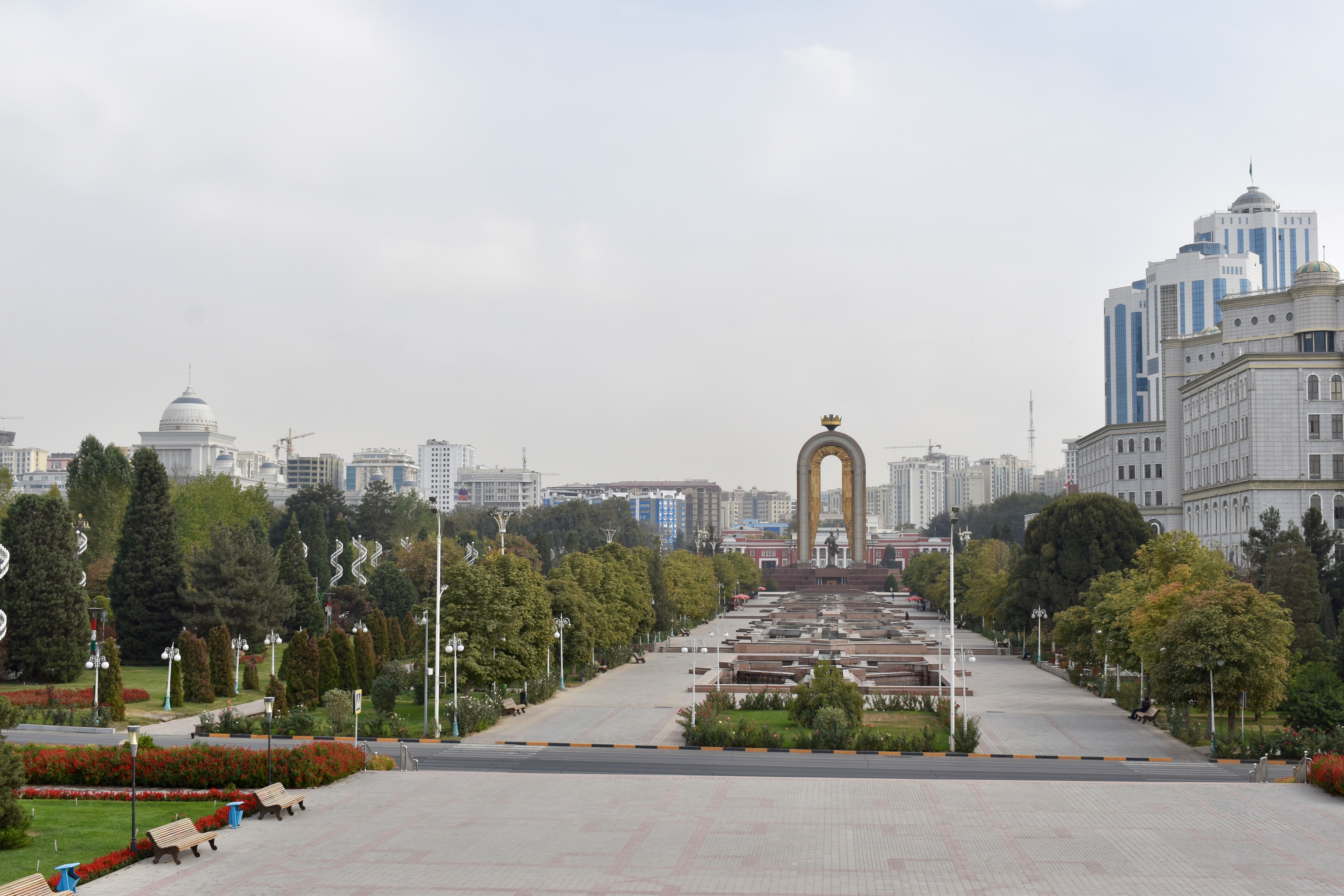
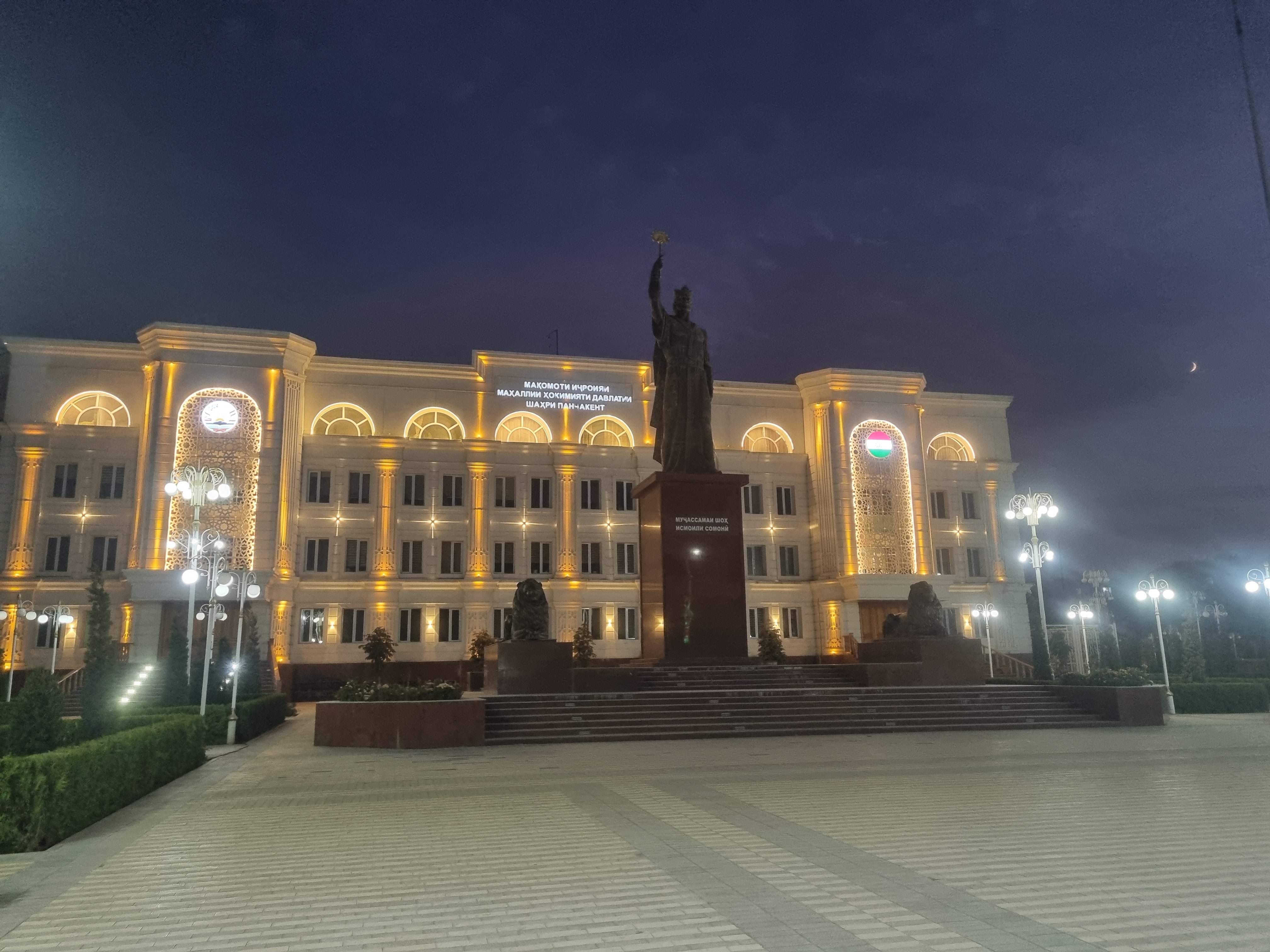
We then continued along the Rudaki Avenue towards the center of Dushanbe and the Rudaki Park. Here we went to check out the Ismoil Somoni Monument, the National Library (there was nothing inside…), and the Palace of Nations (just from a distance). We could also see the Tajikistan Parliament building on the other side of the main avenue. We made a loop around the Palace, since you can’t go anywhere near it, and showed up on the other side by the National Museum (entrance was 30 TJS). We didn’t go in and just walked through the nearby park.

Interesting Fact
As part of the Soviet Union, the city was named Stalinabad in 1929. It was renamed back to Dushanbe in 1961.
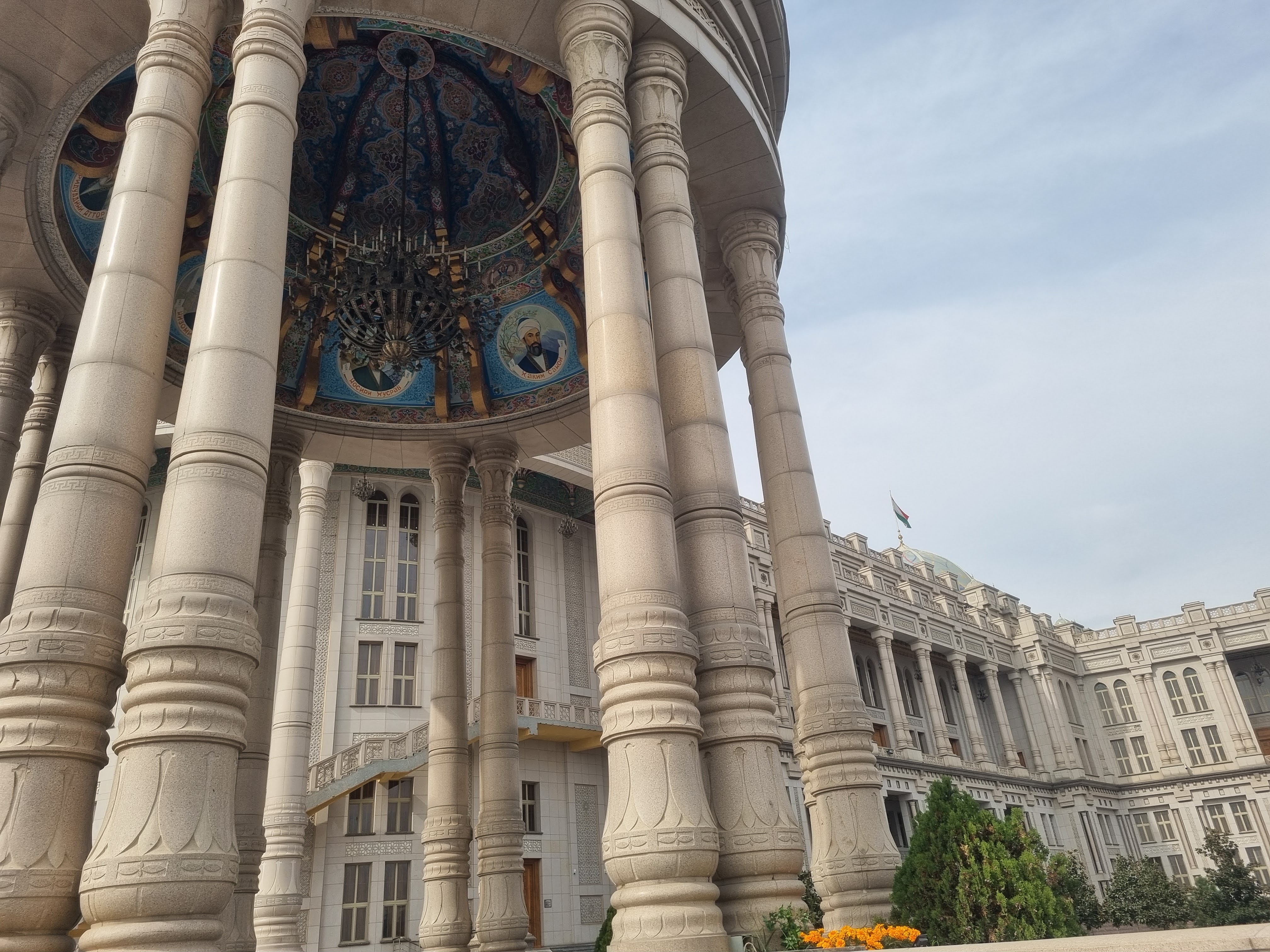
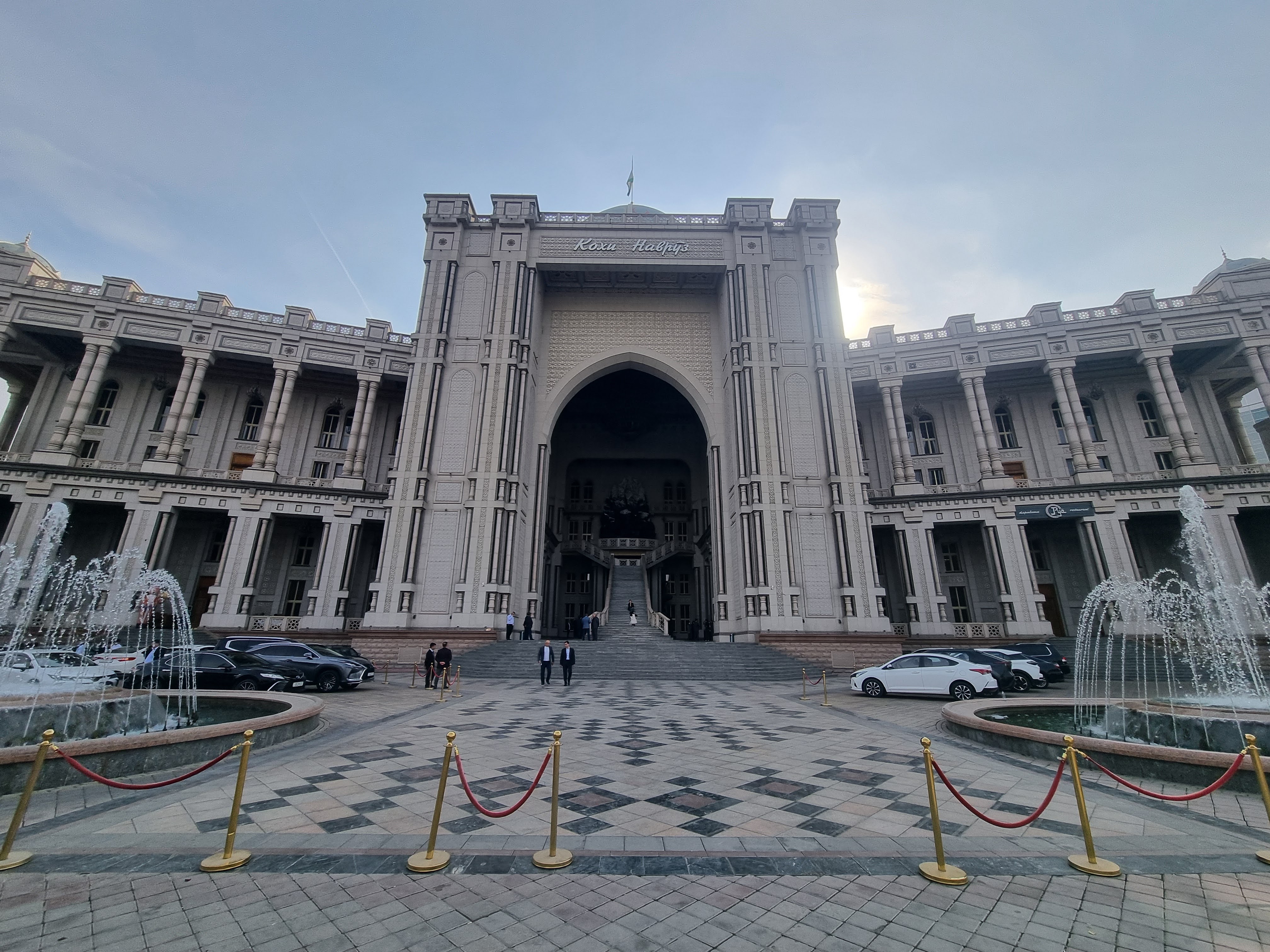
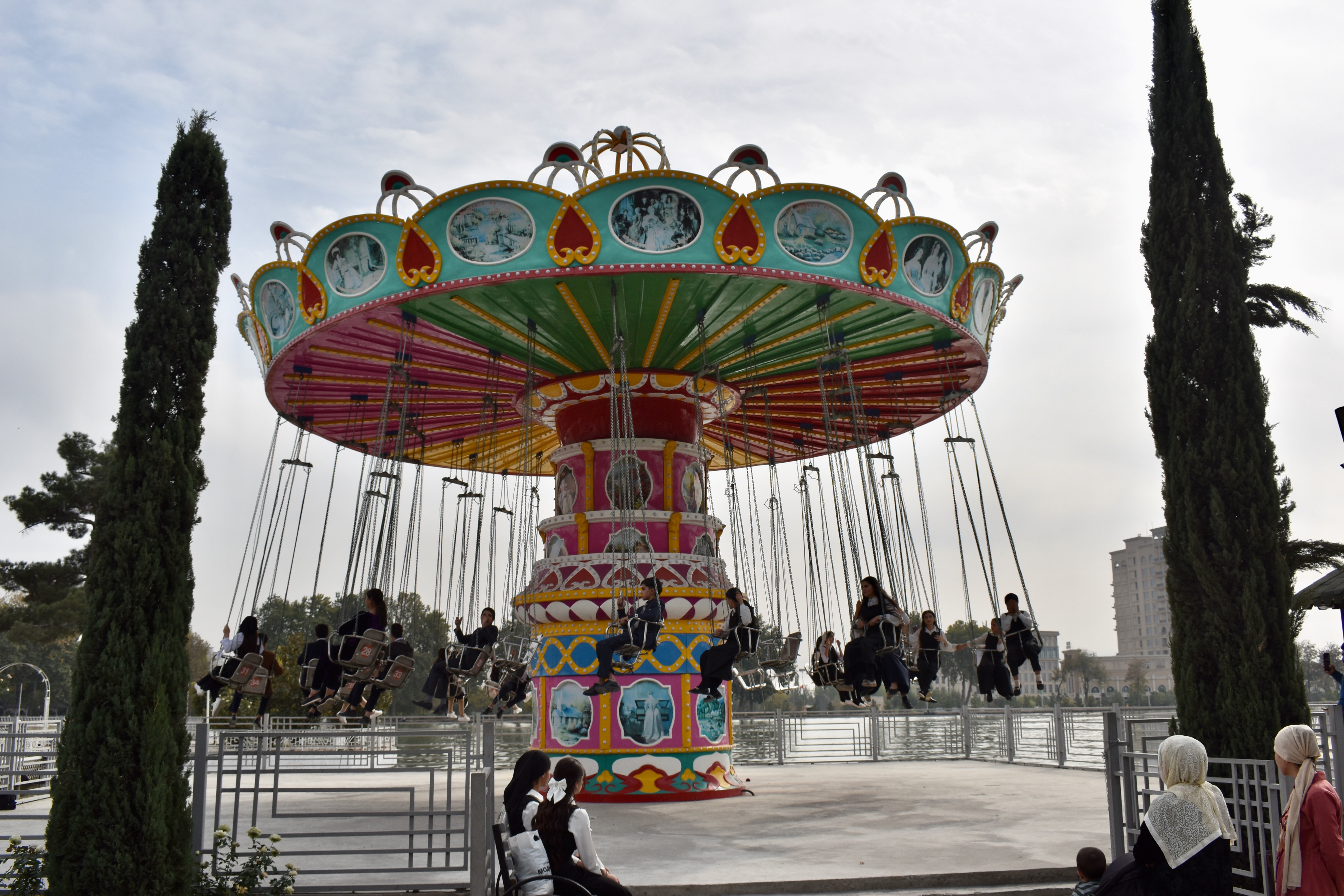
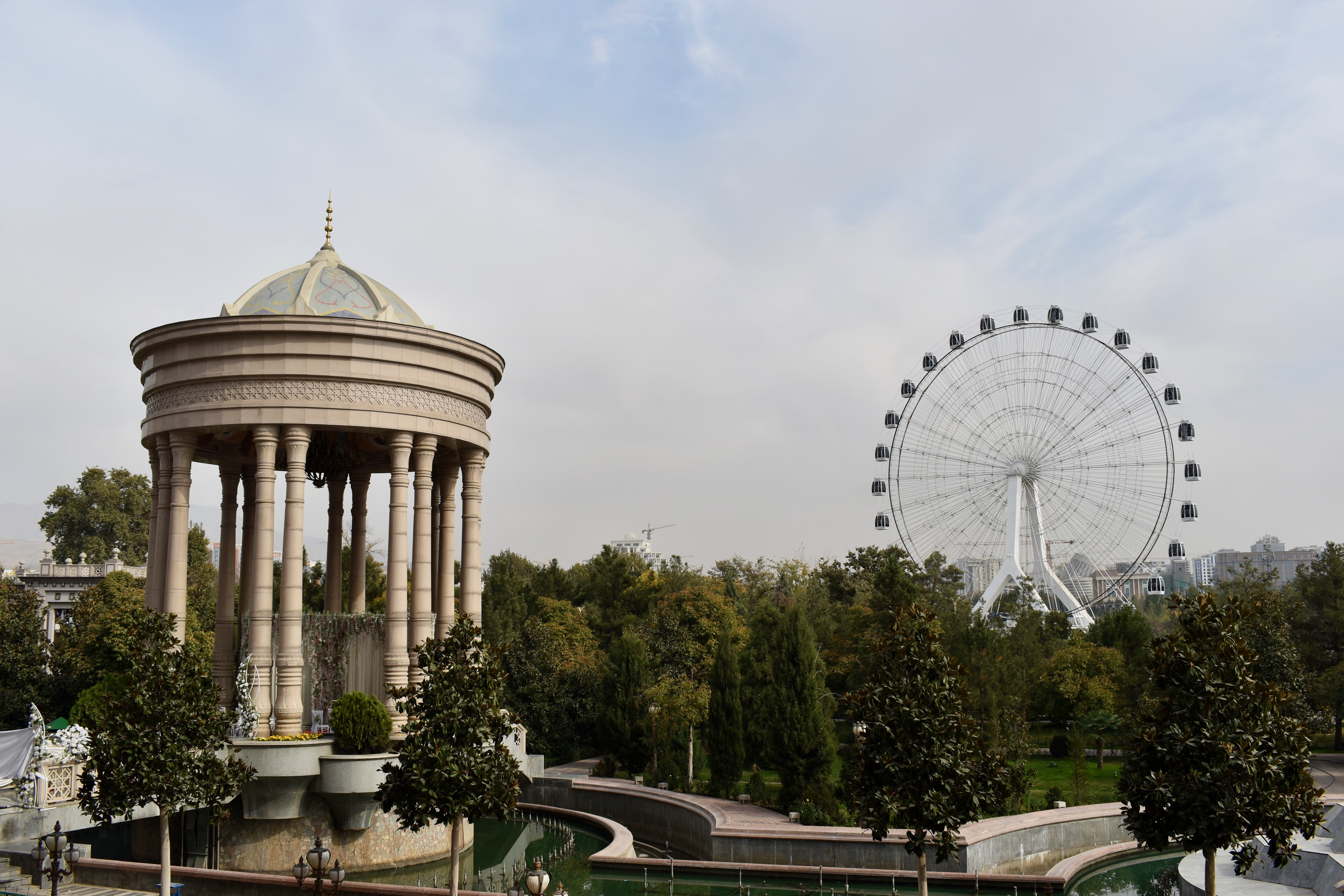
We then crossed the river, walked through an amusement park by a lake, and finished at Kohli Navruz Palace. We read about getting a tea there in the world’s largest teahouse, but it was closed for a wedding. But there was a restaurant next door, so we stopped there for Palau and tea.
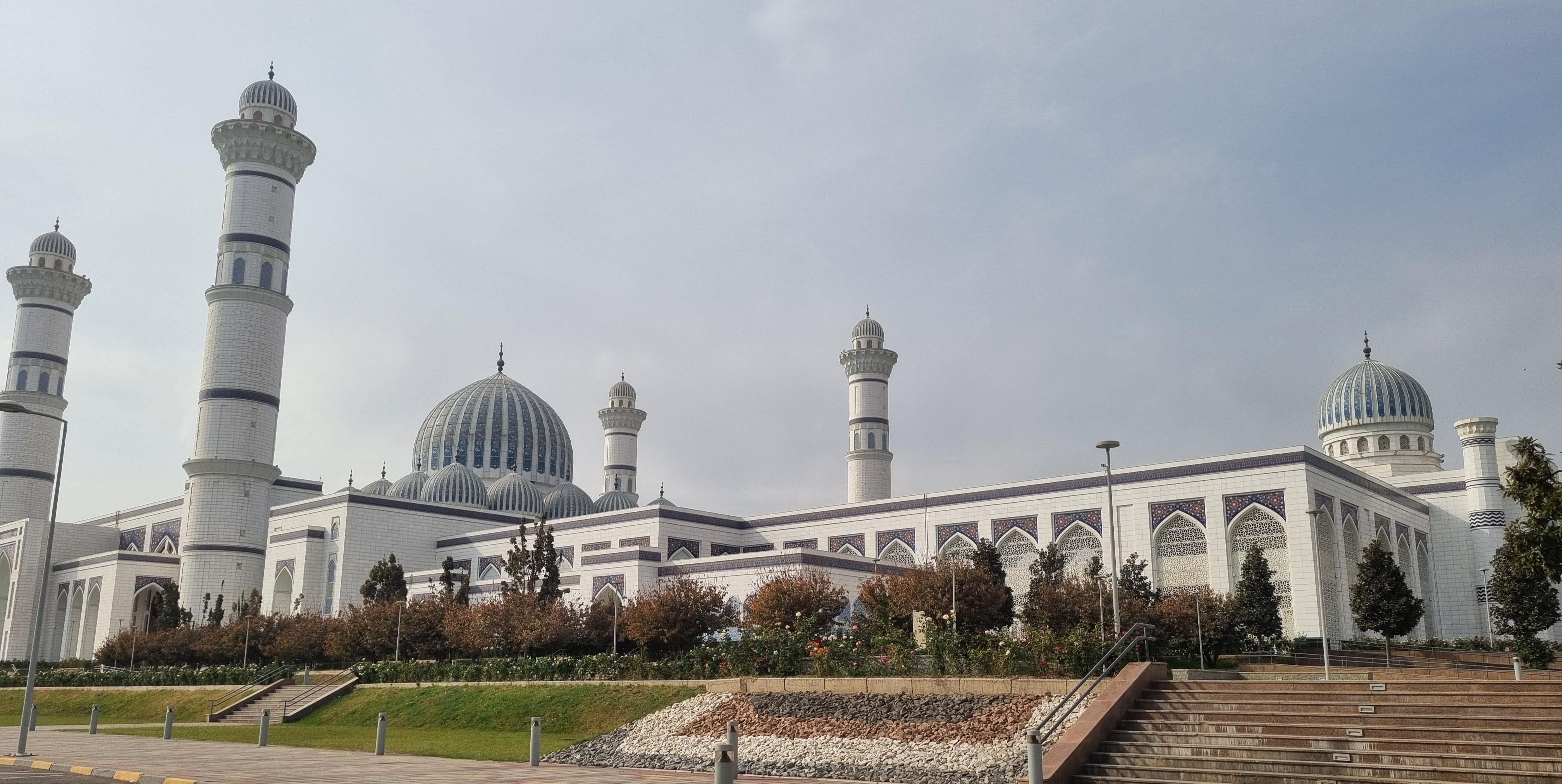
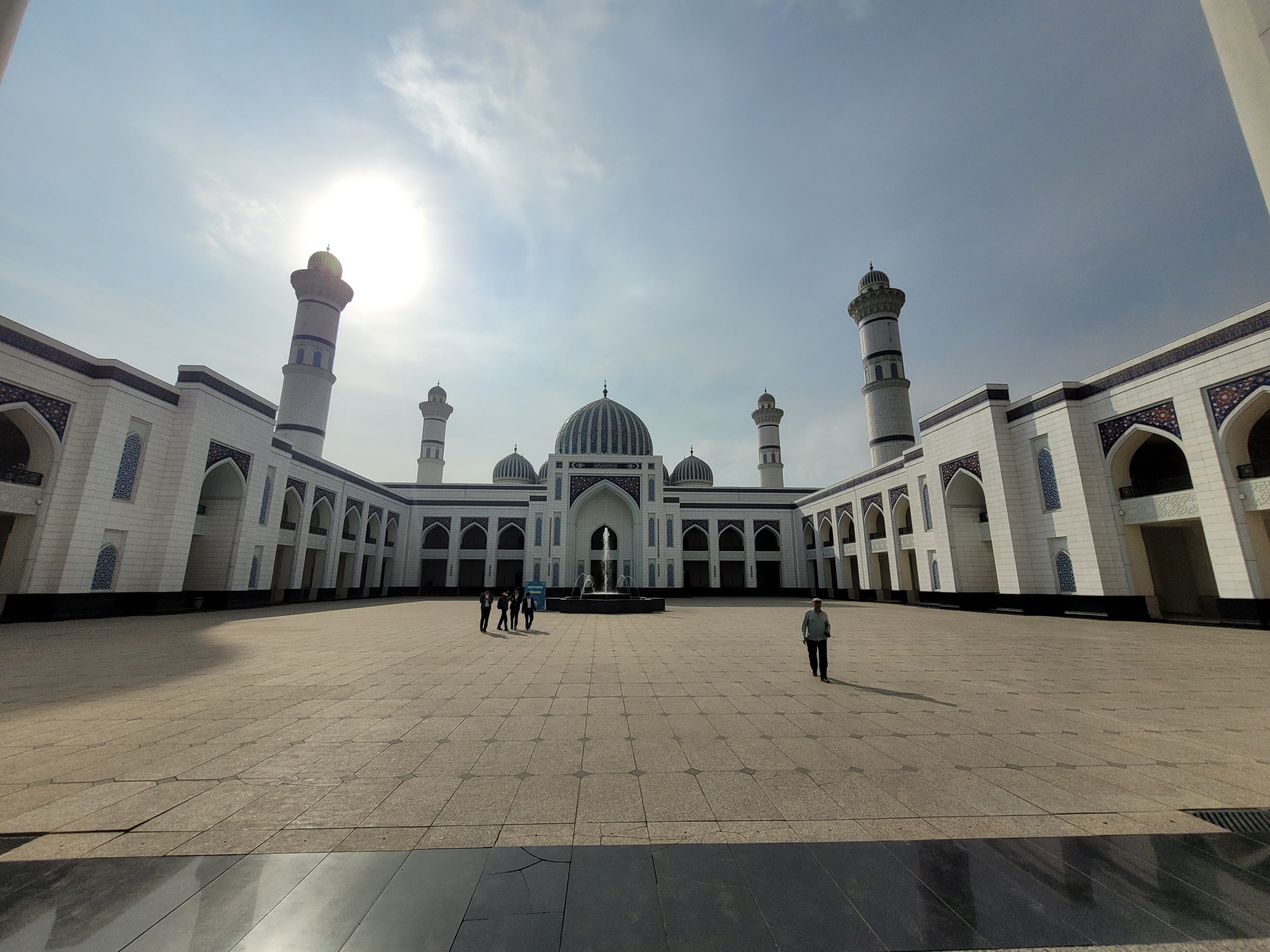
We then took a big detour back to the center by first walking through the sports complex, then stopping at the Central Mosque (absolutely massive), to then finish the loop at the Istiklol (Independence) Monument (also absolutely massive). We were pretty exhausted by then, so we had a long break at the park there. We then passed by the Haji Yaqub Mosque on the way out of the park and got back on the Rudaki Avenue to walk back to our hotel. We stopped for a kebab on the way back and at a shop to buy some supplies for hiking later. We ended up also getting some somsa and baklava for dinner. I say dinner, but it was barely 5 pm – our day was all messed up from the flight.
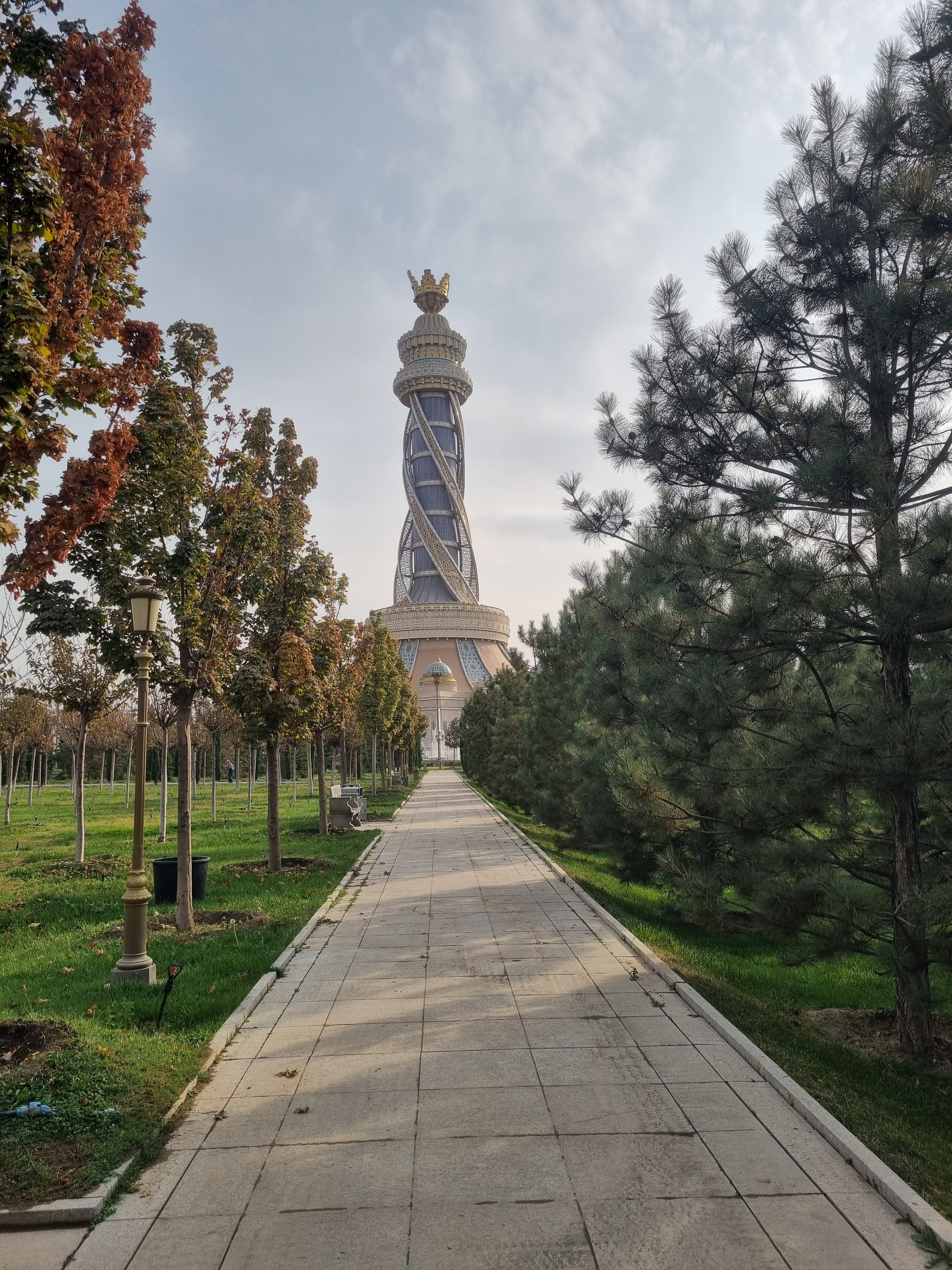
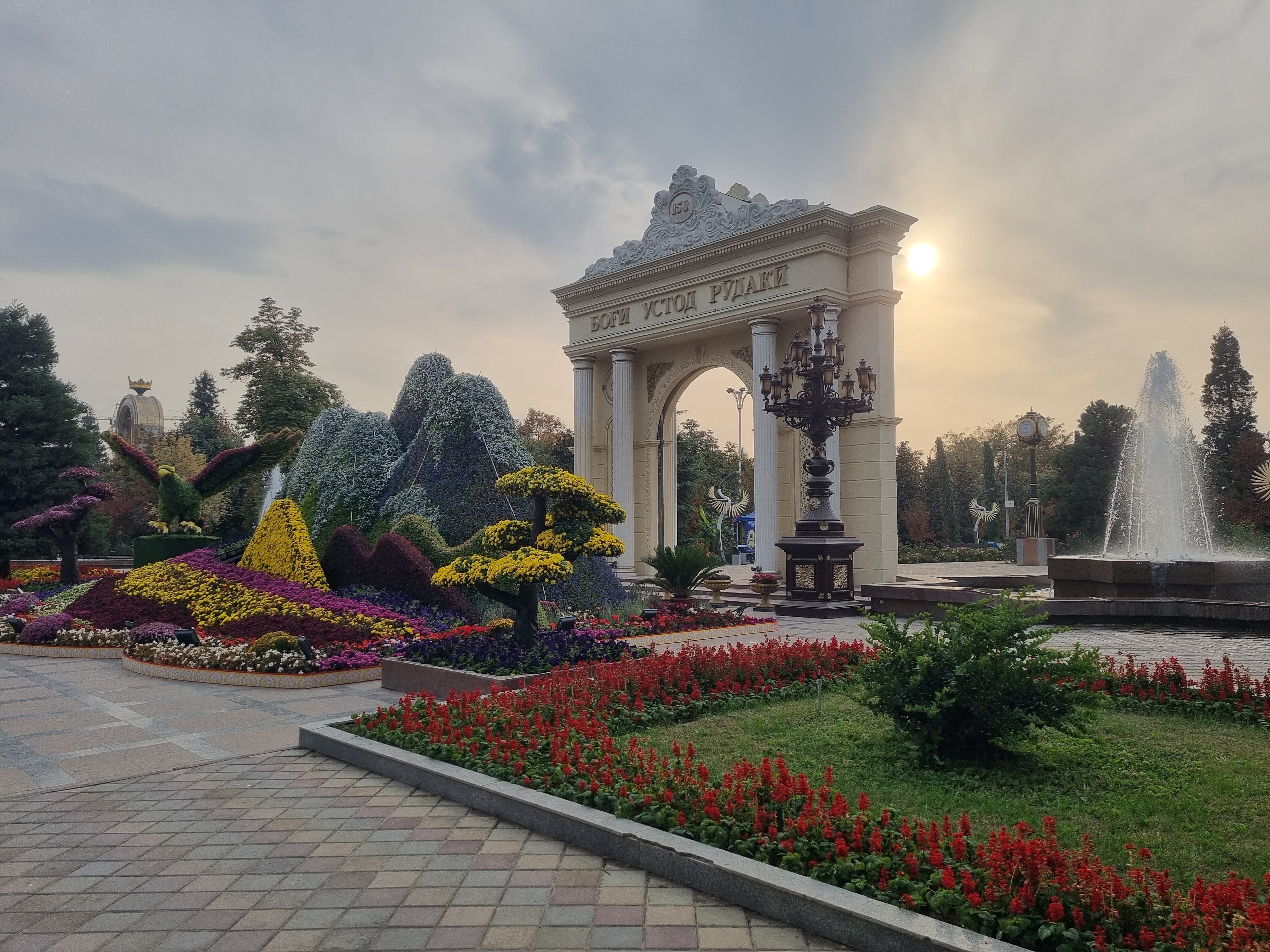
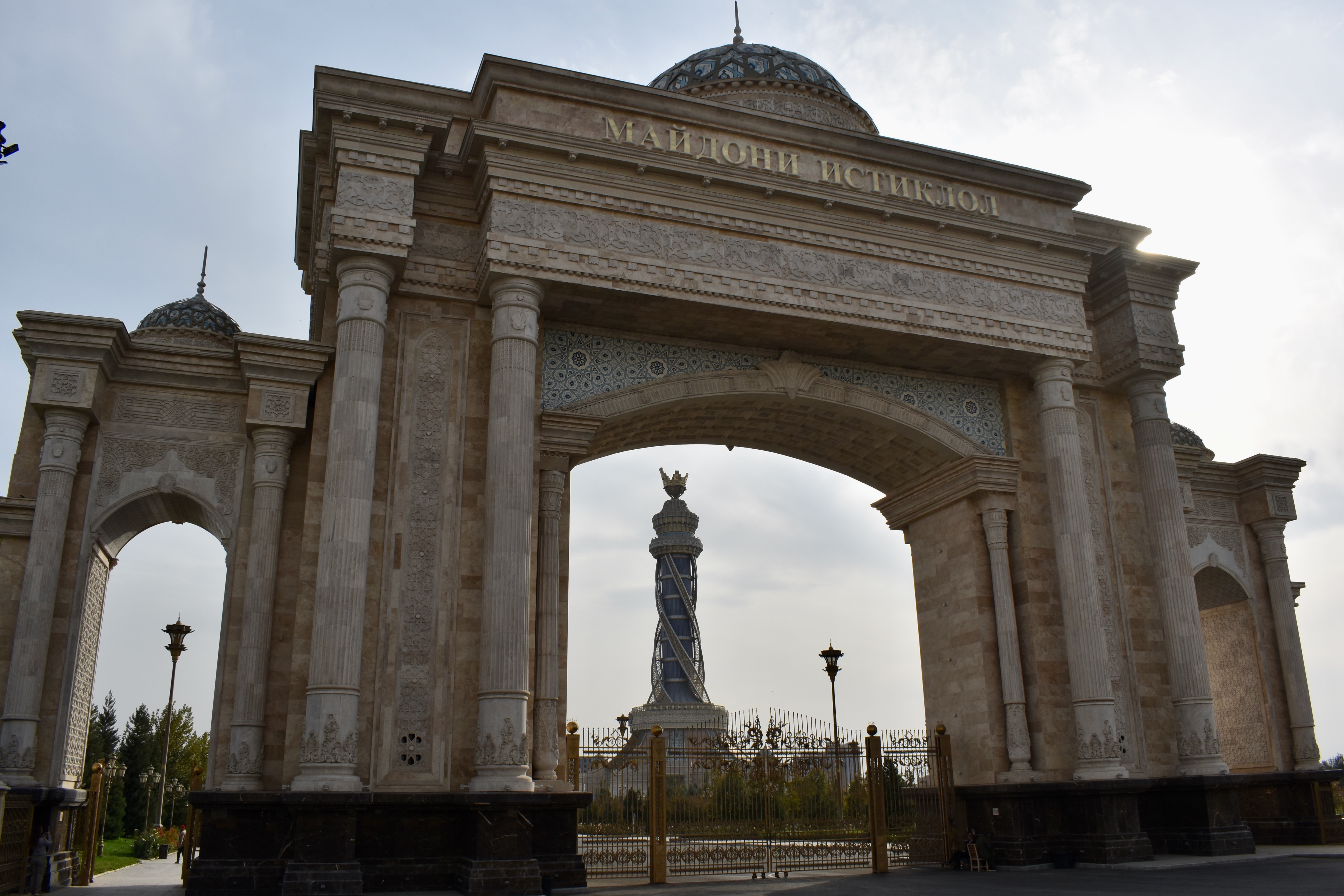
After dinner, we chilled for a bit and then just went to buy a camping gas cylinder for the hike from a nearby hostel (Green House Hostel, small cylinder for 70 somoni). That was us for the day. We thought we saw a fella selling beer on the way to the hostel, but it turned out it was a lemonade. When he was making the ad, he chose a very misleading picture online! We got one can (they didn’t have more) of Yak beer from our hotel, drank it on the porch outside, and went to get a shower. The last thing was to pack for our hiking trip and go to sleep.
Day 2: The city of Panjakent
We started the day with breakfast in the hotel, and then we went straight into a taxi booked from the hotel to go to the shared taxi station in Chorbogh in the northern part of Dushanbe. The taxi ride cost 46 somoni.
Note
You can’t use the local taxi apps without a local number. But if you stop the green Jura taxi on the street, they all use their app as a meter, so you won’t get scammed.
We expected the usual yelling, negotiating of prices, and all the different drivers wanting a fare, but we didn’t see it coming that we would be pulled out of the car before we even reached the parking lot. Don’t take me wrong, the drivers were really nice, but they have to wait until the car is full to go, and everybody counts, so it’s a battle.
We got first offered a ride to Panjakent for 150 per person. We said no because we heard that 150 somoni is the maximum we should pay, so we wanted to negotiate a little. Another fella then came and said 100, which started an argument with the other drivers. We were all baffled and even put our bags in his car, but then he started saying (this is all my version of translation) “Oh, but you’re just two, let’s make it 150.” The other driver, who he stole us from, came and was like, “You said 100, then take them for 100!”. That was, of course, because he just wanted to throw it in his face; the driver was not going anywhere for only a hundred per head.
At that point, Big Max showed up (we didn’t know his name by then, but it perfectly describes his physical stature) and offered again 150 and said that he had a full car. He was willing to negotiate, and we agreed on 130 somoni per person. We took our stuff to his 7-seater car and just had to wait for one more person to join us. We got to the shared taxi parking lot around 8:30 am, by 9 am agreed on the price with Max, and left just by 10 am when the car was full.

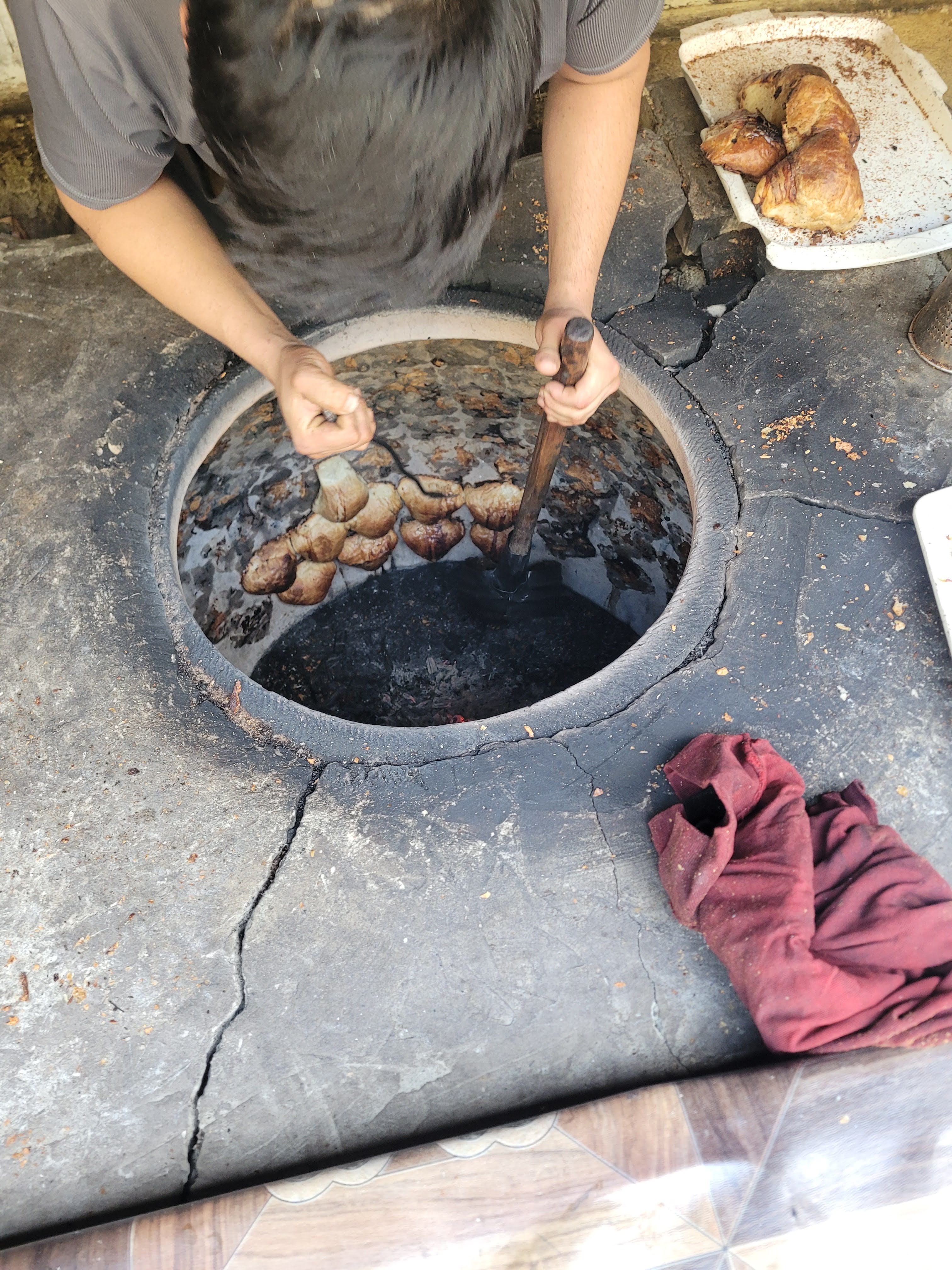
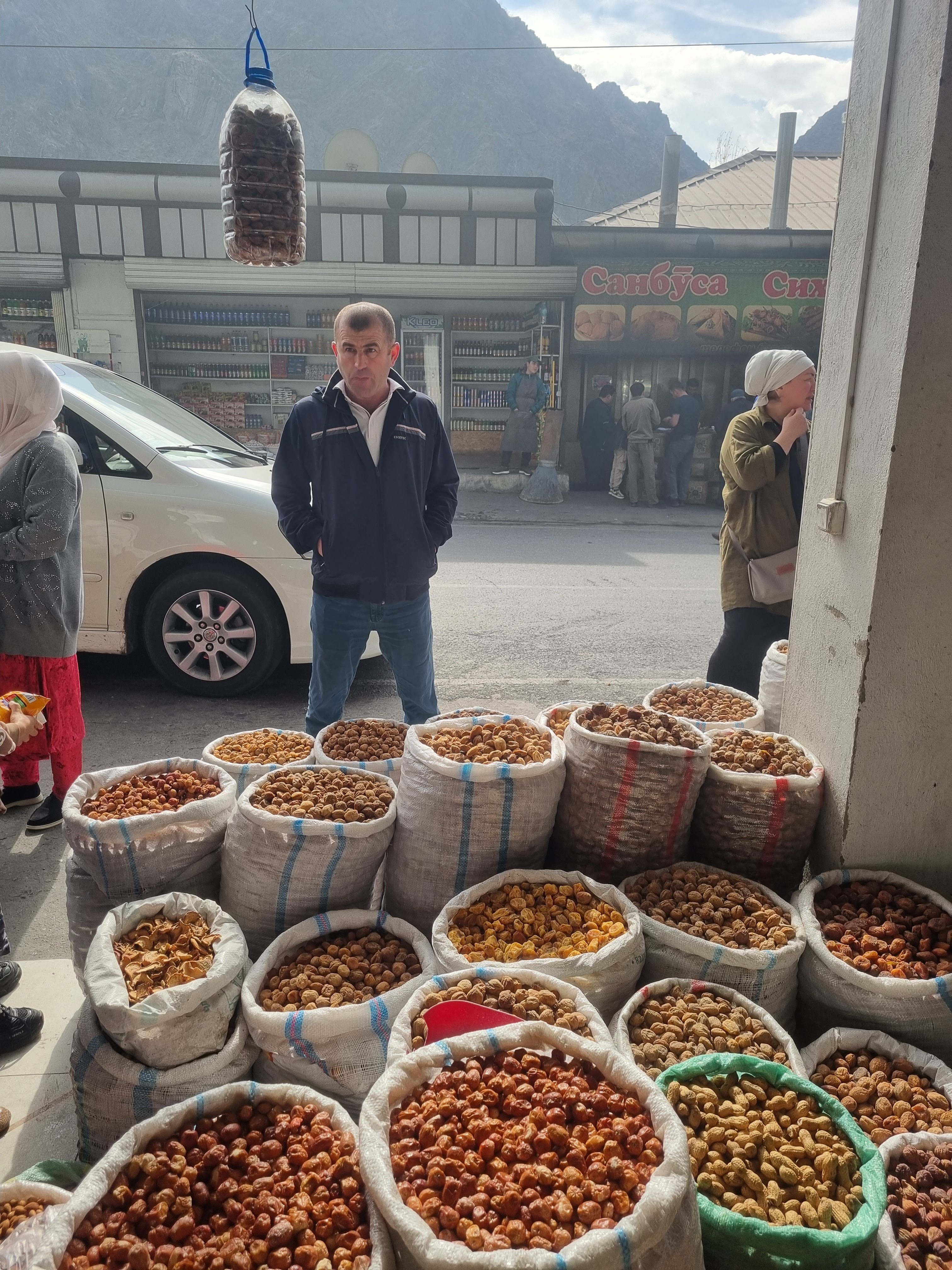
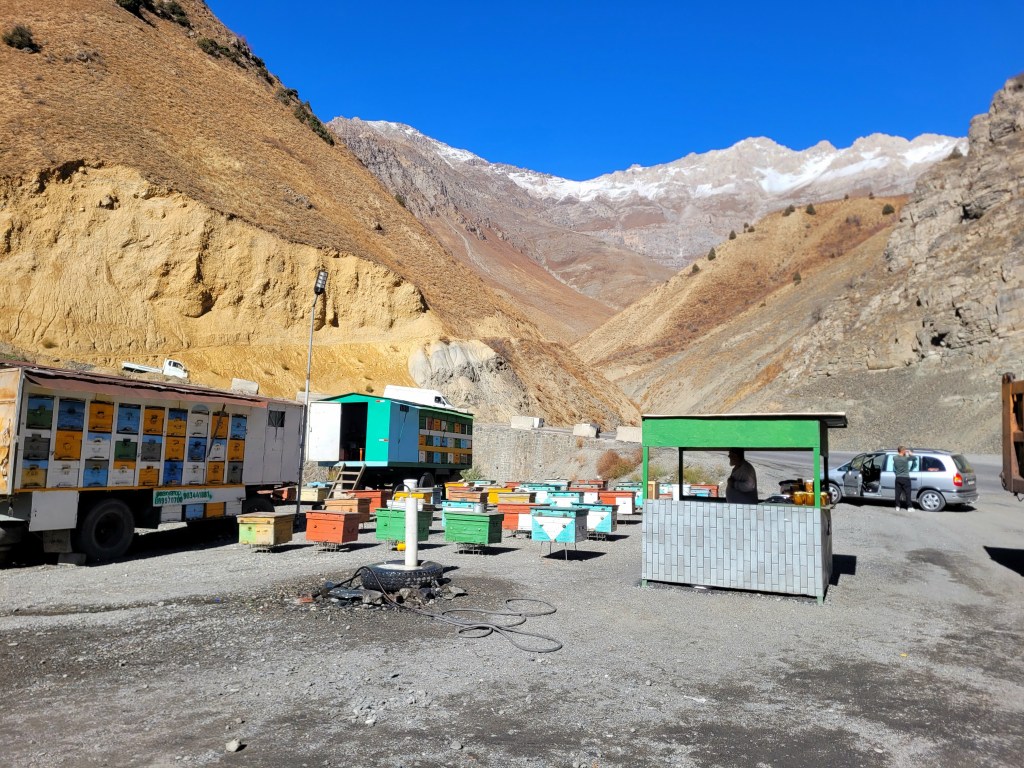
The drive to Panjakent isn’t too long distance-wise, but it goes through the mountains and takes time. We reached Panjakent after about 4 hours, with one quick stop towards the end of the mountain range, where there was a sudden rest stop in the middle of the road with no village around. There were several shops, and we bought nuts and local honey for hiking. They also made an amazing Samsa there, so we got two straight from the oven. I forgot to mention that we were delivering pigeons to Panjakent for some reason, and at one point, one of them got away from the box and started flying around the car. Otherwise, the drive was pretty uneventful, except for some (for this part of the world) usual overtaking maneuvers that scared the hell out of me.
Note
Samsa, also known as sambusa, is a traditional savory pastry filled with spiced meat and baked in a clay oven called a tandyr. Classic (beef) is usually 10 somoni, and a better one (lamb) goes for 15.
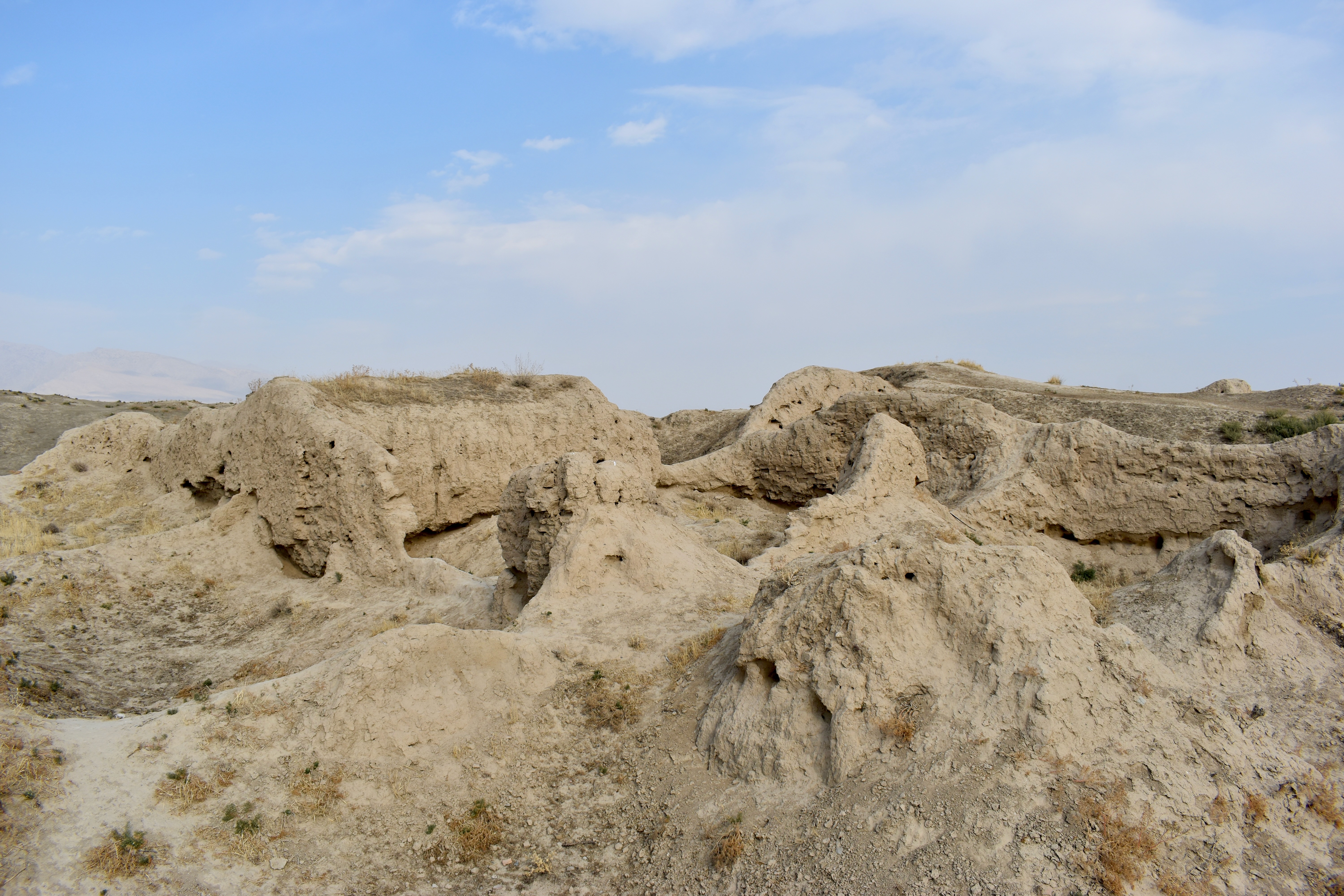
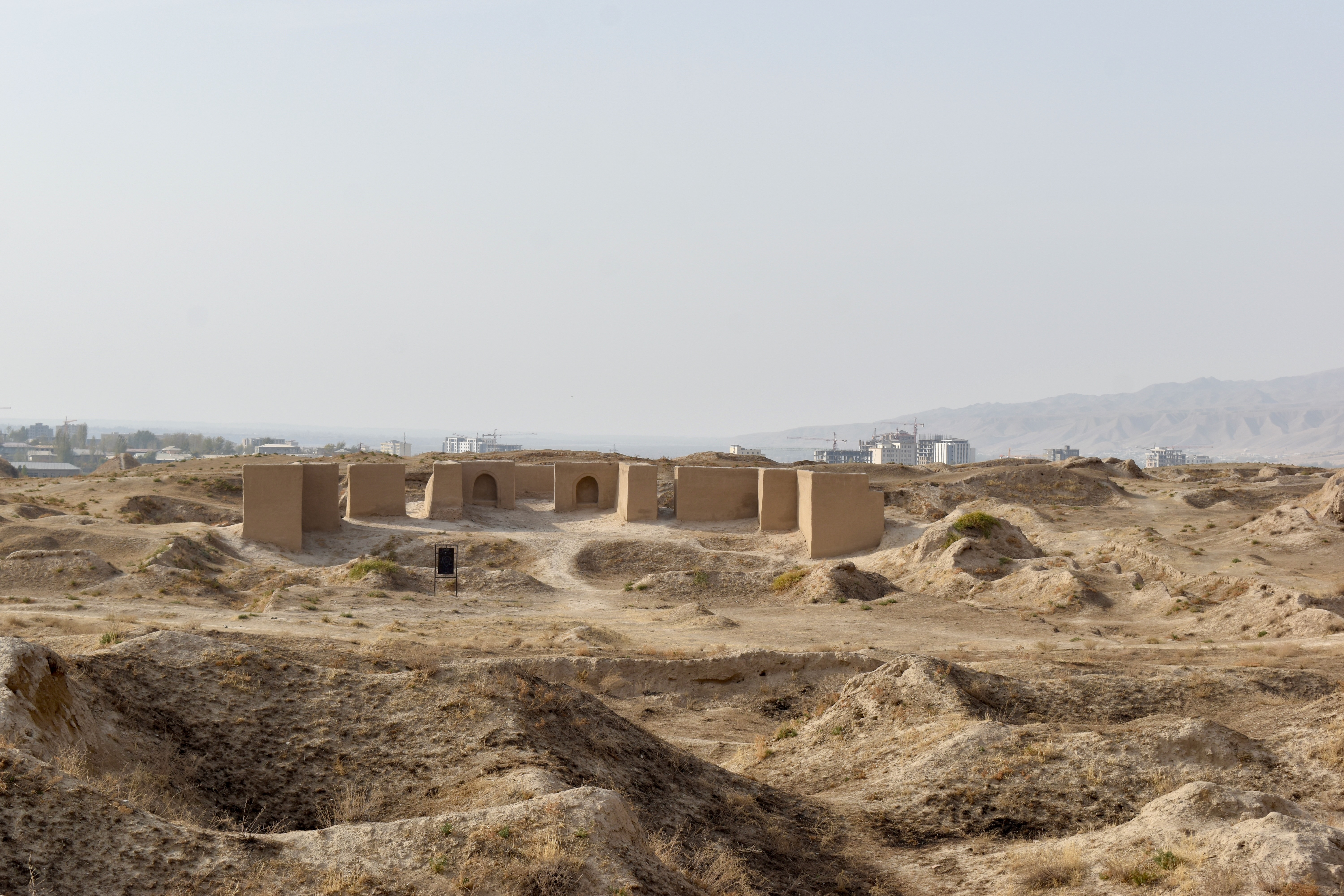
We got dropped off at our hotel, Zarafshon, where we paid 340 TJS ($37) for one night with breakfast. We left our stuff there and went to explore the town before the sun set. Just about 1.5 km walk from our hotel was the Ancient City of Panjakent. It looked like several hills, sometimes covered with old bricks and with a few rebuilt walls. The entry from the town is free, but once you reach the end, there is a museum where you should also pay for the entrance to the ruins. It cost 30 somoni/person. The city used to be part of the Silk Road and dates to the 5th – 8th century AD.
Note
Just outside of the town, towards the Uzbekistan border, lie the ruins of another ancient city called Sarazm. This should be the oldest city in Central Asia, dating back to 3500 BC. There shouldn’t be much (only a few excavated walls), but cool to see. However, we didn’t have a chance to get there.
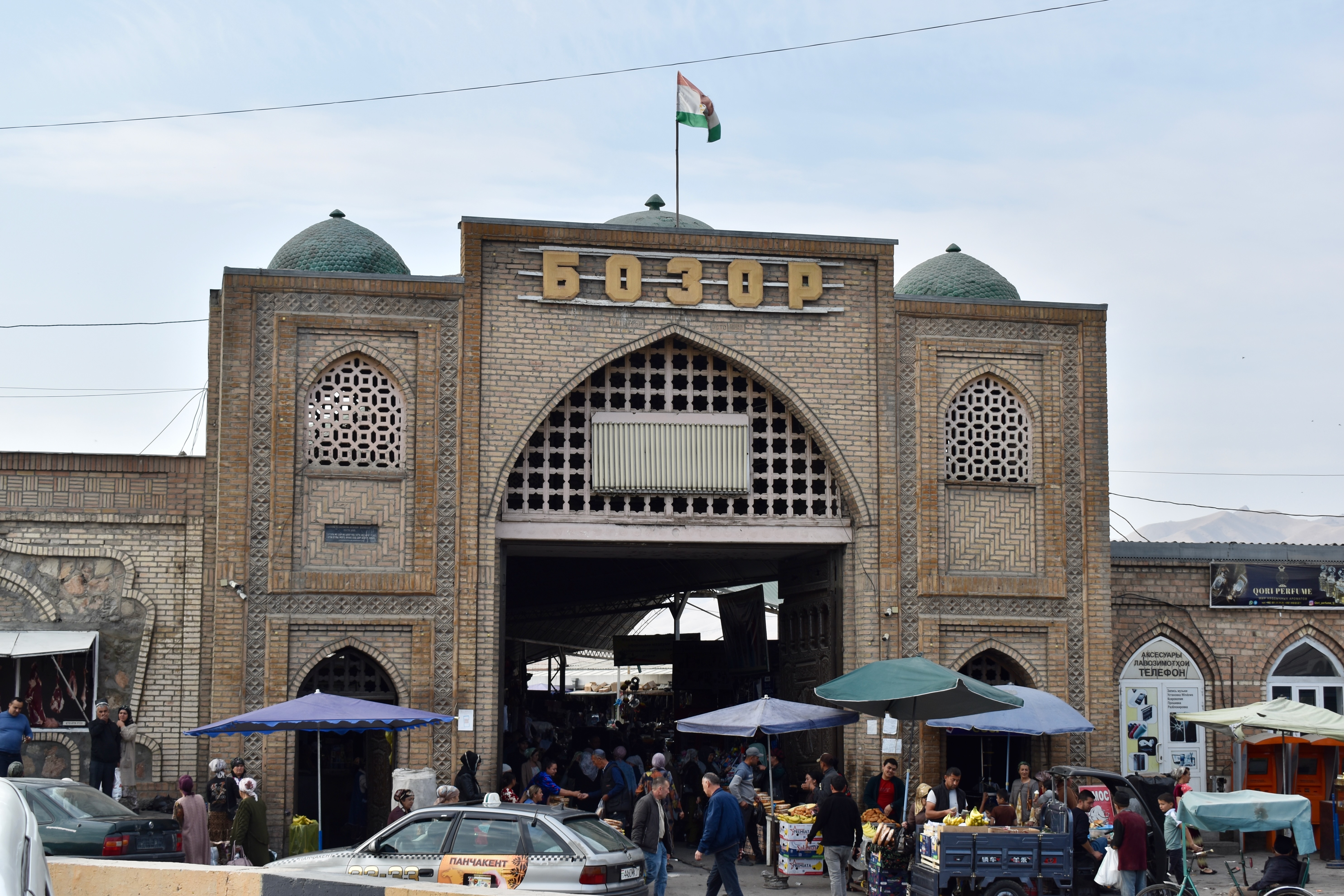
We then continued our walk back to the town, witnessed a fight between two drunk fellas, and went to check the Central Bazaar. On the way back to the hotel, we stopped for another 2 beef samsas. We then headed back to our room with the sunset to check our stuff for tomorrow’s hike. We saw that we needed more food for the planned 3 nights of camping and went to a shop later. We also wanted to get some Plov for dinner, but everything closed after sunset, so we settled for a whole chicken from a fast-food place (those were the only ones open in the town). I wanted to only get a half, but I’m glad Clare changed my mind. We also got beer for the room.
Day 3: Taxi to Artuch and the first night in the Fann Mountains
We didn’t rush in the morning, especially since Hotel Zarafhson had probably one of the hardest beds we ever slept on, and we felt like we hadn’t slept much! We were also told that the marshrutka wouldn’t be leaving until at least 9 am. We headed to the parking spot of the marshrutkas for Artuch right after breakfast (39.4978611N, 67.6140422E). There was no one around, but there was a car with a sign for Artuch. We waited for about half an hour when a fella showed up in a different car and told us that he also goes to Artuch. He even got someone on the phone who spoke English, and he told us that he wouldn’t be leaving until 1:30 pm, but that he is the earliest one to go.
Note
Marshrutka is kind of like a privately operated bus. In some parts, they need a license, but usually those are just local fellas with minivans who drive the same route daily. There is no real schedule, but they are way cheaper than a taxi.
We were a bit stupid, trusted him, and left our bags in his van (but didn’t pay anything yet). Since we had all that time, we walked a bit more around the town and went to visit the Panjakent Museum (30 somoni to enter). We were also thinking about going to Sarazm, but it was closed. Instead, we headed back to the marshrutka to check if anything had changed. Of course, there was the actual marshrutka by now, but we couldn’t go because we had our rucksacks locked in the other car. We couldn’t do anything else, just wait. Eventually, our fella showed up all angry because he lost a fare, but it was 11:45 and we needed to get to Artuch as soon as possible. We gave him 20 somoni because we felt sorry, but he clearly lied to us…
The other driver was only waiting for us, so we left right away. Luckily, we stopped before the end of the town and we managed to buy 3 pieces of local Tajik bread called “lepyoshka“. Along the way, he picked up a few more people, and we made it to Artuch in an hour and a half. The ride cost 50 somoni each.
We got off, got our bags ready (we had to fill our camel bags since we didn’t want them to spill in the car), and set off for the valley. The first 7 km to the Artuch Base Camp was easy and mostly flat, except for two steeper sections. The whole walk was on a dirt road, since you can also get a 4×4 to the camp. Along the way, we talked to a few local kids (some on donkeys).
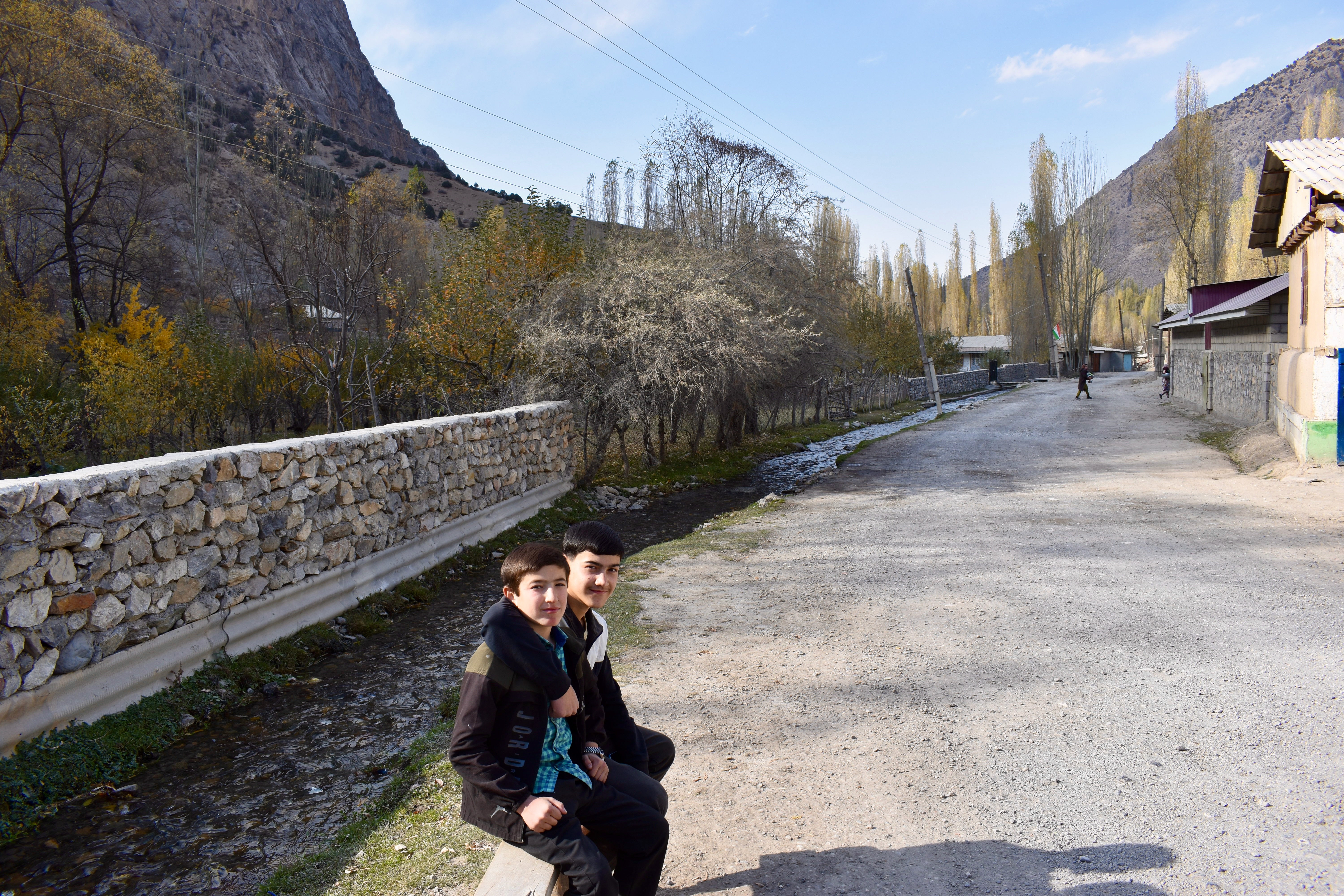
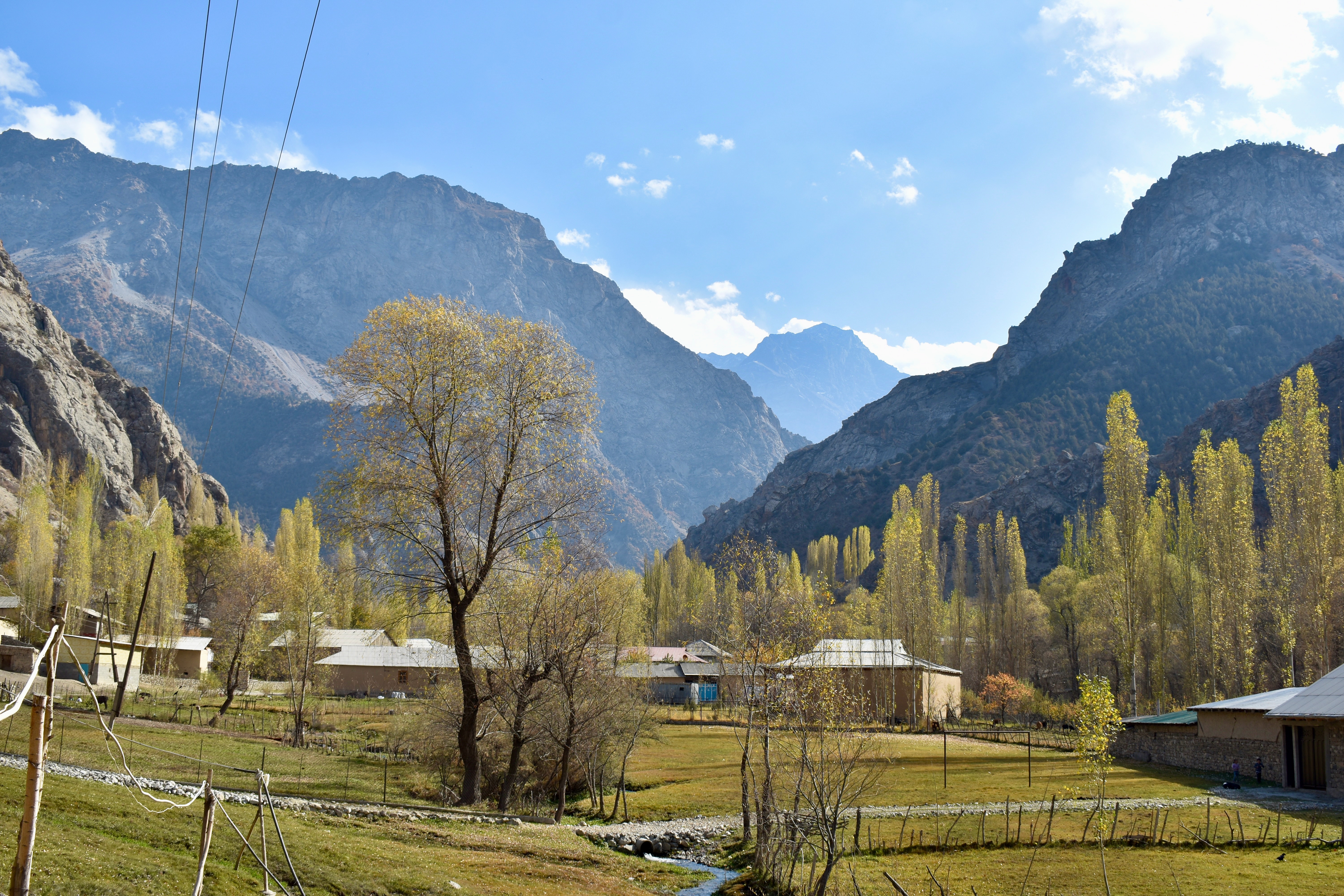
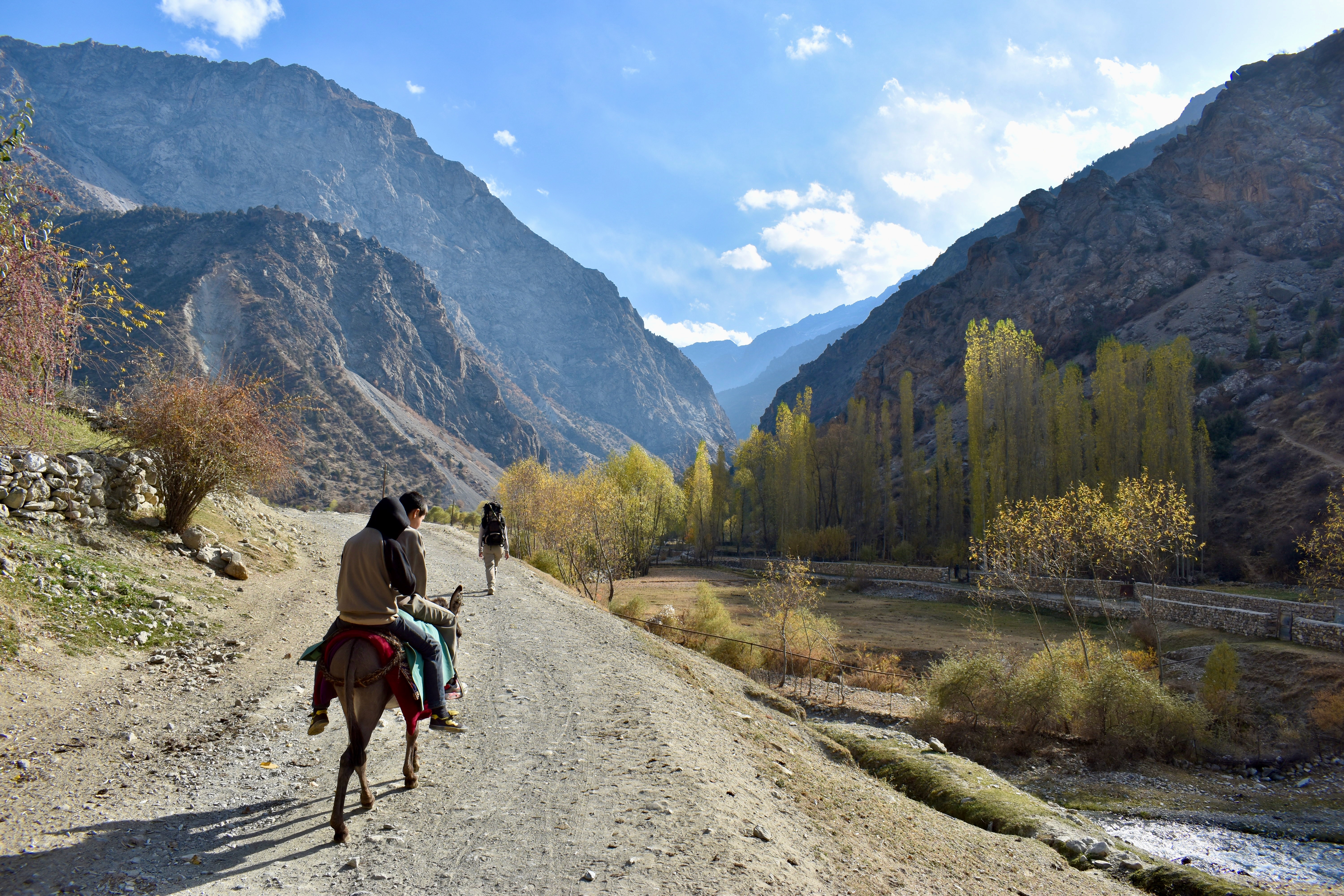
We reached the Artuch Base Camp in just under 1:45 hours. We planned to stay there the first night, but we contacted them a week earlier and found that they were already closed for the season. That made us a bit worried if hiking in the region is even possible at this time of the year, but so far everything has been good and we have been enjoying the autumn colours. We had to cross through the camp anyway because we chose to get to the Kulikalon Valley the harder way via the Chuqurak Lake, and the hiking trail passed through the camp. There, we met an older gentleman who confirmed for us that the camp is closed and also told us that the conditions were still good for what we planned, which made us really happy.
We were a bit tired because our bags were pretty heavy – estimating about 15 kg for me and 11 kg for Clare without water – so we were contemplating just staying near the campground, but in the end, we pushed it the extra hour up the hill to the Chuqurak Lake. It was only about 1.5 km away, but almost 350 meters in elevation. Clare also couldn’t help herself and went to pet a dog that was chilling under a tree in the camp. Little did we know that the dog wouldn’t leave us until the end of our hike.
Even though we only hiked for about 3 hours, due to the marshrutka leaving so late from the town, we arrived only about an hour before sunset. We were a bit worried that there wouldn’t be any running water, and we read that the lake dries up towards the end of the season, but it was still there – slightly brown, but still there.
We quickly got to setting up the tent. Clare went to look for some wood for the fire, and I went to Sawyer some of the murky water. I think this was the first time we used the Sawyer filter on water that wasn’t clear, and it worked miracles! The water that came out was crystal clear and tasted great. Surprisingly, finding wood was an issue, but we managed to find enough to have a small fire for a few hours. We cooked dinner by the fire pit – Chinese chicken soup and beef sausages – using our gas stove. We also had some bread with honey as a dessert. Taj, the name we gave the dog from the Artuch camp, also enjoyed some bread and half of an oat bar.

The night temperature went below 0, so it was a great opportunity to test our new Hannah Polar sleeping bags, which we bought this summer. They worked a treat – we were basically naked inside them.
Day 4: Welcome to Kulikalom Valley
The night was nice, warm, and cozy in the new sleeping bags, and with only a bit of strong wind towards the morning. We were up with the first light at 7 am and started getting ready to leave. Clare packed the whole tent while I painstakingly filtered some water (the filter was clogged with dirt by this time).

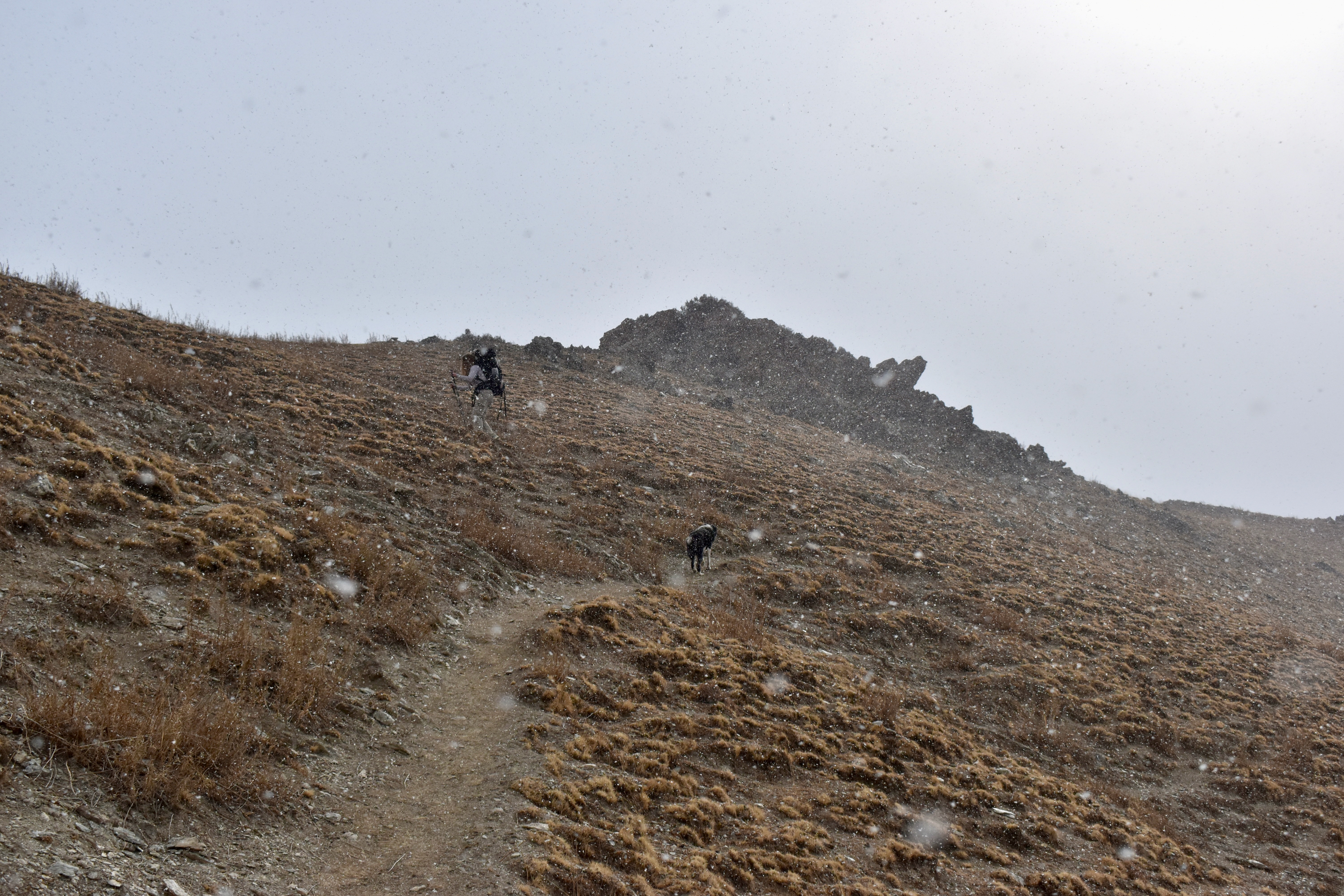
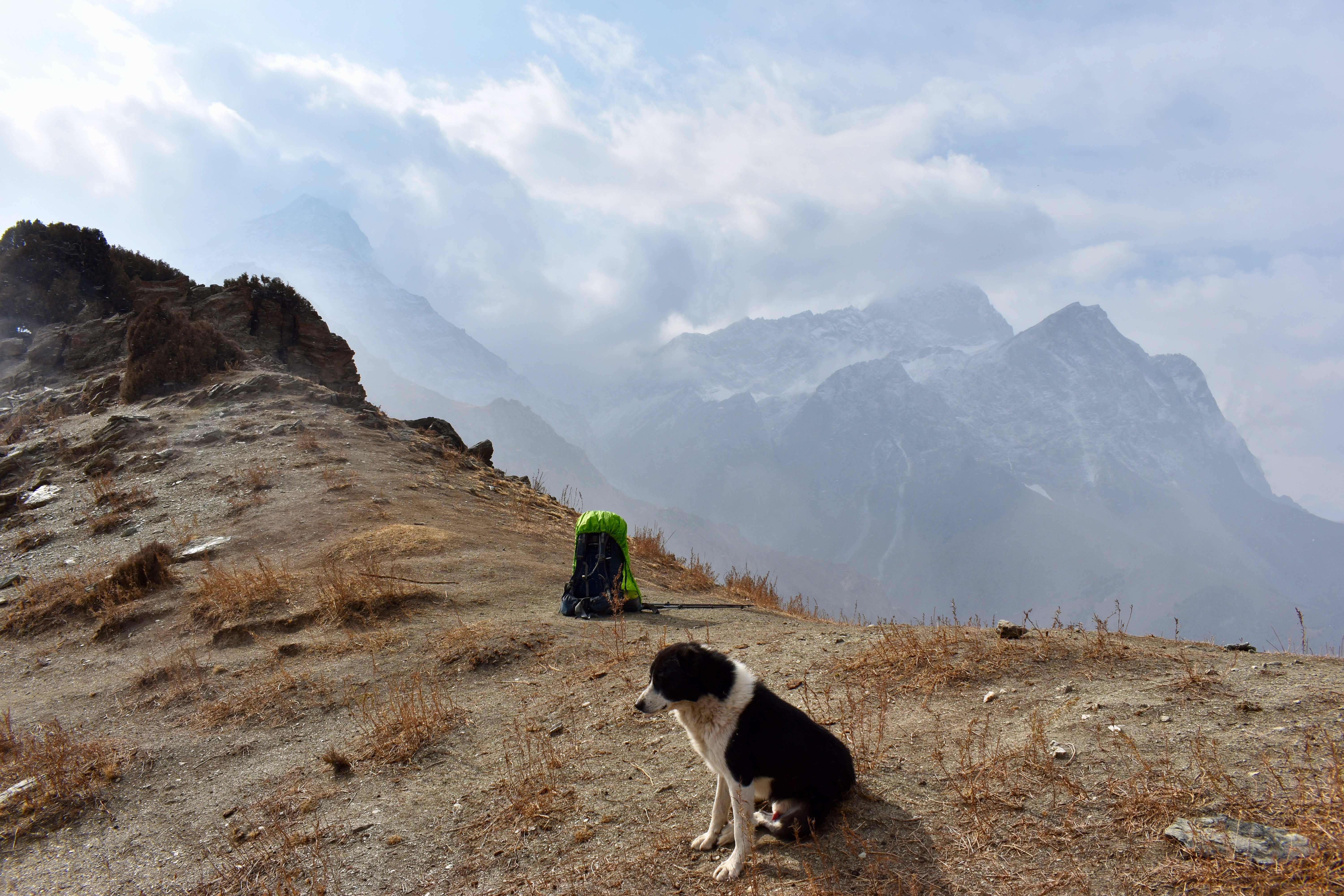
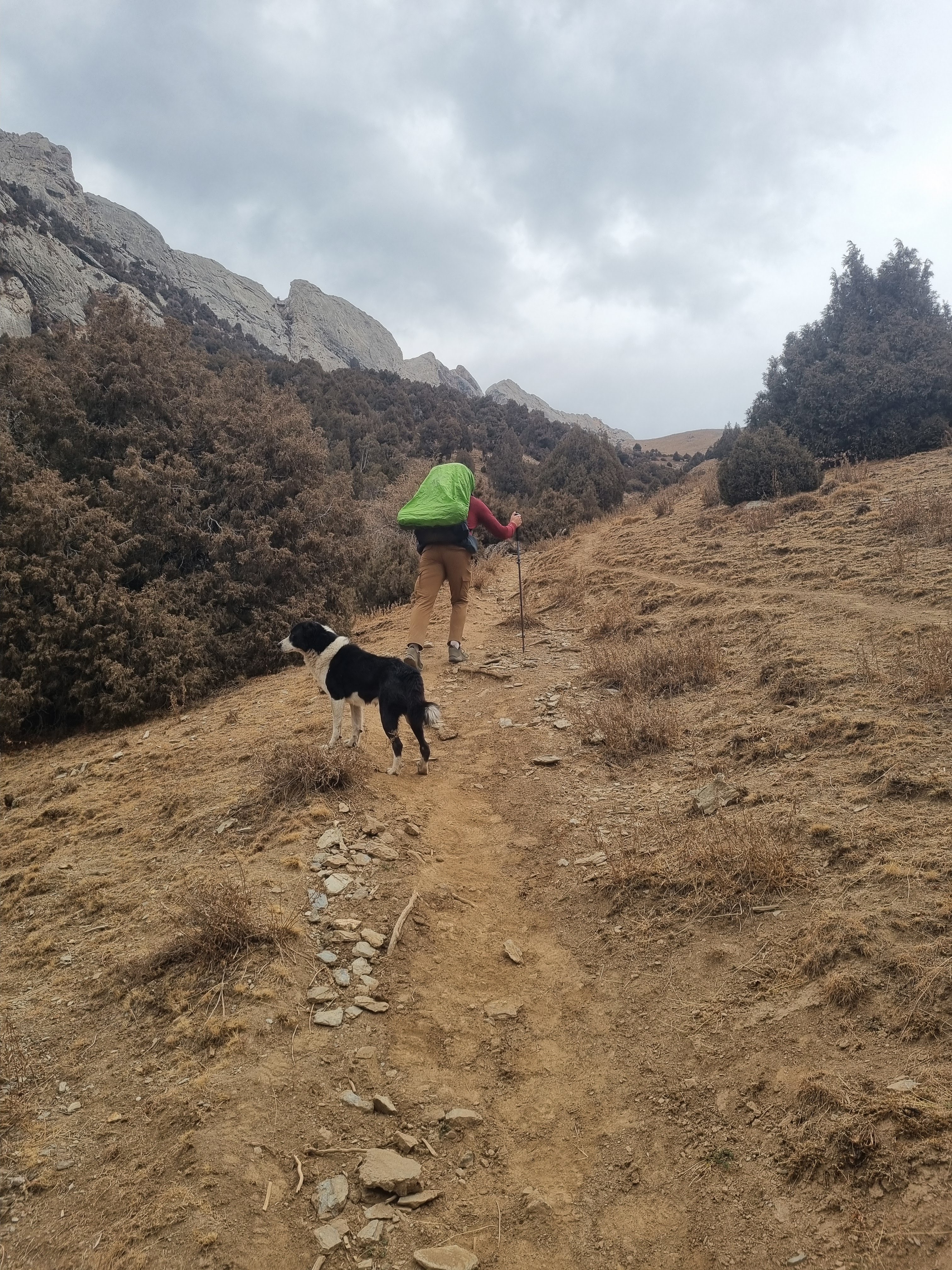
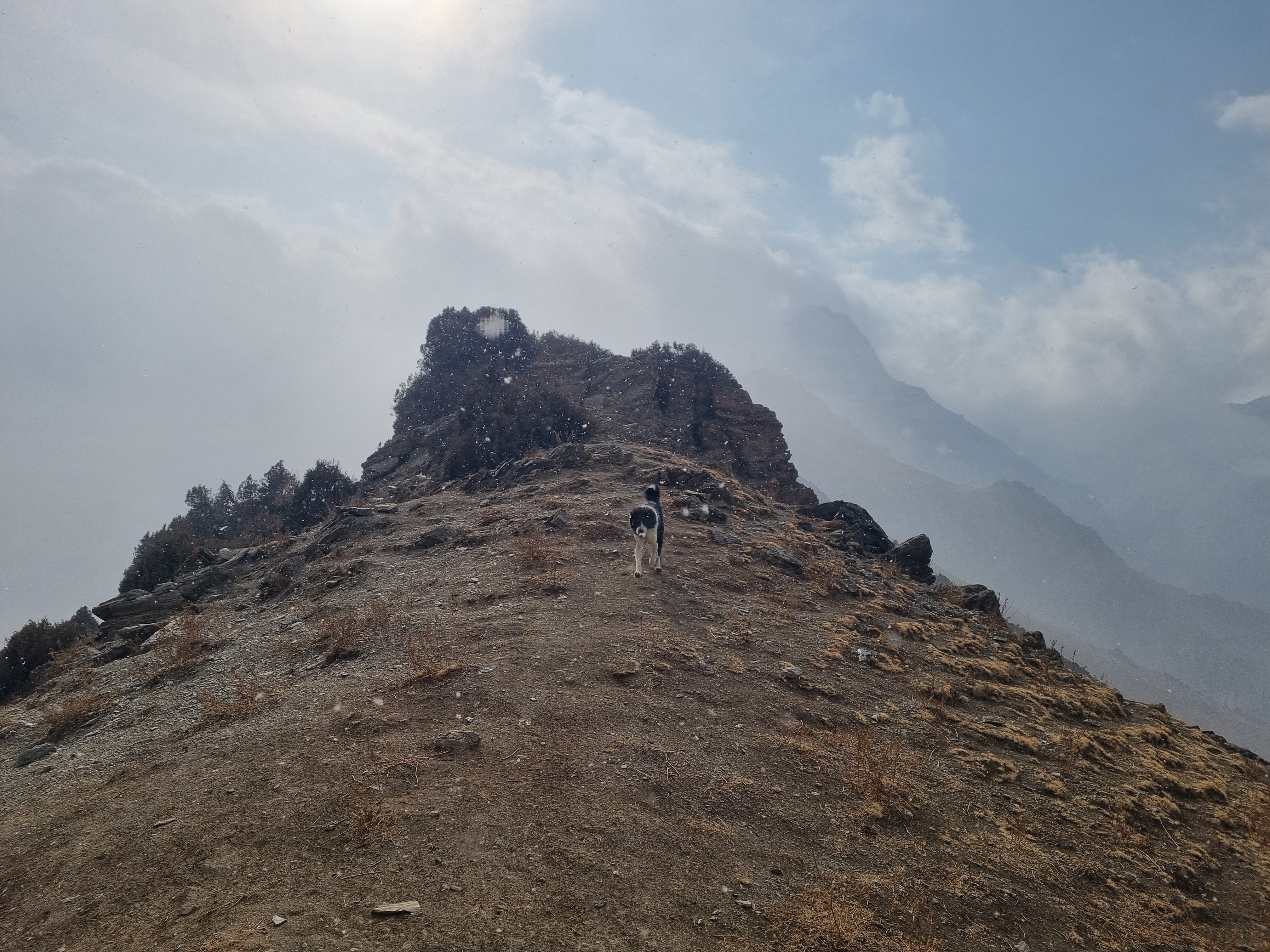
After breakfast and coffee, we started straight away with the hardest bit of the day’s journey, the crossing of the Chuqurak Pass at 3175 meters. The path was easy enough to follow (except at the end). We were able to climb the 750 meters of elevation in one hour and 50 minutes. By the end of the climb, the wind picked up, and it started snowing. However, it was gone in no time, and the wind actually cleared the valley, so we got a better view of the lakes below us. We then descended about 300 meters to the Kuli Kalom Lake, and because the sun came out, we decided to have a short stop and get a coffee.
Note
I'm pretty sure "kuli" means lake, so my sentences sound pretty stupid.
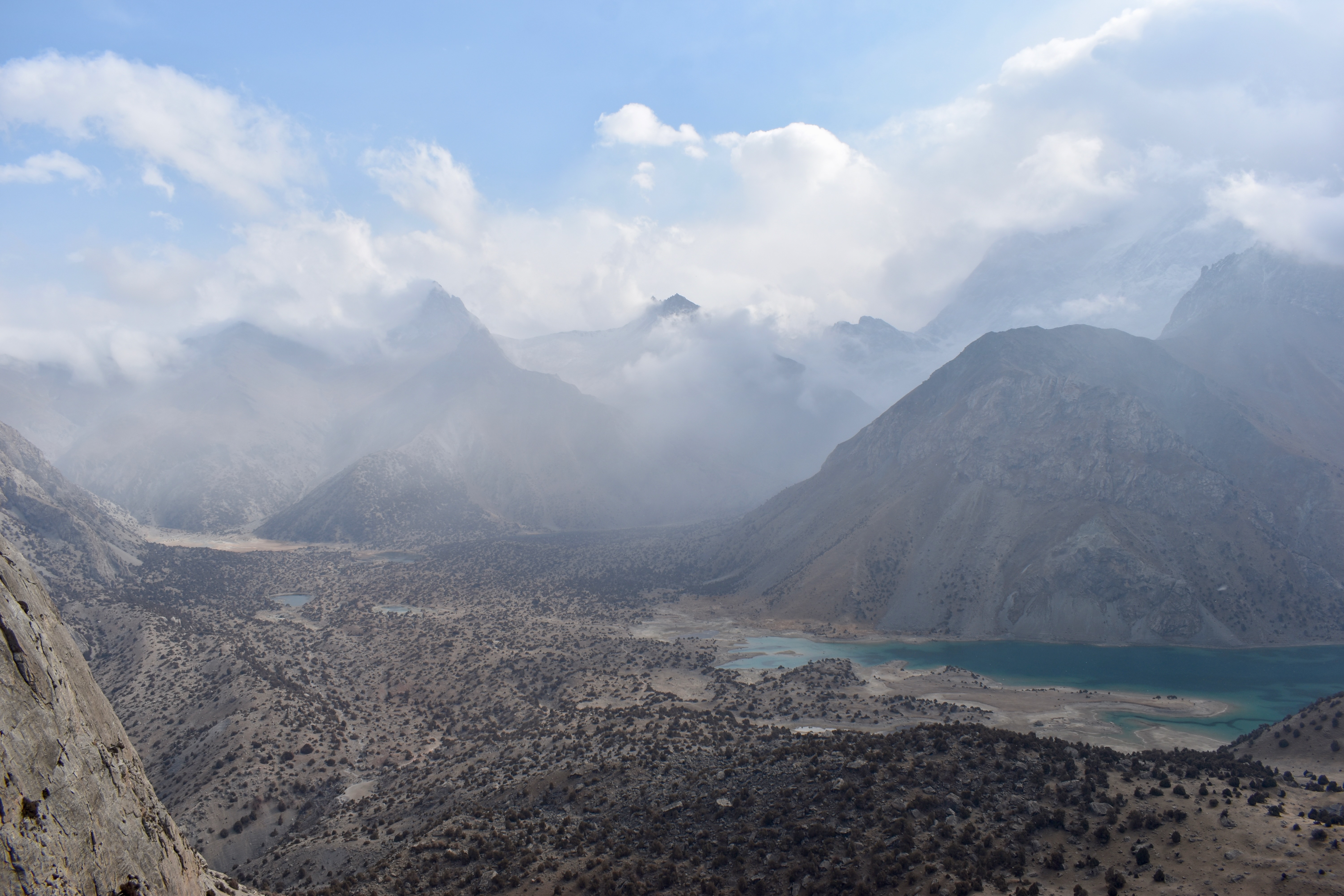

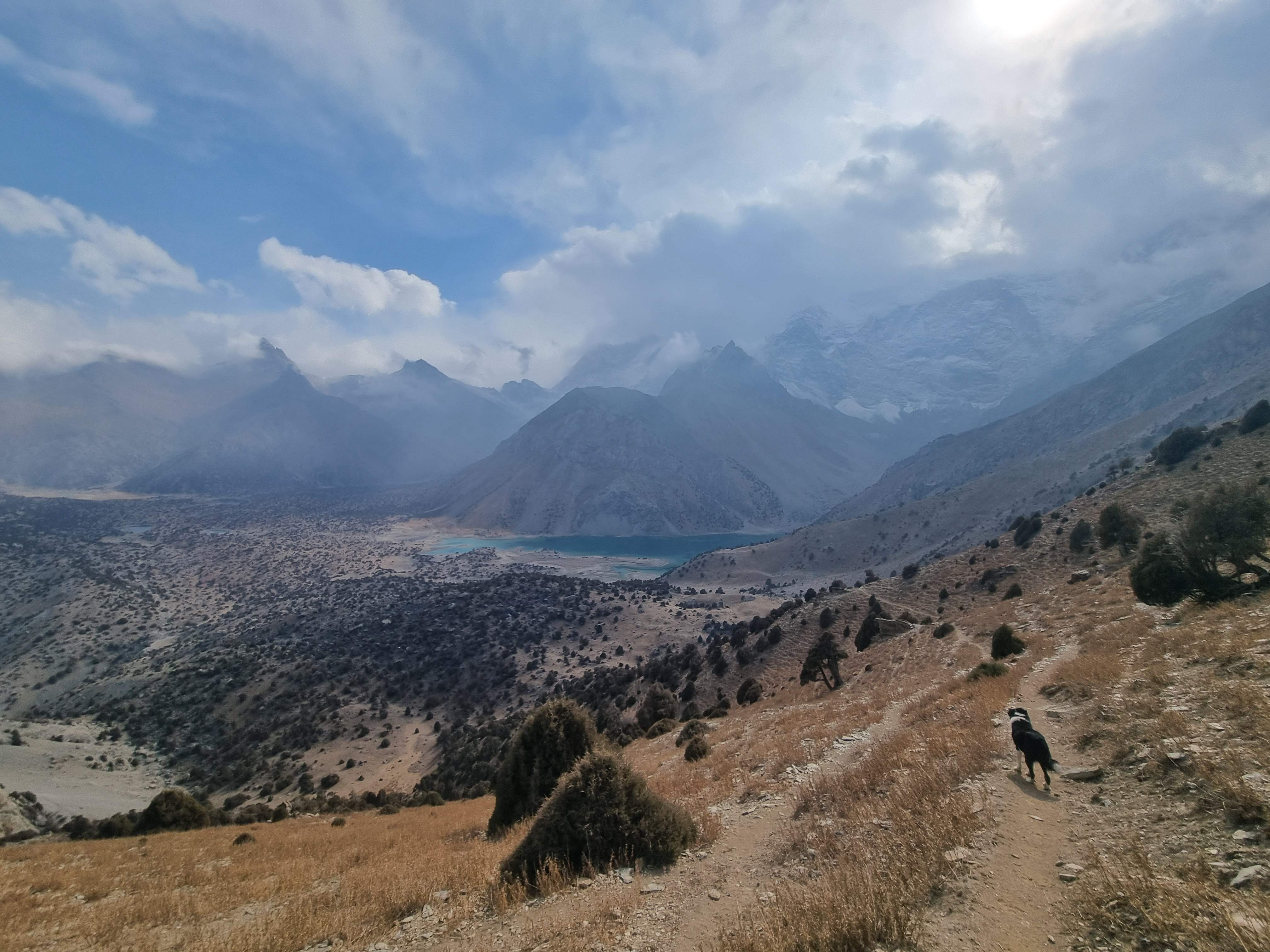
Next, we continued across the valley to the Kuli Siyoh Lake. There was a hut along the way, so we stopped to check if it was open in case we needed a better shelter from the rain. But unfortunately, the hut was closed. Once we got to the lake, we turned South and headed to Chimtarga Lake. That was the last bit of climbing for the day. The whole hike was 10.7 km with just a few meters shy of 1000 ascended meters.
The area around the lake was very rocky, but we found a nice spot under the trees and set up a camp there. The water here was way clearer, but we never carry the cleaning syringe with us, so filtering water was still a pain. What was, however, worse than yesterday was finding any firewood. It took a long time, and in the end, we had to be happy for even a smaller fire than yesterday, but it gave us something to do, and it wouldn’t be camping without at least a wee fire. We had a similar dinner to the other night, but this time we gave Taj even some sausage for sticking with us for the whole day.
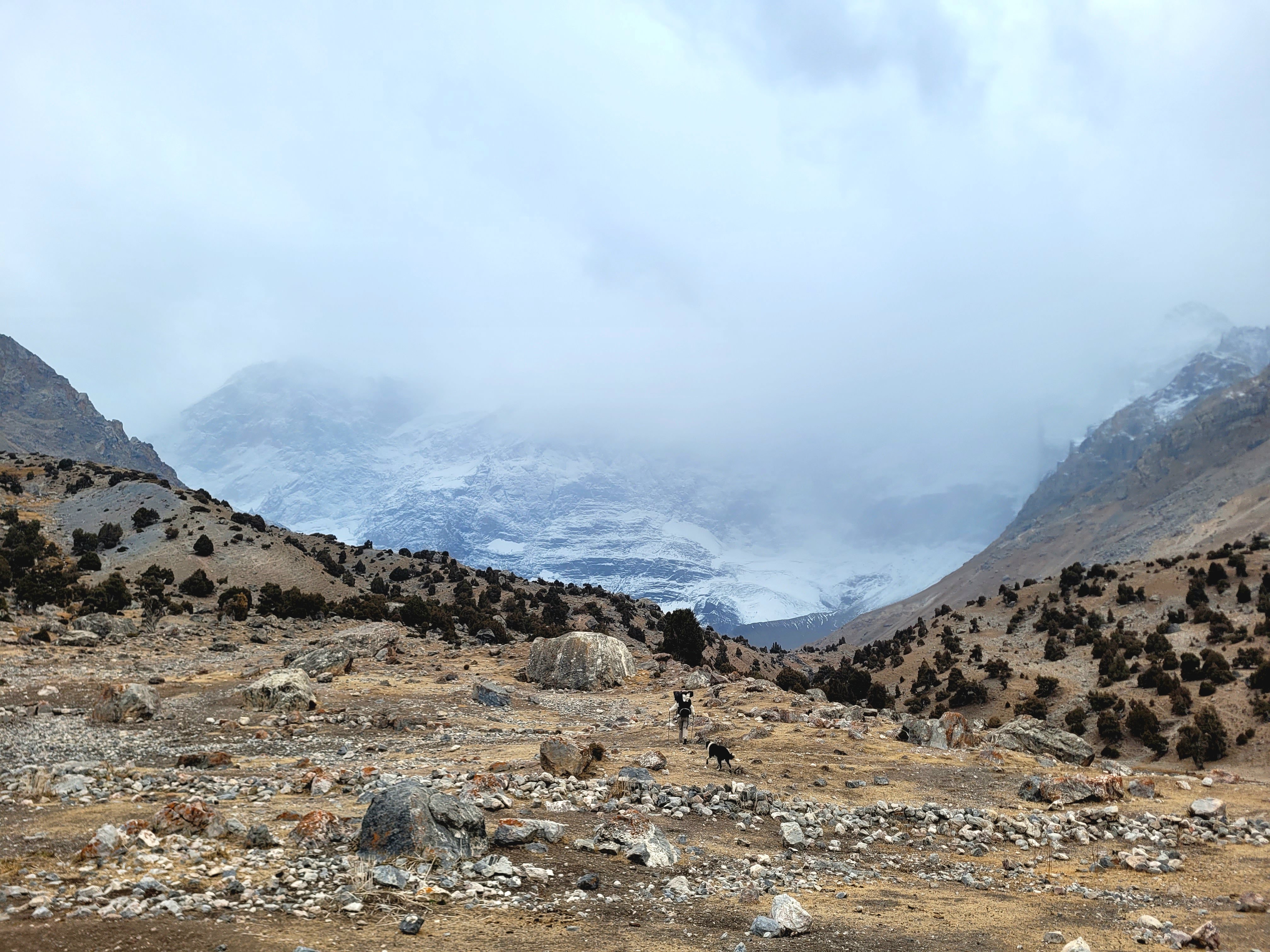
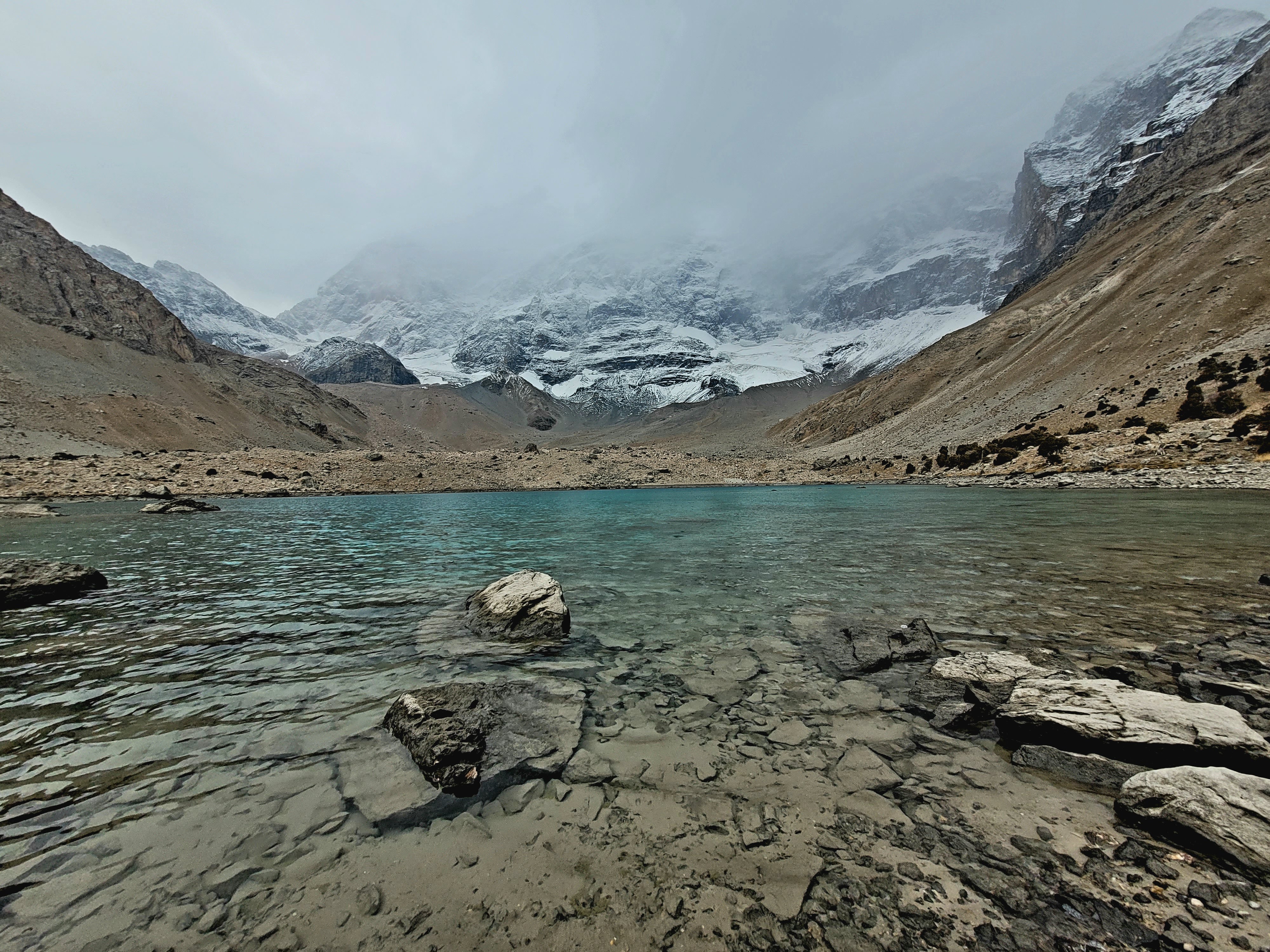

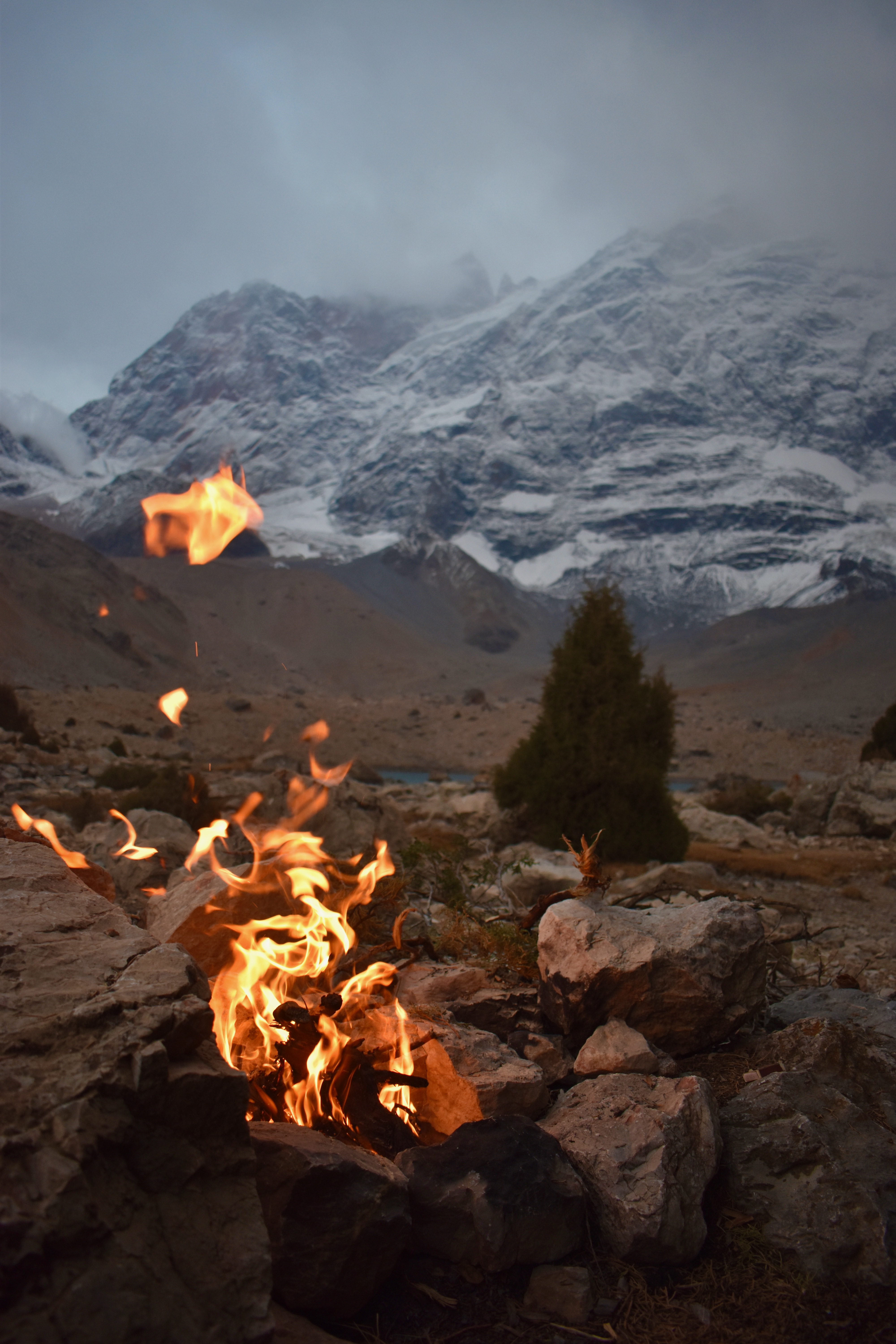
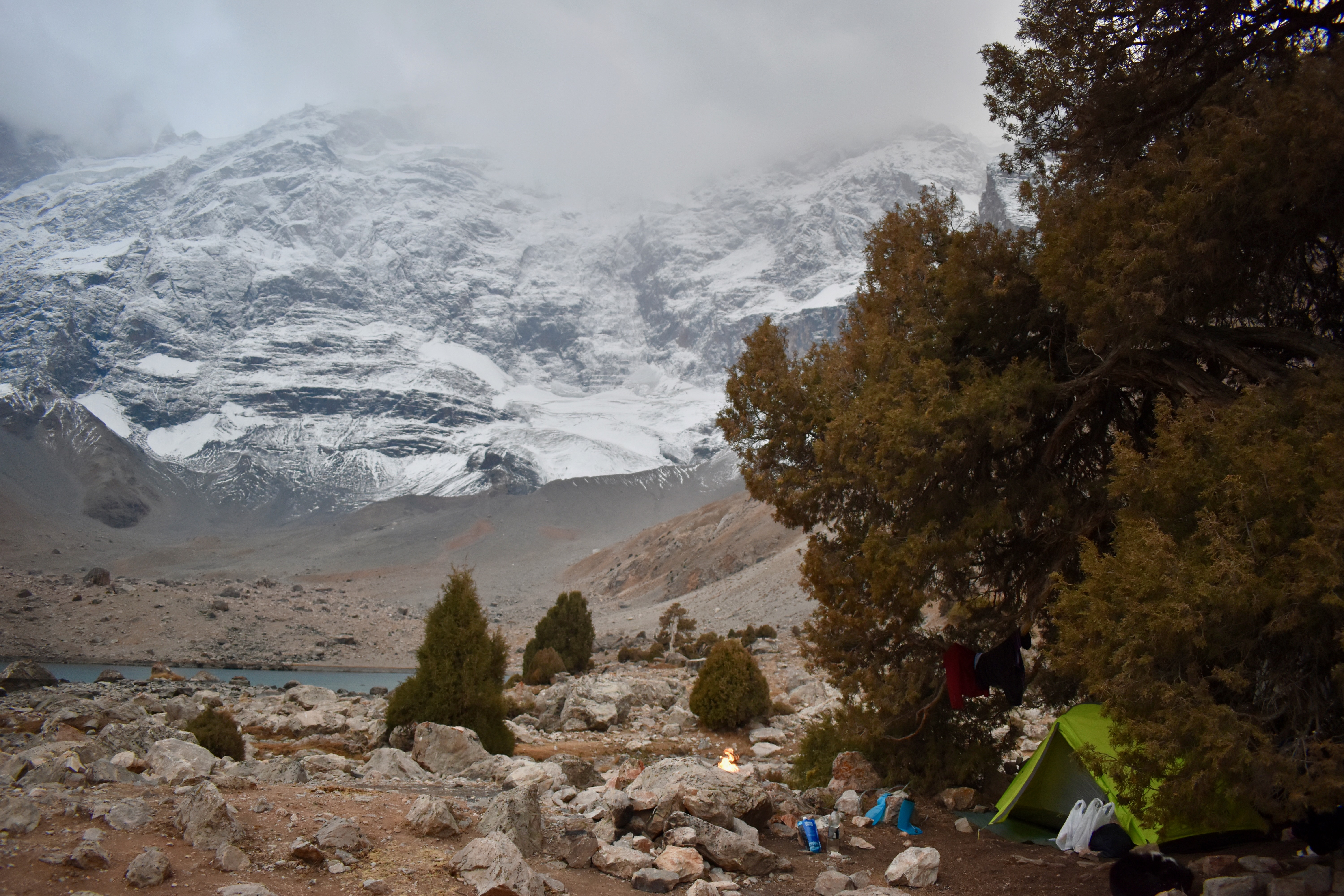
Before we went to sleep, we tested our new toy – the Garmin inReach Mini 2. And it worked! We even got a response back. We were camping at 3000 meters, so the night was definitely colder, but still very comfortable.
Day 5: An early Christmas!
I could hear at the beginning of the night some things falling on our tent, but it was on and off, so I was sure it wasn’t raining and probably just pine needles from the tree that we were hiding under. By 3 am, I woke up and needed to go pee. The noise was still there, and I didn’t think it was any louder or more frequent than before, but I could see flashes of lightning somewhere southwest of us, far enough not to hear the thunder. However, when I came out of the tent, I couldn’t help but notice that I was standing in a snow that was all around us. Even Taj had to curl up closer to the tent, and I wished I could have taken him inside.
Once we opened the tent at 7 am, we were welcomed by a winter wonderland. The amount of snow probably doubled since I saw it at 3 am, and it was about ankle deep. It was a bit colder during the night and in the morning, but because the clouds had all gone away, we had a sunny day ahead of us.
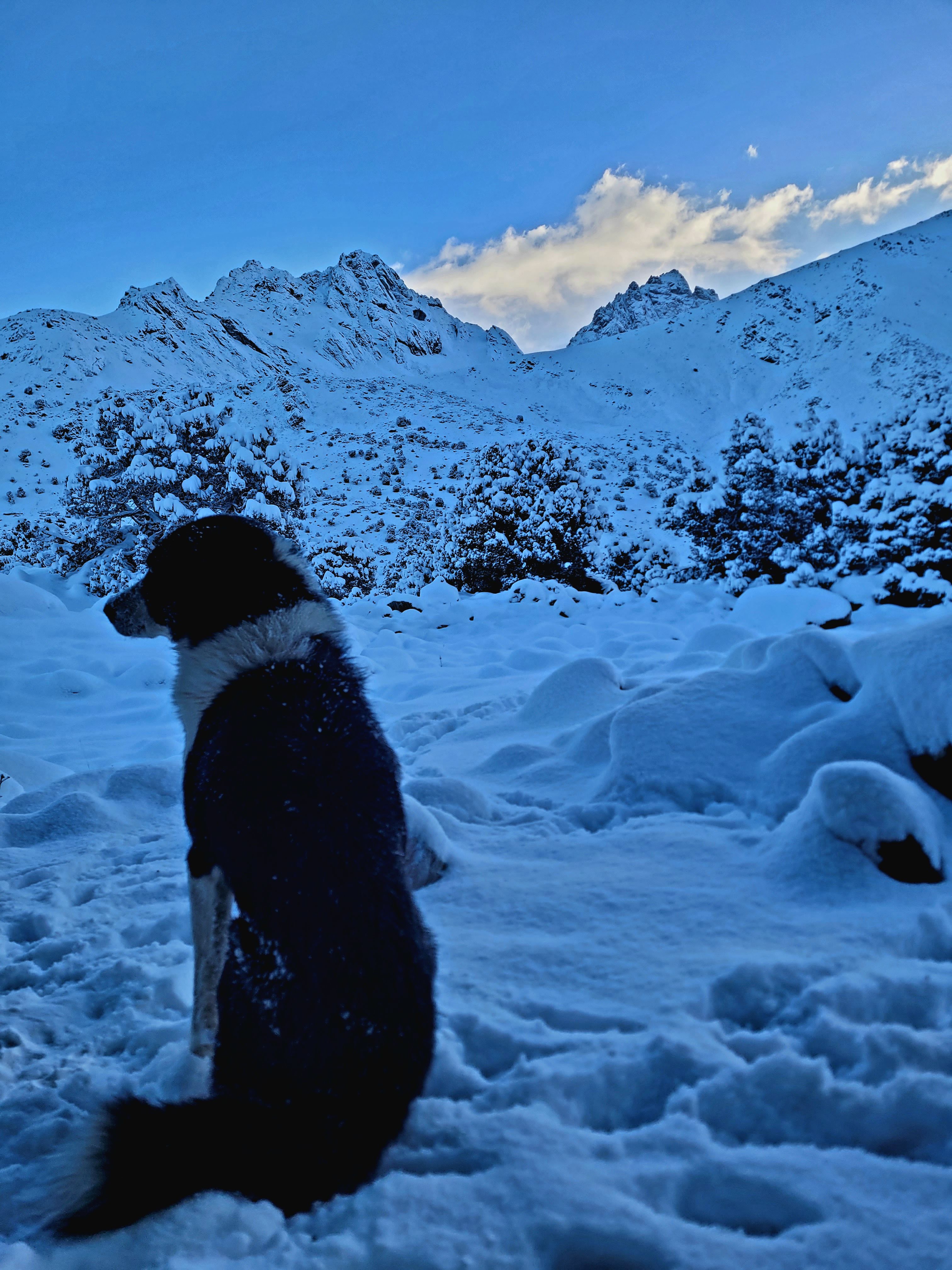

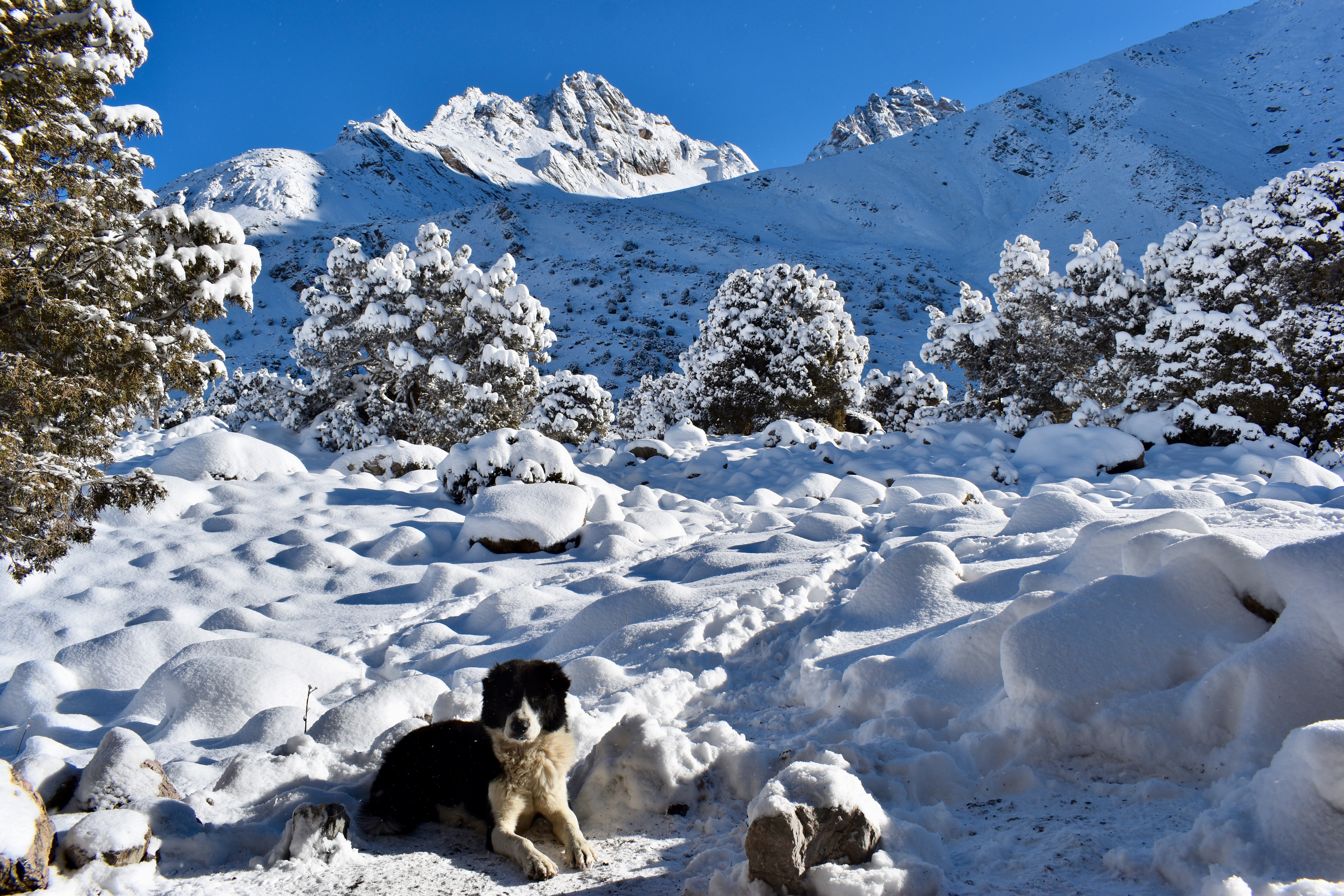
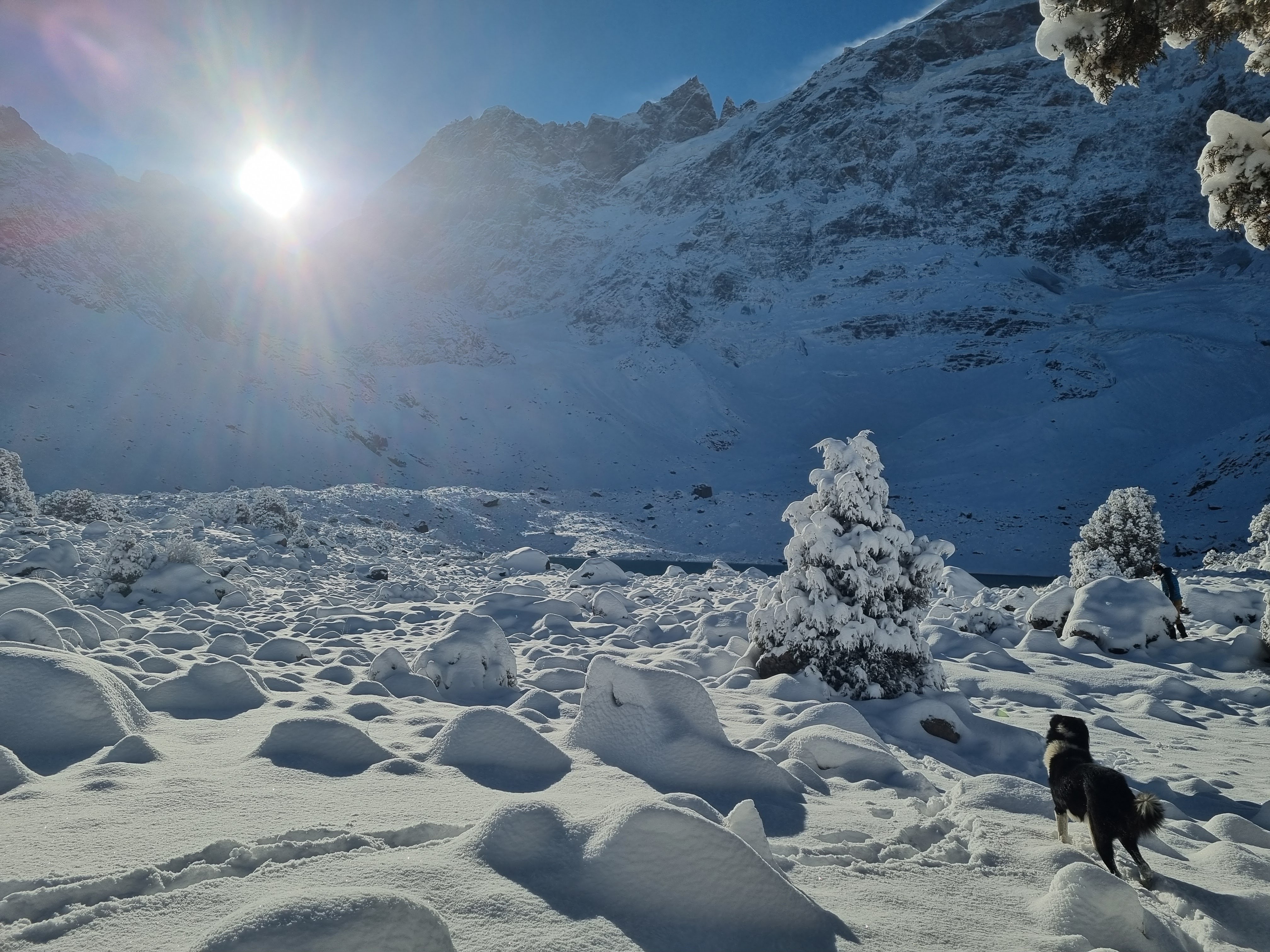
As beautiful as it was, unfortunately, now came the difficult moment to decide what to do next. We couldn’t see the path ahead of us last night and were more or less guessing where it was supposed to be. The path yesterday over the Chuqurak Pass was pretty steep both up and down, and we lost it a few times, even when there was no snow. Lastly, we were at 3000 meters and had to climb up to 3800 meters, and had no idea what to expect up there in terms of snow coverage and ice. Especially on the way down. We made the tough decision to turn around and head back to Artuch. In hindsight, we would possibly choose differently, but I also know this was the right and safe decision.
We had a quick breakfast and a cup of coffee, and packed the frozen tent away. We hadn’t realized up to that point how nice the camping spot was. It provided both sidewind and snow shelter. I started to trudge the way back to the lakes below us by trying to follow the path we took yesterday, but I had no clue where it was. The only thing we knew was that there was a river on our right side with a fall towards it that we didn’t want to go anywhere near. Taj helped with the path even though he went on a wee tangent from time to time.
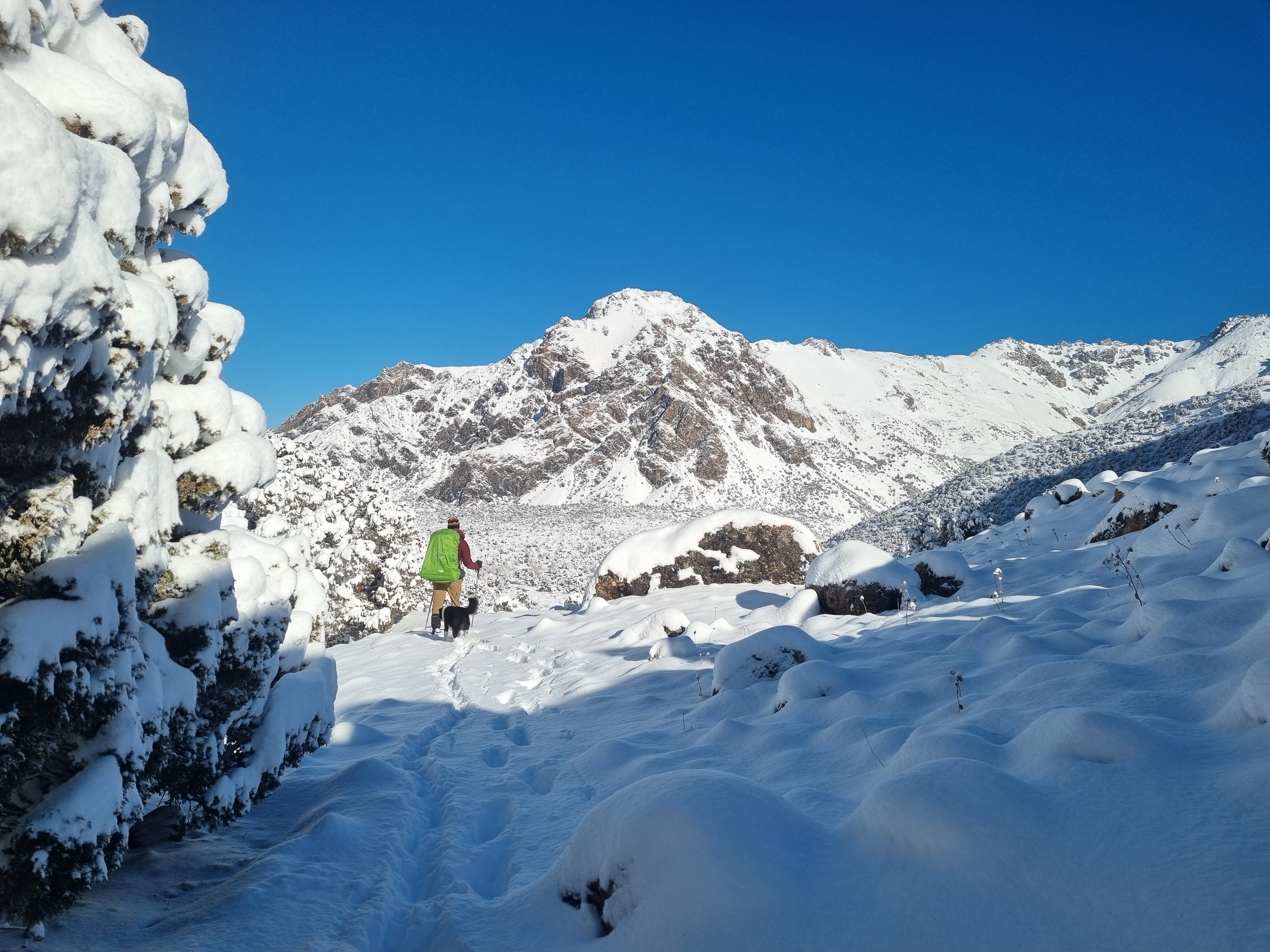
It took us about an hour and ten minutes to reach the hut at Lake Kuli Siyoh. The sun was behind our backs, and we had to make a stop to take some clothes off. It took another hour to cross the valley. We didn’t go back through the pass, but instead we took the more direct route by the Artuch river. We haven’t seen any other people, except the guy at the Base Camp, but once we reached the start of the river and the start of the descent, we found fresh tracks in the snow. Based on the trail, whoever came up made it to this point at the start of the valley and then turned around and went back down. We didn’t ponder much why, and instead, we were happy for a clearly visible trail in the snow for the steep part down.
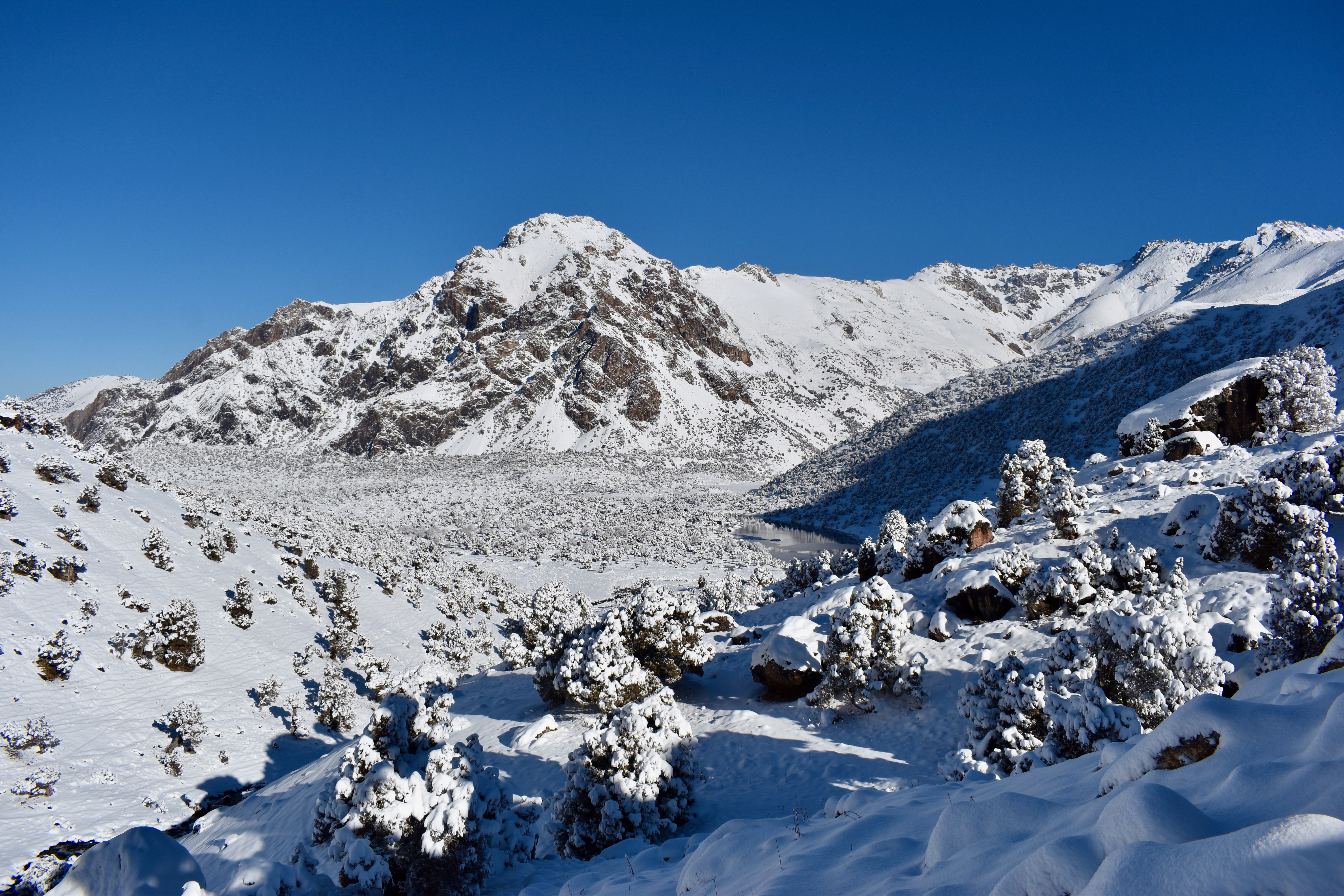
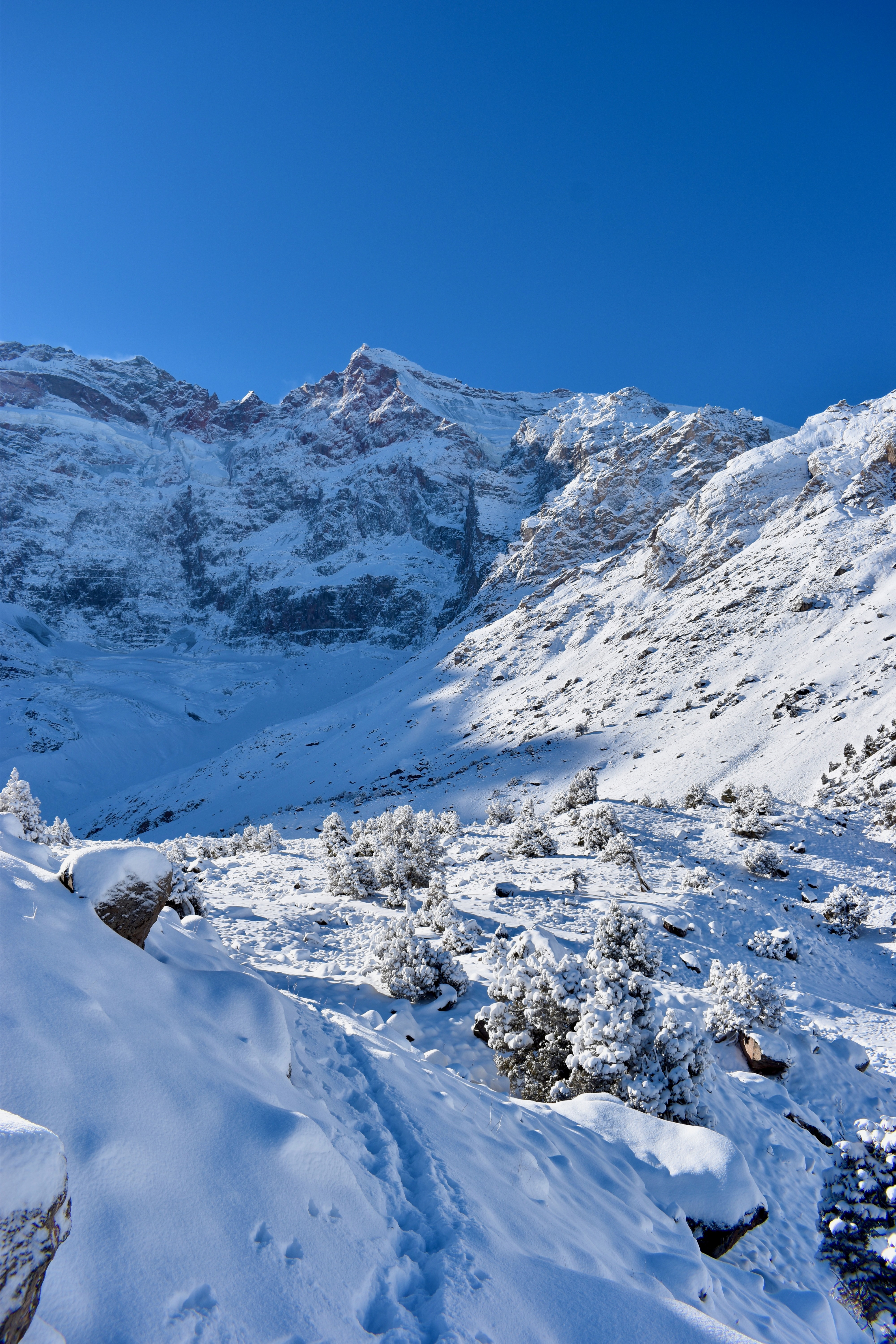

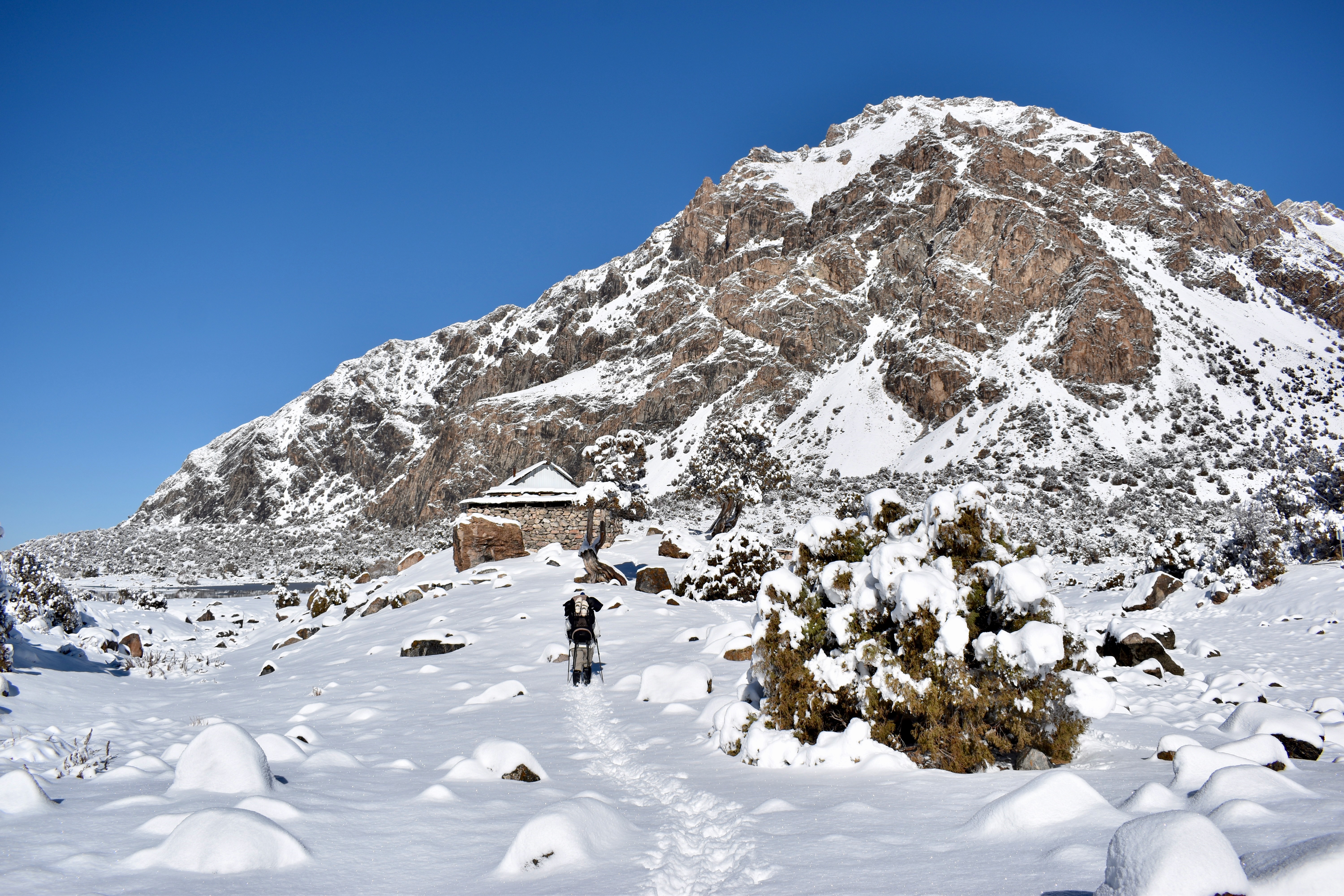
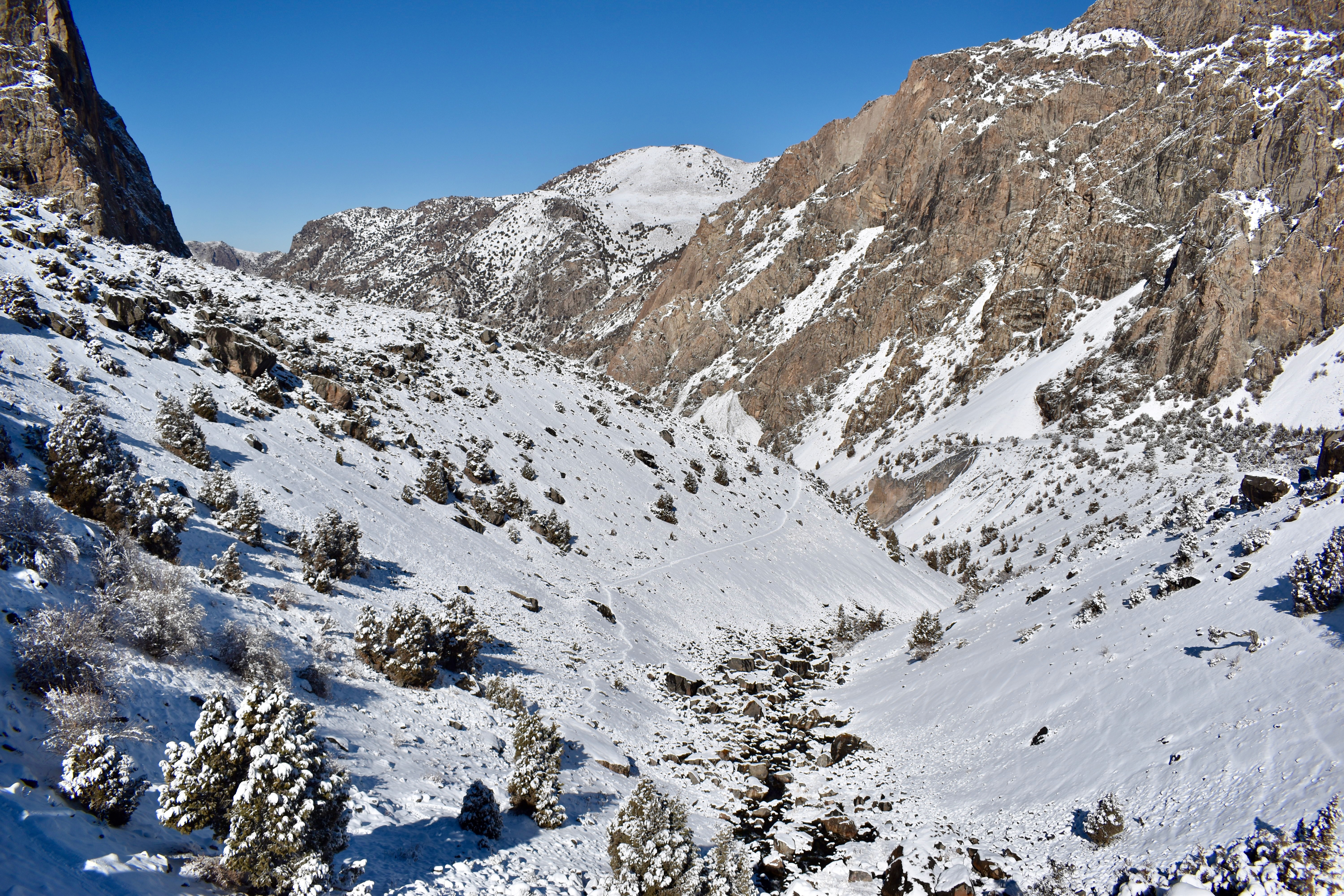
It took some time to get down, but we were by the Artuc Base Camp in another 2 hours. When we came upon the tracks, Taj left us and followed the way down way ahead of us until we couldn’t see him anymore. We were happy to see him lounging by one of the cabins at the Base Camp. He was almost at the same spot where we found him, waiting for another adventure!
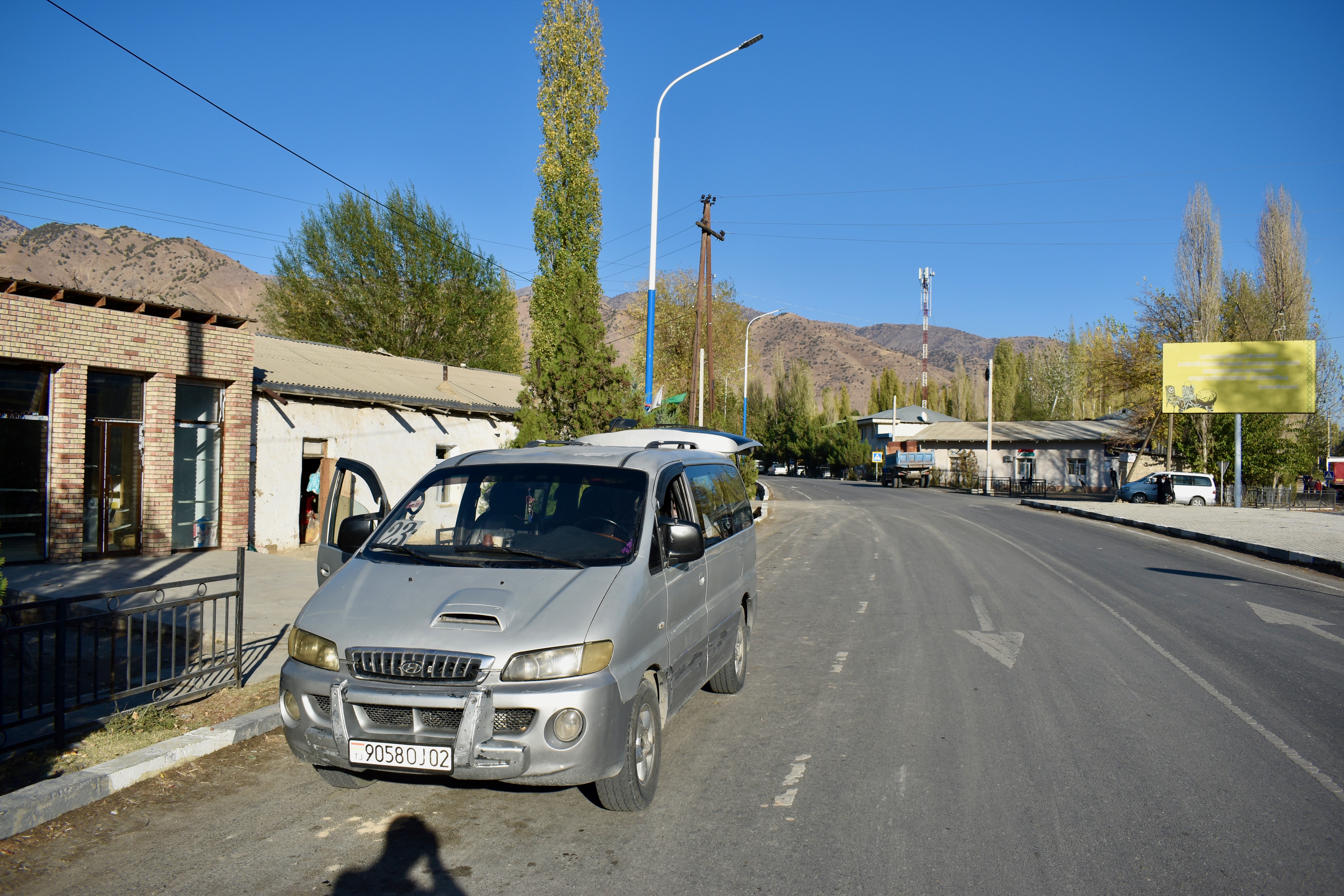
We refilled our water from the stream by the camp (we used our filtering pills to be sure – load of kettle around) and continued another 1:20 down to the Artuch village. We tried to find the marshrutka in the village, but we were told by several people that the last one had already left. We were approached by some kids, and they told us that their father/uncle could take us to Shurcha, where we could then get a marshrutka to Panjakent. We agreed on 150 somoni, but the uncle/ father (no clue) didn’t want to go under 200. At that moment, we spotted the same marshrutka that took us in Artuch, but I couldn’t catch it. On the road, we stopped another guy who first said that he would take us for 200 to Shurcha, but I really tried to get him to 150 and he eventually budged.
Unfortunately, it wasn’t such a good deal as I thought. I understood enough of his Russian that I found out that he would only take us for 150 to Panjrud (the next village after Artuch), and from there we could get a marshrutka to Shurcha. It was already a shit deal, and on top of that, the marshrutka to Shurcha was not operating that day (well, at least he said so after talking to a few locals and waiting with us for a bit at an intersection). He then offered to take us to Shurcha by himself….for 300 somoni. We agreed because we were tired and had few other options. At least we enjoyed a proper 4×4 ride down because he had no care in the world and just flew down the road. His car was also in some state that is hard to describe. My window was, for example, held in place by a stick from a tree, and the door could only be opened from the outside.
Marshrutka to Panjakent was already ready by the side of the road, and it cost us 25 somoni per person. We got dropped off by the same hotel as before, but first went straight to a restaurant nearby. We were craving some Plov, but they didn’t have it. Because it was almost sunset, we didn’t want to risk looking for a place and ending up with everything closed like before, and so we stayed. We ordered Qurutob (Tajikistan’s national dish that we wanted to try), a plate of Manti (Tajik steamed dumplings), and something unknown from the menu (the menu had pictures, and this looked good – it ended up being a minced meat patty topped with an egg with three different sides). The three meals + a big bottle of Coke came to 130 somoni.

After the dinner, we headed directly to the hotel Zarafshon and asked for one more night. I was a bit worried after the car price fuck-up that they may charge us something ridiculous because we didn’t book it online, but the fella was nice and gave us the same standard room for 300 somoni without breakfast (we asked, but suddenly they weren’t serving any…).
We offloaded some wet clothes from our bags, got a nice warm shower, and unpacked the tent and tarp to get them dry overnight. We then went for a short walk around the town and stopped for ice cream.
Day 6: Khujand is just too far away
Our idea was that since we couldn’t finish our hike to Alauddin Lake, we would instead visit the city of Khujand. But after seeing the situation with taxis and marshrutkas yesterday and properly looking at the map, we didn’t see it as a sane option anymore. Khujand is in the northern part of Tajikistan, in the wee inlet that wedges between Uzbekistan and Kyrgyzstan. The road doesn’t go through the mountains, but it was still about 260 km, which would take hours to get to (not even counting the wait for the shared taxi to fill up). We would be going there only for one afternoon and then had to go to Dushanbe the next morning. After considering the pros and cons, we decided that we didn’t want to spend that much time in a car. We would instead go straight back to Dushanbe and do a day trip from there.
A wee regret
This is why I mentioned earlier that “in hindsight” we may have decided differently about the hike. Because we decided that Khujand was too far, we could have maybe attempted the crossing of Alauddin Pass, and even if it wasn’t possible, we could have come back and just camped one more night in the Kulikalon Valley.
We left the hotel around 8 am and walked to the shared taxi parking lot on the east side of the town (about a 2 km walk). There were so many drivers waiting, trying to find people to get their cars full, that when he said 150 to Dushanbe and I said 120, he agreed immediately. There was already one person in the car, a guy from Croatia, and we just had to wait for one more. After about 15 minutes, we headed back to the town and picked up someone. He was waiting right in front of the Zarafshon hotel.
Note
The shared taxi we got from Panjakent to Dushanbe was a fully electric Aion V. Anywhere else in the world, I would be surprised to get a full electric car for a cheap journey like this, but not in Tajikistan. The number of electric cars on the road was staggering. They were everywhere! For example, every Jura taxi in Dushanbe was fully electric, and you could see charging stations everywhere. The driver told us that he paid 15,000 euros for the car.
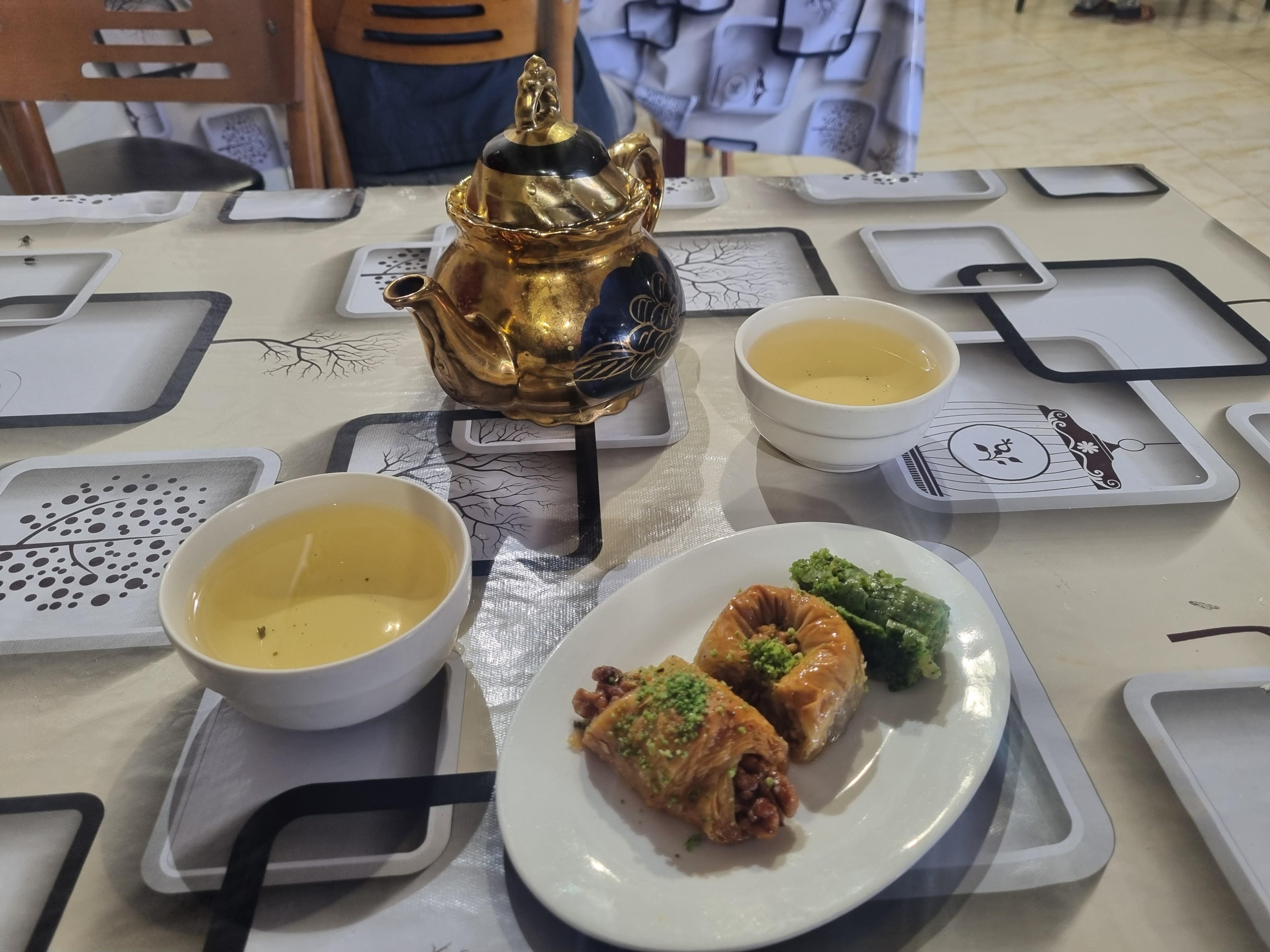
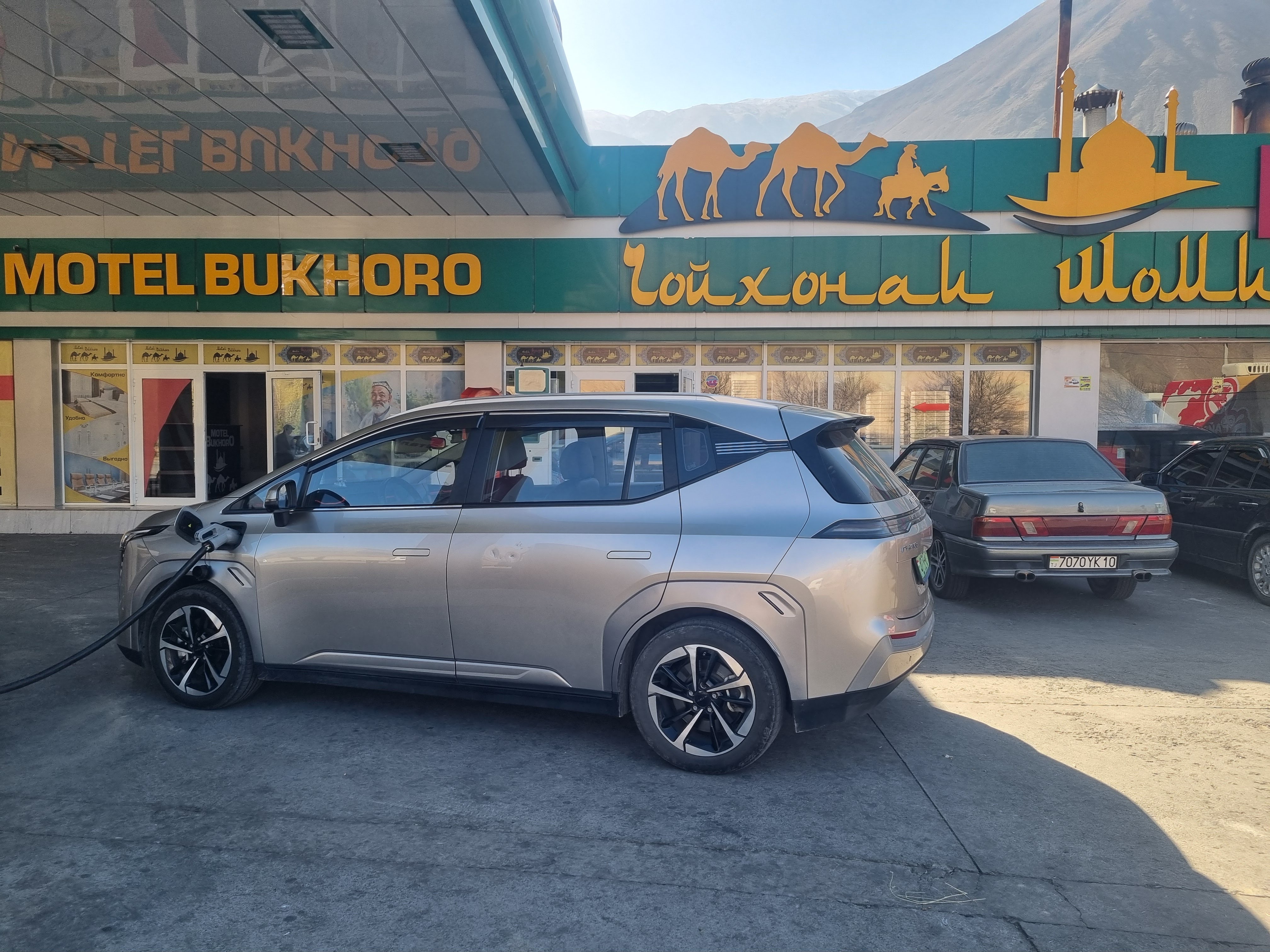
We had a stop at the same place as on the way to Panjakent to get Samsas and one more later at a charging station, where we got mint tea and baklava while waiting. We arrived at the parking lot in Chorbogh around 2 pm and got a taxi to the Almaz Hotel. We left our stuff in and went for a walk right away to get the most out of the day before the sunset.
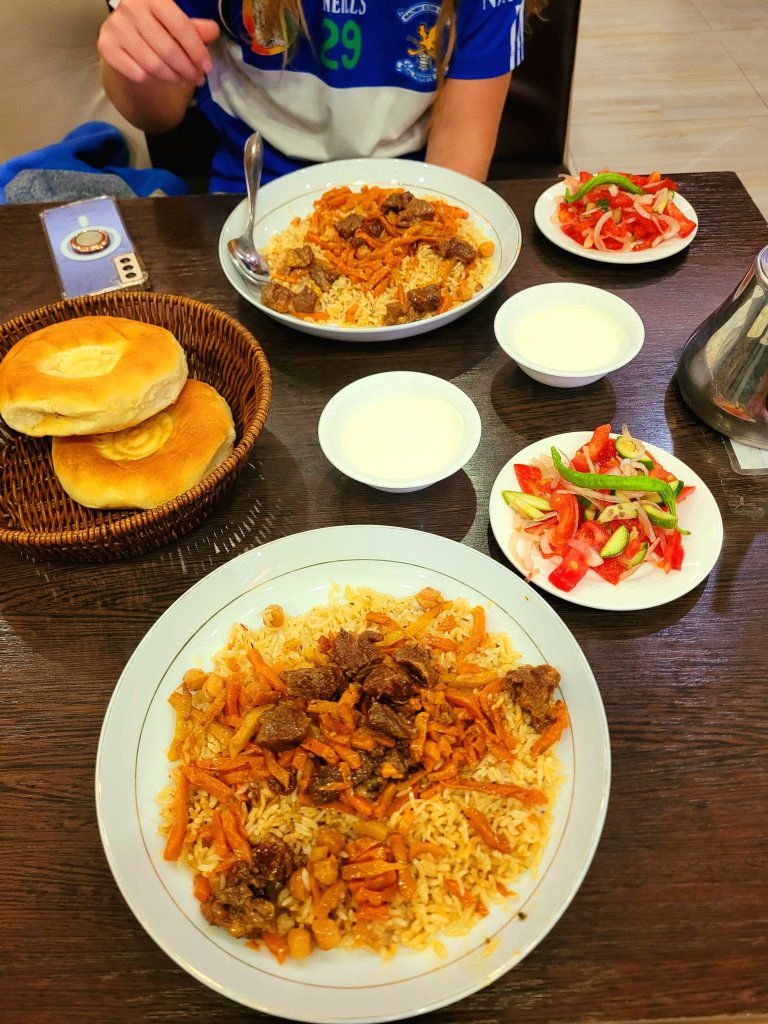
Our first stop was mandatory Plov. We were craving it since the second day and couldn’t get it anywhere. We picked a place at the end of our street called Nur Kurutobkhona. Yes, the place specialized in Kurutob, the Tajik national dish, but their Plov was amazing. We got one full portion, which was more than enough for two people.
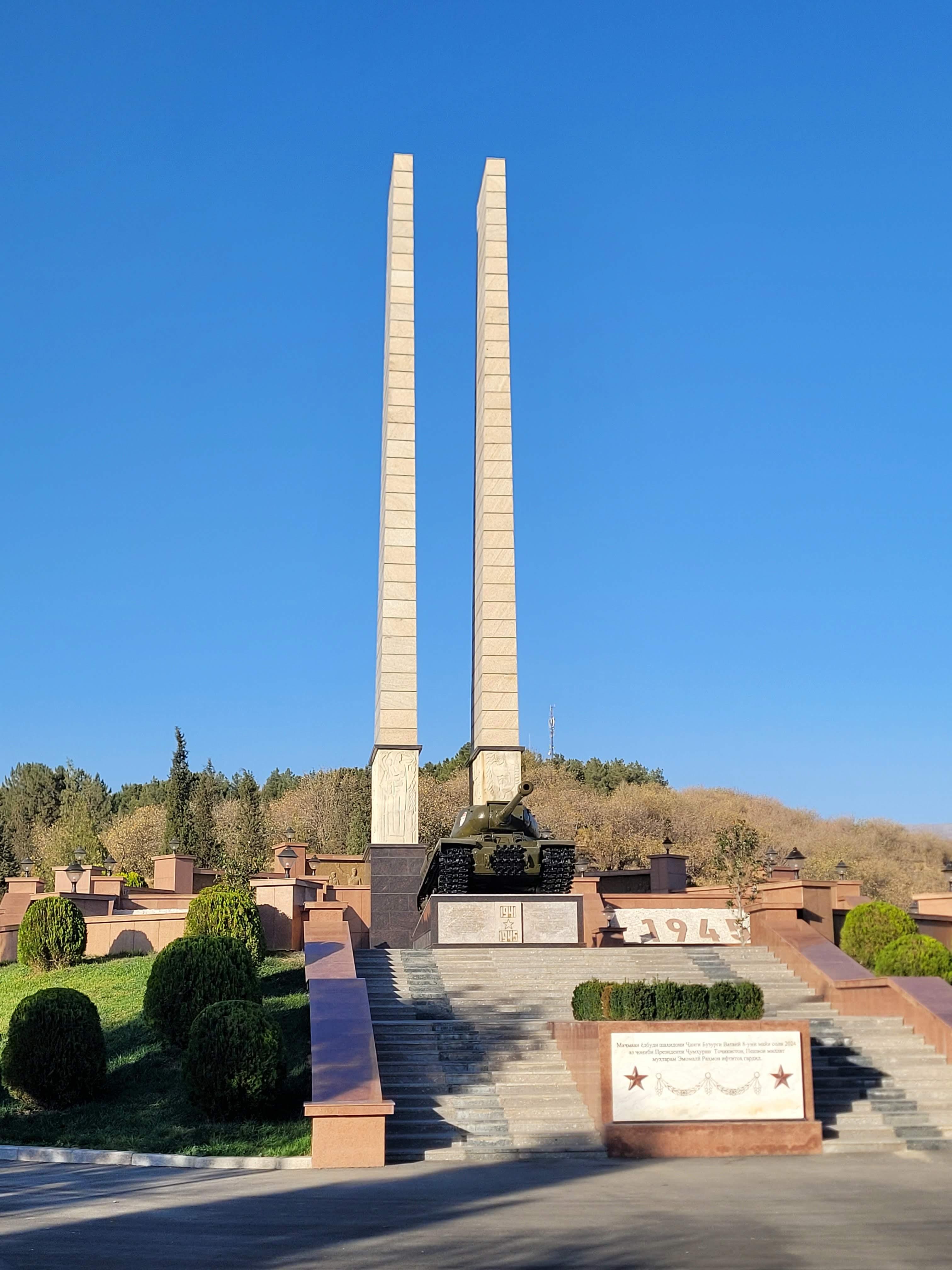
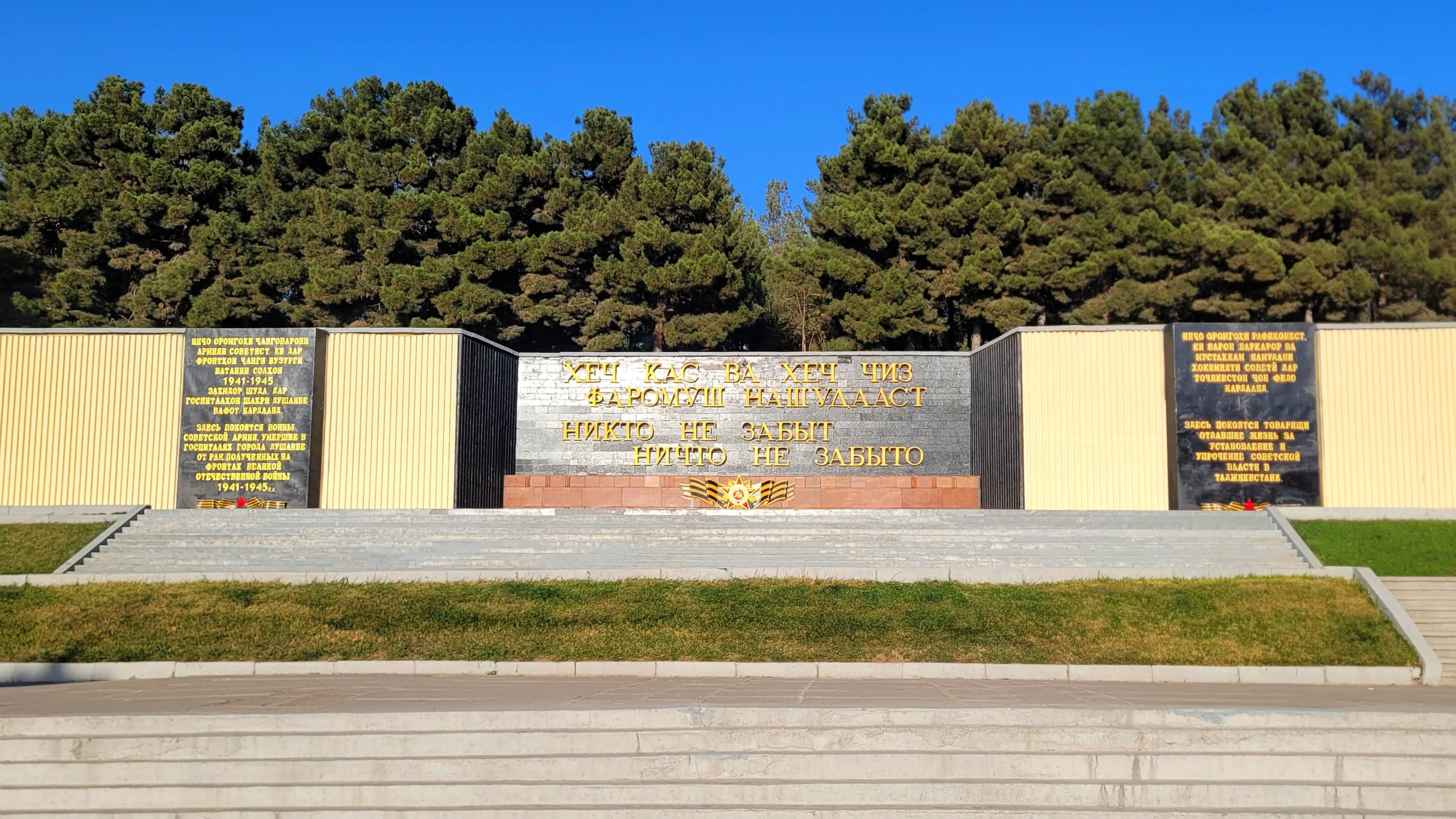
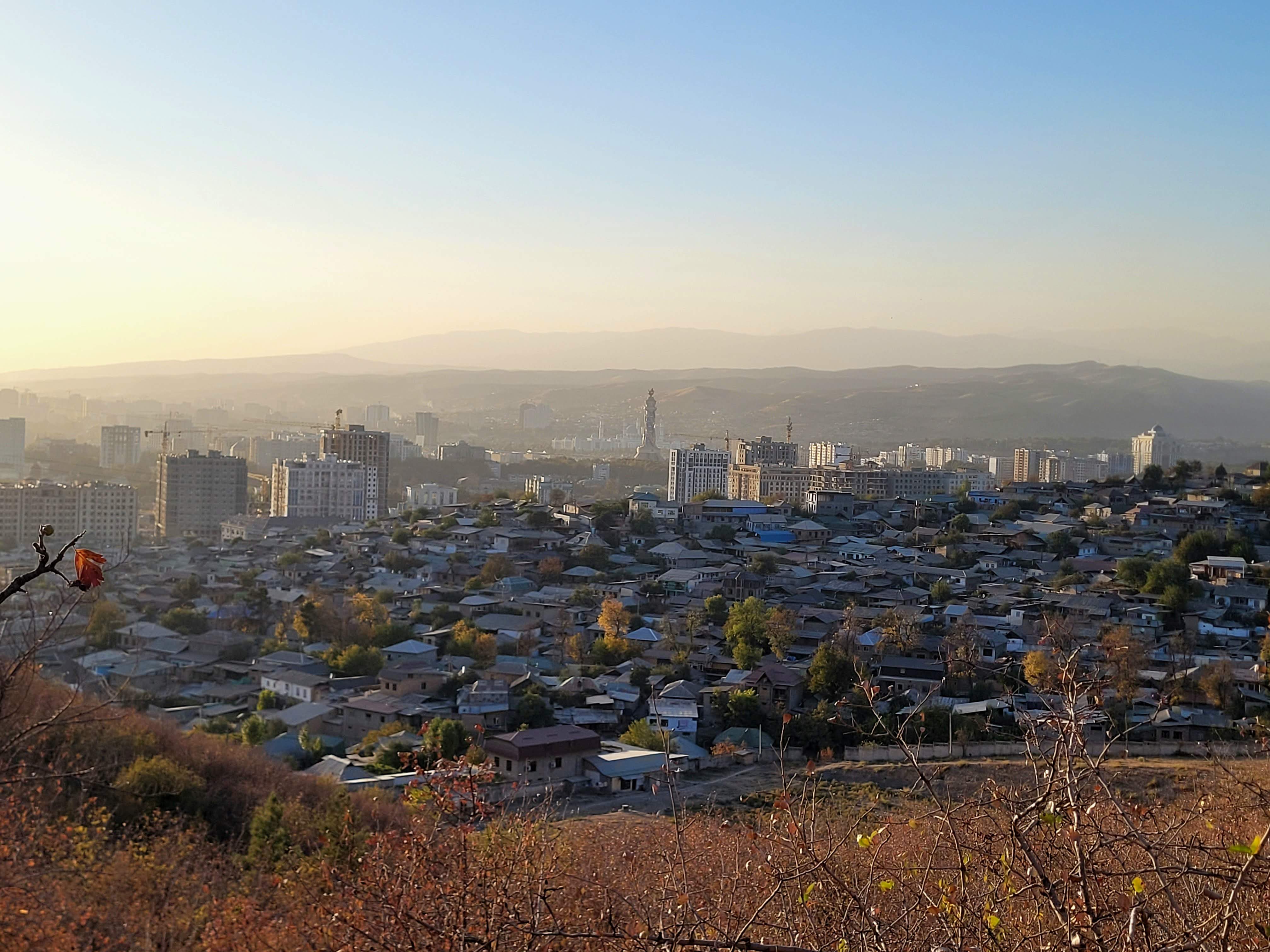
Then we continued up the hill through the narrow streets of the neighbourhood to the Victory Park. Once we entered the park, we appeared right in front of the tank and stone obelisks commemorating the World War 2 victory. We walked around and continued to another memorial hidden behind it. This, we found out, was the actual WW2 memorial dedicated to the Tajik soldiers who died during the war, as well as to those who returned with medals of honor. Around 60 Tajik soldiers were awarded the title of Hero of the Soviet Union, and their pictures were displayed along the stairs of the memorial.
Note
Since Tajikistan was part of the Soviet Union during World War 2 (Tajik Soviet Socialist Republic), the war is referenced as the Great Patriotic War. Between 50,000 and 90,000 Tajik servicemen were killed during the war.
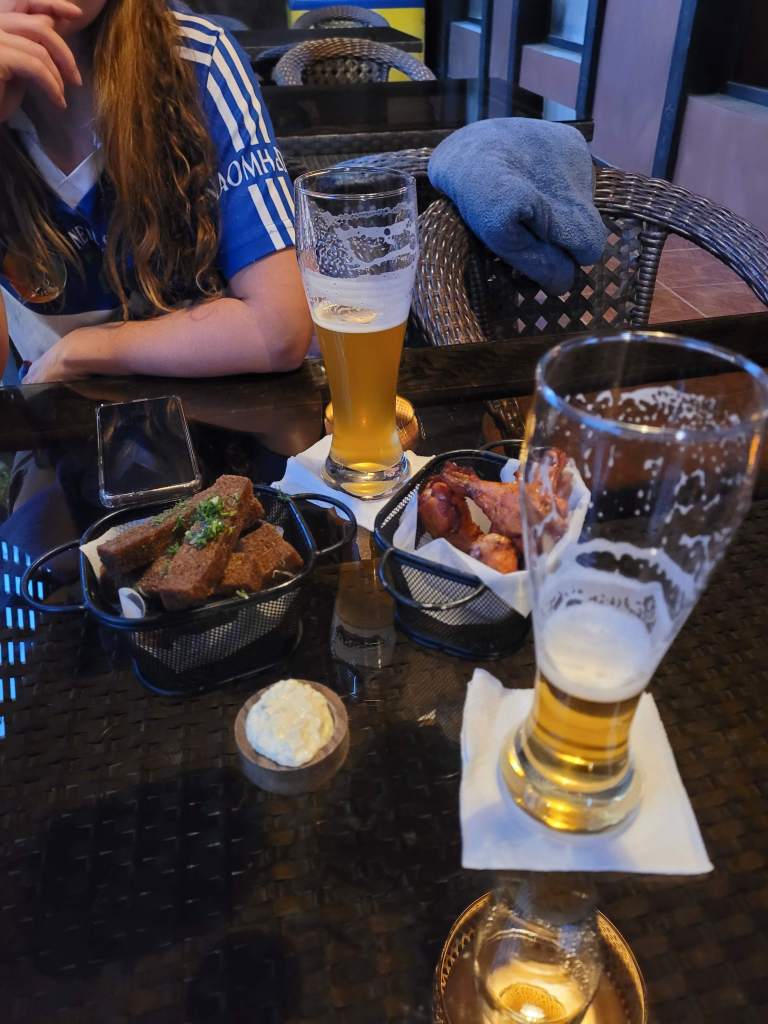
We did a small loop around the park and stopped to do a few pull-ups at workout stations along the path for good measure. The main road from the park took us to a part of the city that we had marked on a map that had a few bars. We wanted to stop at Dushanbe Brewery, but when we saw the people around and in it, we changed our minds. It was basically just a window with a tap and bottles, and a bunch of people off their tits. We ended up in Bavaria House, which was right next to it. It looked really fancy, but the beer was 14-16 somoni (~$1.5$). We were not sure, but the way the woman asked, we assumed we had to order some food with beer (and we always find an excuse to get food), so we also got chicken wings and garlic bread.
By the time we left, it was dark and we just slowly stralled back to our hotel through the Alisher Navoi Park.
Day 7: Dushanbe public transportation and Hisor Fort
We had a shite night because one of the lights in our room couldn’t be turned off, and a few people were coming in on a late flight who clearly don’t have in mind that they may not be the only ones in the hotel. On top of all that, Clare started feeling really strange and got some sort of vertigo that made her world spin. Therefore, we took the morning nice and easy, and I tried to make the vertigo go away by performing the Epley Maneuver. We got about halfway through the maneuver when Clare couldn’t take it anymore and ran to throw up. Surprisingly, that was it. The headspin went away, and she felt much better for the rest of the day.
We had a full day in Dushanbe, so we decided to visit the Hisor Fort. We researched how to get there by local buses and wanted to try it. First, we had to get on bus #8. There are two different services in Dushanbe:
- The actual bus line where you need a local bus card to pay (a local SIM card is needed).
- Sort of a “marshrutka” service that runs under the same numbers, is paid cash, but doesn’t necessarily run the exact same route.
We found out that the actual bus #8 ran on Ayni Street (south of our hotel), but we couldn’t take that one. Luckily, last night on the way home, we spotted the marshrutka bus #8 on the Nisor Mukhammad Street north of our hotel. We only waited for a moment on the street, and the van with #8 showed up. We paid 5 somoni total for both of us.
We stayed on the bus/van until the driver told us that we were at the Zarafshan Bazaar/Market. We read that from here we could get another marshrutka. However, the van stopped at a different location than we thought. We didn’t know if the buses were coming from here, but the stop that we read about was only about 5 minutes away through the neighbourhood, so we walked there. Once we got to the spot we marked on the map, so many drivers were yelling “Hisor” and so we knew we were at the right spot.
But we didn’t want to take a shared taxi. We started looking for the bus to Hisor. Here it got difficult because we didn’t know how we would recognize it or if it had any number. We waited at the side of the road for a while and watched many vans/buses pass, but couldn’t get any wiser. We asked some people, but they just sent us to wait by the side of the road. Eventually, we gave up and arranged a shared taxi all the way to the fort (the bus would only take us to the town of Hisor) for 50 somoni. Once we left the parking lot, we merged onto the road we were standing at before, and in front of us was a bus with a sign in Azbuka that looked familiar to me. Of course, that was our bus!
Note
If you're reading this, the bus even had a number, and it was 270. The sign for Hisor in Cyrillic script (Azbuka) is Ҳисор.
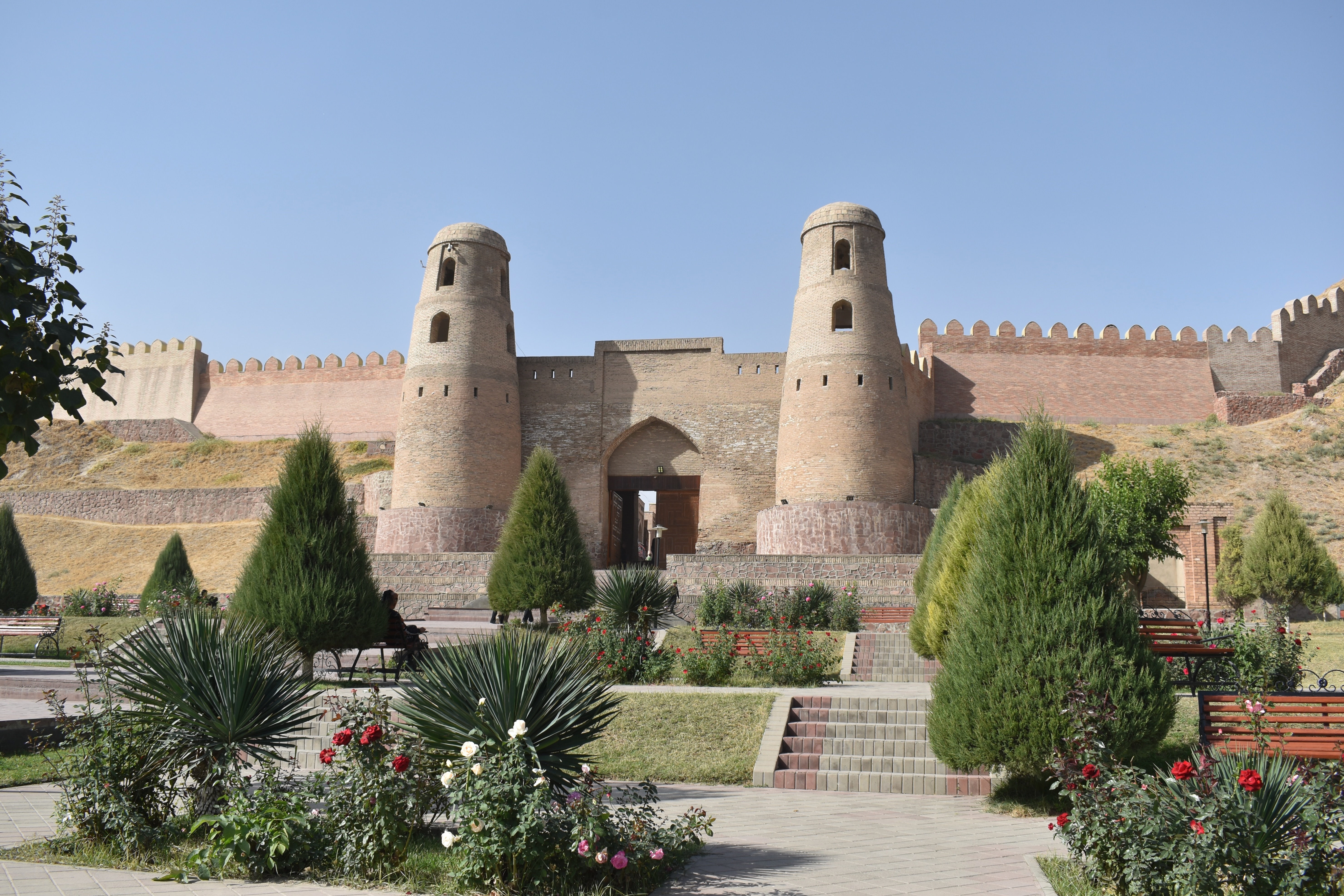
The drive wasn’t too long, and we were at the fort around 11 am. The Hisor Fort dates back more than 2,000 years, since it was located along a branch of the Silk Road, and is one of the best preserved in Tajikistan. The main attraction was definitely the main gate. Once we entered (20 somoni for a ticket), we found only a few more buildings around the main road, but they were all built new and now serve as tourist shops. In the back of the fortress, you can still see the old wall and amphitheater, but otherwise, the area is used for horse riding. At the hilltop was a building, but once we reached it, we found out that it was also newly built, seemed empty, and was closed.
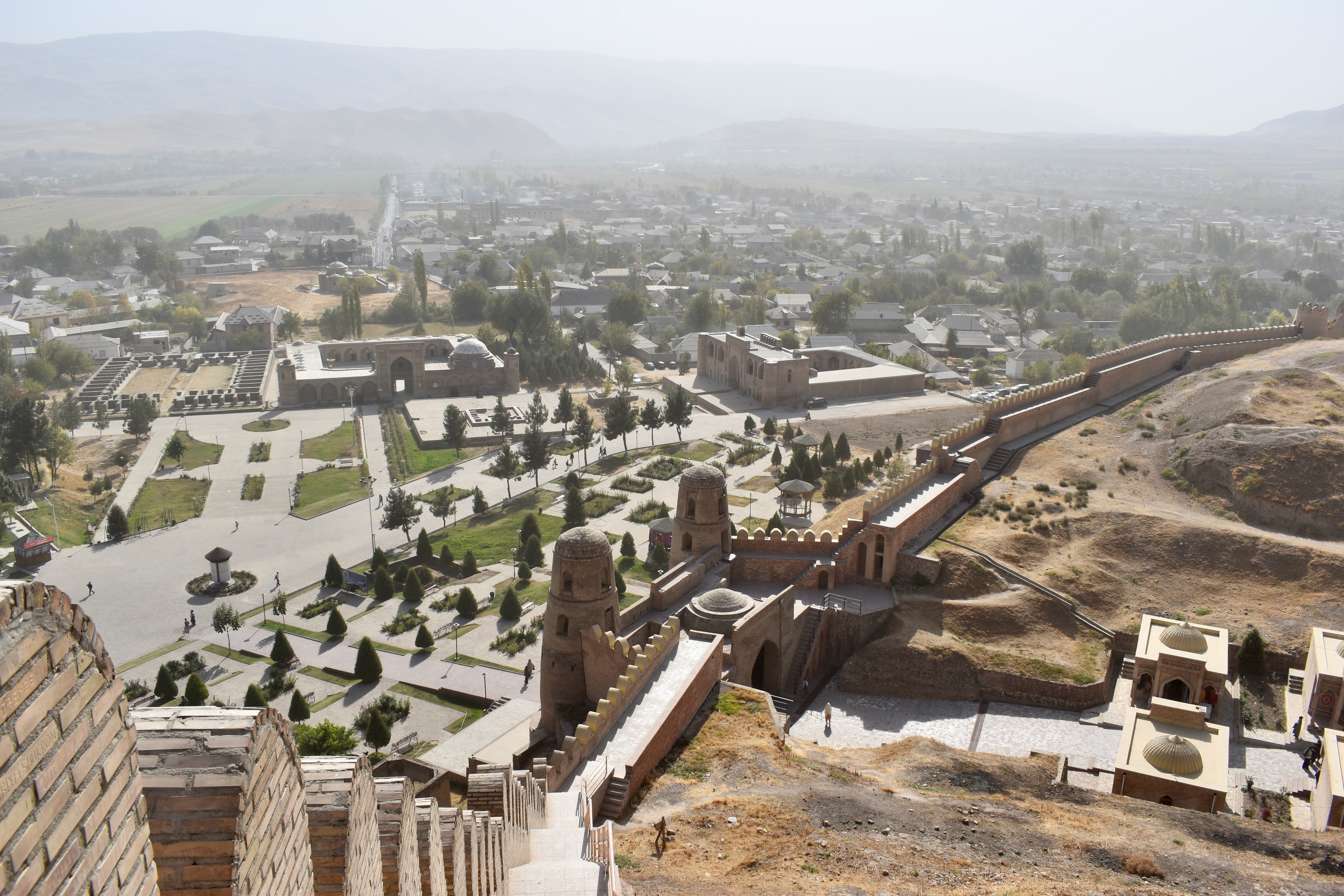
We then continued by exploring the neighbouring buildings – the New and Old Madrasa, and the Caravanserai. The New Madrasa is still being used, so we just peeked in. The Old Madrasa is also the Hisor museum, but we didn’t want to pay another 20 somoni, so we skipped it. The Caravanserai only has some walls left, but it served as a sort of roadside inn that provided lodging and provisions for travelers, merchants, and caravans.
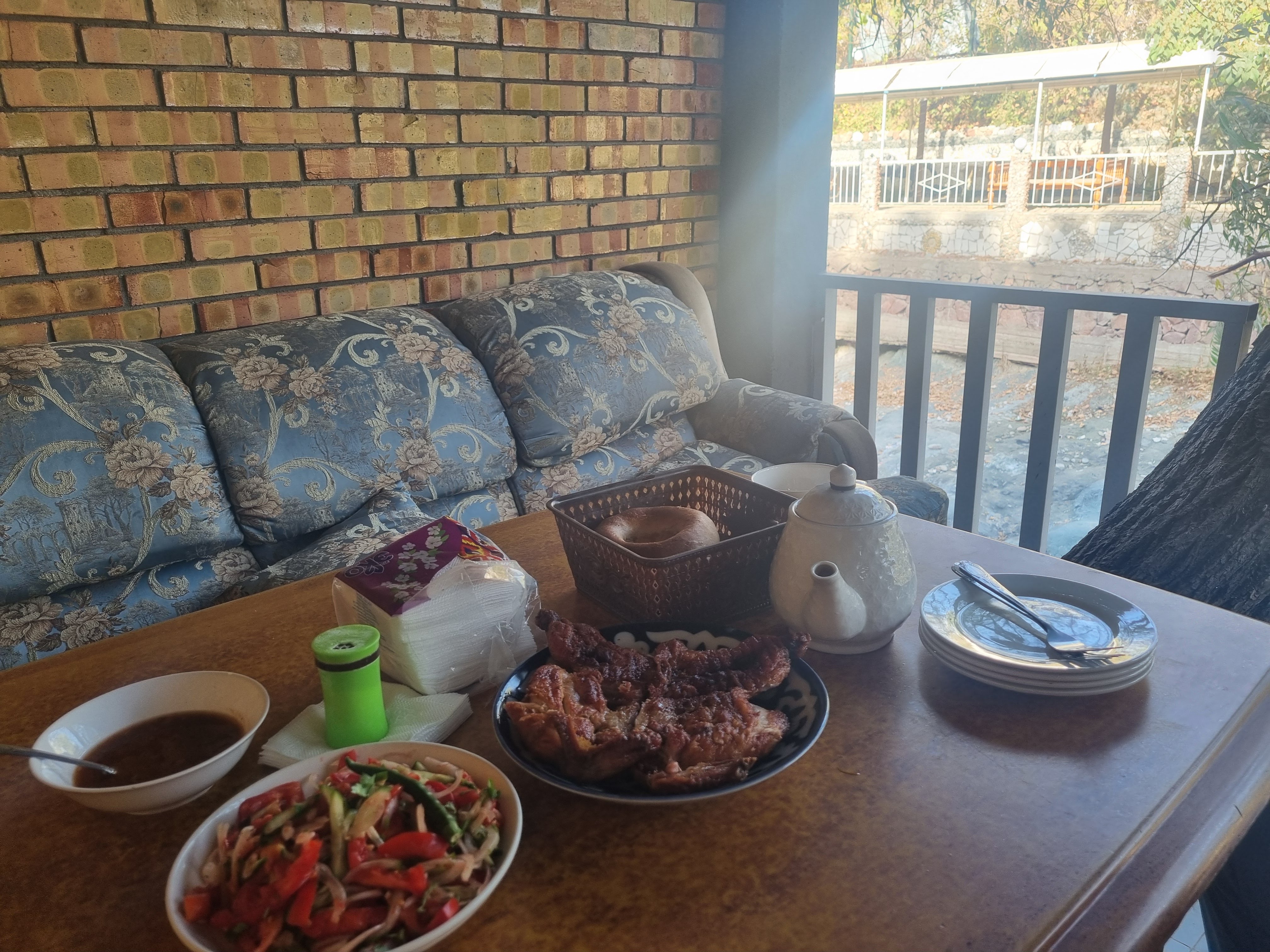
We still had a lot of time, so we started wandering around and aimed for a restaurant we discovered while we were researching the area the other day. We weren’t really hungry, but even our driver mentioned a “chicken shop” on the way to the Fort, so we had to give it a go. It was called Qaraev (Табакаи Қараев). It was situated by a river, but there wasn’t much water at this time of the year, so we saw more garbage than water. But it was still nice to just sit on a cozy sofa by the river. We got a pot of tea, and since we were there, we ordered a portion of chicken. We asked if they had Plov, but as we understood, they only served one thing – chicken. And hell, what a chinsken that was! Clare even had to edit her list of the best chickens she ever had. I can’t remember, but I think we paid around 110 somoni for the chicken, salad, bread, and a pot of tea.
We wanted to do the way back on buses to save some of our last cash, so we wouldn’t have to go change more. We still had to get a shared taxi to the town of Hisor, but it only cost 2 somoni per person. We got dropped off right by the bus stop, where we jumped on the first bus #270 waiting there. We paid 5 somoni each to get to Dushanbe. On the way, we even had a chat with an old lady who wanted to know where we were from and if we liked Tajikistan. She also said that she saw us at the Fort. Some of the stuff I understood, but the rest was translated by a local boy who had just boarded the bus to go to the city for his extra English lessons, so he took the opportunity and practiced with us.
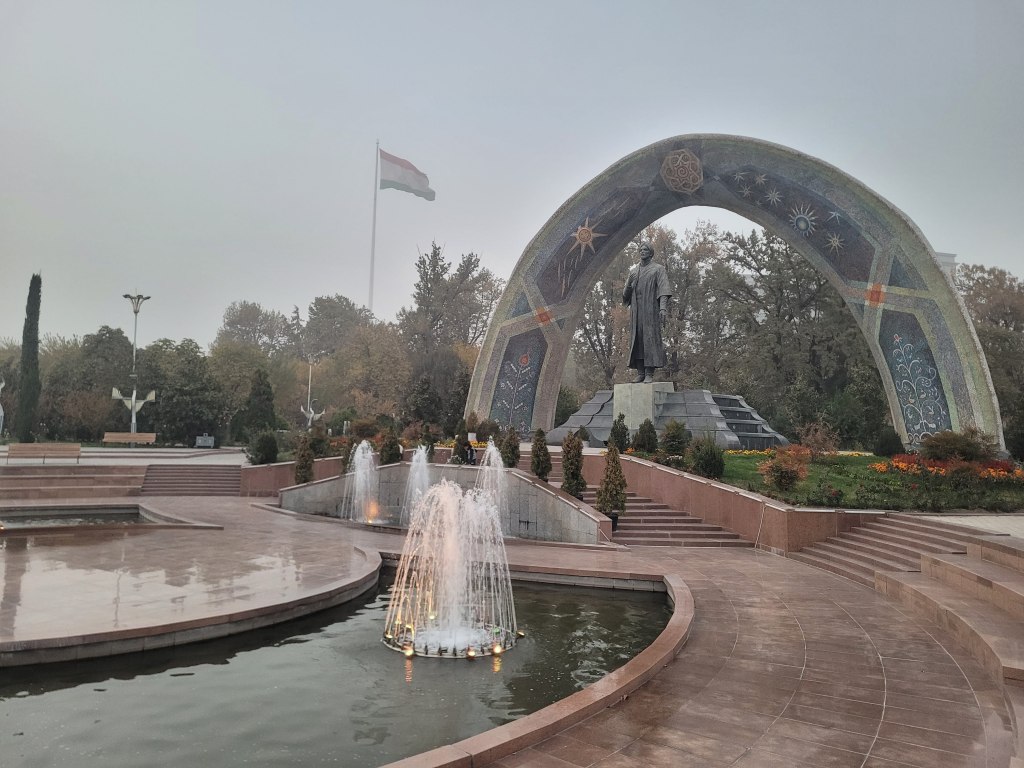
We stayed on the bus as long as we could to get as far into the city. We weren’t too far from the Kokhi Navruz, so we just followed the Ismoli Somoni Avenue into the city center. We walked past the National Museum and through the Rudaki Park, past the Rudaki statue. Just as it was getting dark, we stopped for an ice cream and continued towards our hotel. Just before we got in, we checked how much money we had left and stopped at a shop for some beef samsa and baklava. We didn’t have any big dinner since we were still full from eating the chicken earlier. The last thing left to do was to repack our rucksacks and go to sleep for a few hours.
Day 8: Way home
We had to wake up early to get on the 4:50 am flight. We saved a bit of cash for the morning taxi and got it ordered from the reception. The fella at the airport saw a knife in my checked luggage and wanted me to get it out, but I’m glad that it was so deep inside the packed rucksack that I couldn’t easily get it out, so he let me go. Something was telling me that he would keep it for himself if I got it out.
We were a bit afraid that we wouldn’t catch our next flight because we had only an hour for transfer in Dubai. That got even worse after we got a message from our pilot that they were still loading the plane at the time of our scheduled takeoff. We left with a 30+ minute delay. We were actually able to get to the terminal in Dubai when it was still saying “Final Call” on the boards, but we got stopped before we could even get to the gates and were sent to the connection counter, where we got rescheduled on a later flight. Luckily, it was only an hour later.
Our trip to Tajikistan was really nice, and I’m very glad for the weather we had because I was getting ready for a week of rain. Dushanbe was a very pleasant surprise, and we would definitely recommend it for a visit. We enjoyed the food and just regret we didn’t have more Plov (especially in Panjakent near the Uzbek border). I believe in the butterfly effect, so I know everything would be different if, but still can’t shake that if we hadn’t lost the day due to FlyDubai’s delay in Doha (still waiting for reimbursement), we could have made the whole hike. Maybe we will come visit Alauddin Lake when we come to explore the Pamir Highway.
 Wandering Wankers